Pancreatic cancer
Board exam relevance: in 3 of 105 exam reports · rank 111- Synonyms
- cancer of the pancreas, pancreatic adenocarcinoma, pancreatic ductal adenocarcinoma, PDAC, pancreatic head cancer
- Specialty
- Internal medicine · Gastroenterology
- Images
- CT 1 · Histology 1 · Gross specimen 1
- Last updated
- 10/2026 · Dr. Pascal Bafteh
Contents
Images (3)
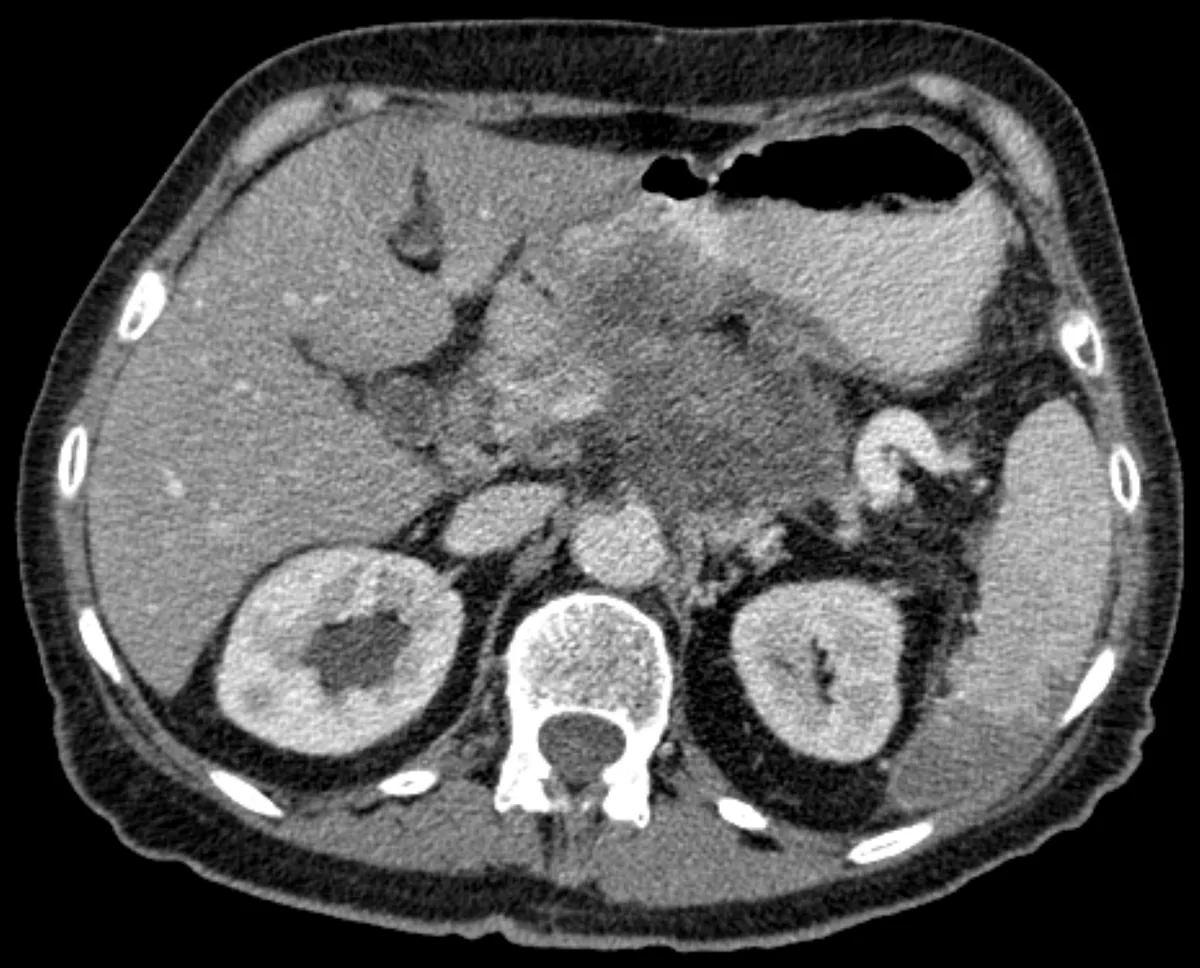 CT
CT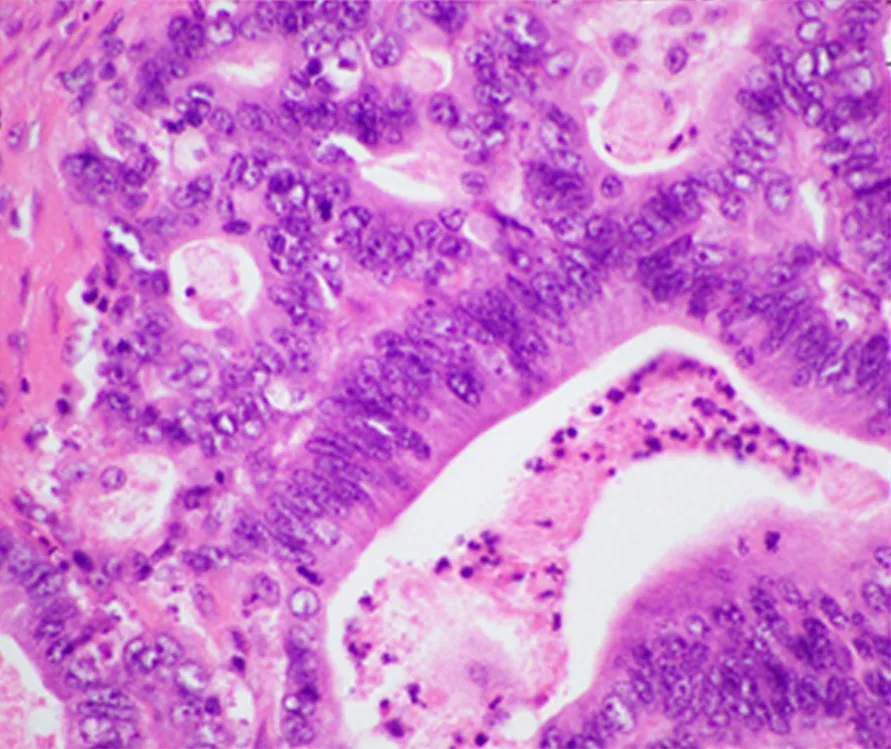 Histology
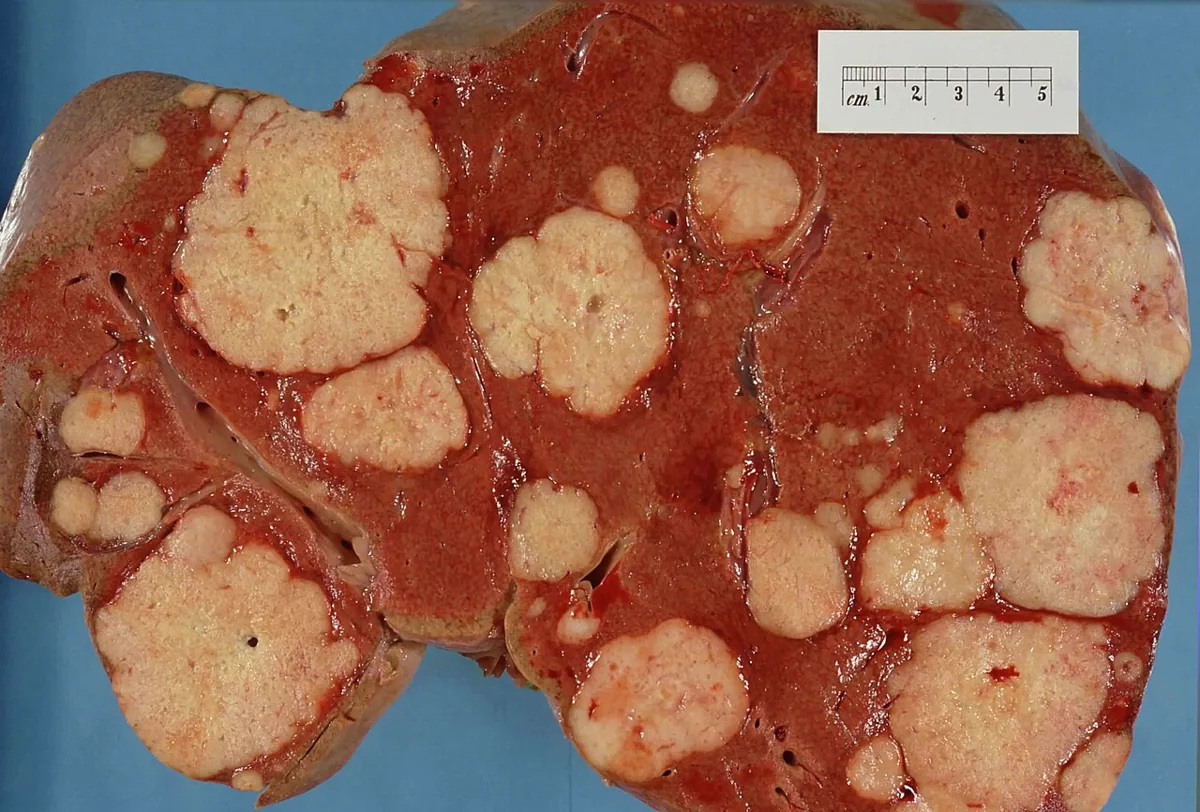 Gross specimen
Definition
Pancreatic cancer is a malignant tumor of the pancreas, most commonly a ductal adenocarcinoma. Most pancreatic cancers are exocrine tumors arising from ductal and acinar cells; adenocarcinomas of the exocrine pancreas arise from duct cells nine times more often than from acinar cells. Acinar cell carcinoma is rare. Neuroendocrine tumors of the pancreas are considered separately.
Classification
By location, carcinomas of the pancreatic head (the large majority) are distinguished from those of the body and tail; they cause different leading symptoms. Other, rarer exocrine tumors include cystadenocarcinoma and intraductal papillary mucinous neoplasms. At diagnosis, 90% of patients have locally advanced tumors involving retroperitoneal structures or regional lymph nodes, or metastases in the liver or lung.
Occurrence & epidemiology
In Germany, about 19,900 people were diagnosed with pancreatic cancer in 2023; it is the fourth most common cause of cancer death in both sexes. The median age at diagnosis is 76 years (women) and 72 years (men). Since the late 1990s, age-standardized incidence rates have risen slightly, especially from the age of 65. Early stages often cause no or only non-specific symptoms, so the tumor is frequently detected late.
Aetiopathogenesis
Risk factors:
- smoking, active and passive
- severe excess weight (obesity), type 2 diabetes mellitus
- chronic pancreatitis
- very heavy alcohol consumption
- exposure to chemicals such as beta-naphthylamine, benzidine, asbestos, benzene and chlorinated hydrocarbons
- infections with Helicobacter pylori and hepatitis B have been linked to its development
- family history; about 10% of pancreatic cancers have a genetic component, e.g. hereditary pancreatitis, Peutz-Jeghers syndrome, Lynch syndrome, CDKN2A mutation or mutations in BRCA1, BRCA2, PALB2 and ATM
Clinical features
About 80% of adenocarcinomas are located in the pancreatic head; obstructive jaundice is therefore often prominent.
Symptoms are non-specific and often lead to a late diagnosis.
- severe upper abdominal pain, usually radiating to the back, and loss of body weight in most patients
- cancer of the pancreatic head: obstructive jaundice (with pruritus) in 80–90%
- cancer of the body and tail: splenic vein obstruction with splenomegaly, gastric and esophageal varices and gastrointestinal bleeding
- diabetes mellitus in up to half of patients (polyuria, polydipsia)
- exocrine pancreatic insufficiency with malabsorption: bloating, watery, greasy or foul-smelling diarrhea, loss of body weight and vitamin deficiencies
Diagnosis
Tumor markers and staging
- CA 19-9 is the common tumor marker but is not elevated in all patients and is not suitable as a screening test
- Local extent is assessed by infiltration of the celiac trunk, superior mesenteric artery, common hepatic artery, portal vein and superior mesenteric vein; in addition, tumor spread outside the pancreas is sought
- Imaging: abdominal CT using pancreatic technique (three contrast phases, slices of 5 mm or less) or MRI with MRCP, depending on availability
- Endoscopic ultrasound with fine-needle aspiration: tissue diagnosis and assessment of extent; MRI/MRCP or endoscopic ultrasound also detect small tumors not visible on CT
- even with apparently advanced disease, a tissue sample is obtained (endoscopic ultrasound or percutaneous aspiration)
- Laboratory tests: elevated alkaline phosphatase and bilirubin indicate bile duct obstruction or liver metastases; amylase and lipase are usually normal
- CA 19-9: for assessing the course, not suitable for population screening; not elevated in all patients
- genetic testing: now offered to all patients with pancreatic cancer
Keep learning in the app
Further reading (open access)
Cross-references
More topics: Gastroenterology
Note: Learning content for medical education – not a treatment recommendation and no substitute for diagnosis or treatment decisions in individual cases. Treatment and management are deliberately not covered on this page.