Colorectal adenomas (polyps)
Board exam relevance: in 3 of 105 exam reports · rank 111- Synonyms
- colon polyps, bowel polyps, adenomatous polyp, tubular adenoma, villous adenoma, advanced adenoma
- Specialty
- Internal medicine · Gastroenterology
- Images
- Endoscopy 1 · Histology 1 · Gross specimen 1
- Last updated
- 10/2026 · Dr. Pascal Bafteh
Contents
Images (3)
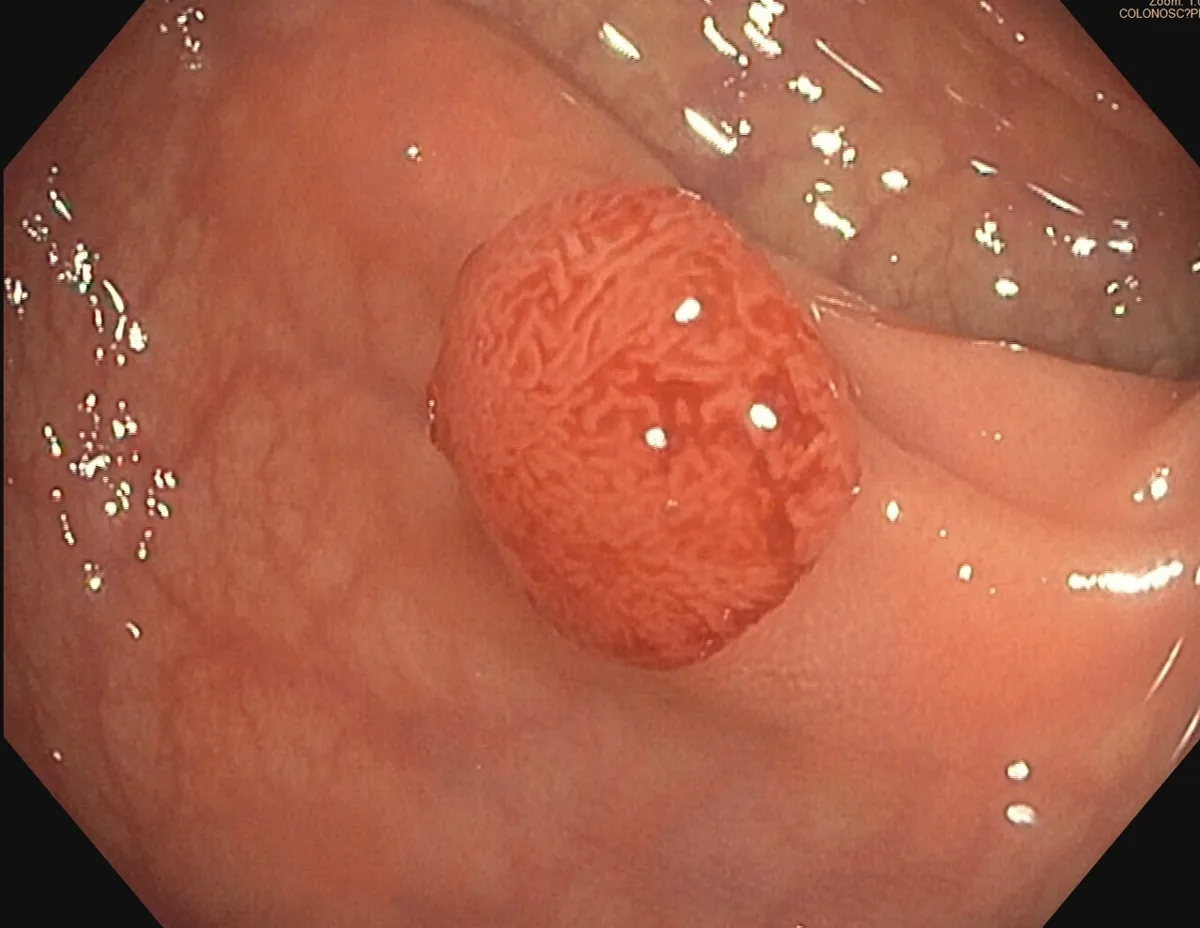 Endoscopy
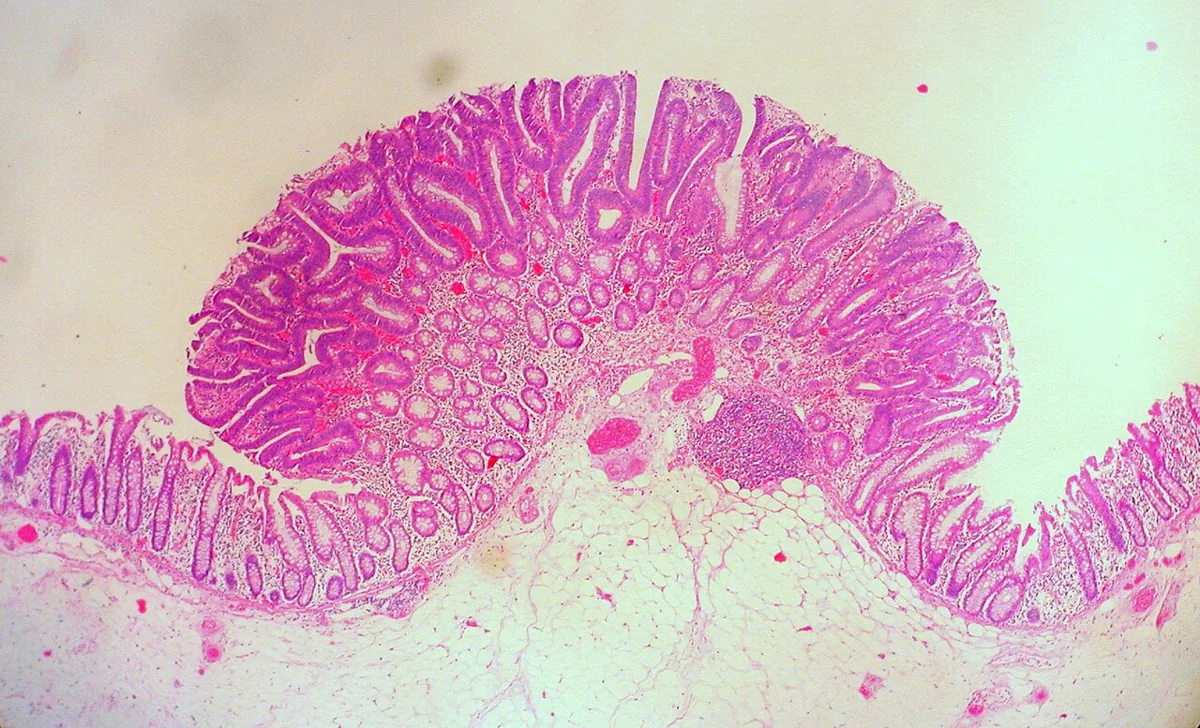 Histology
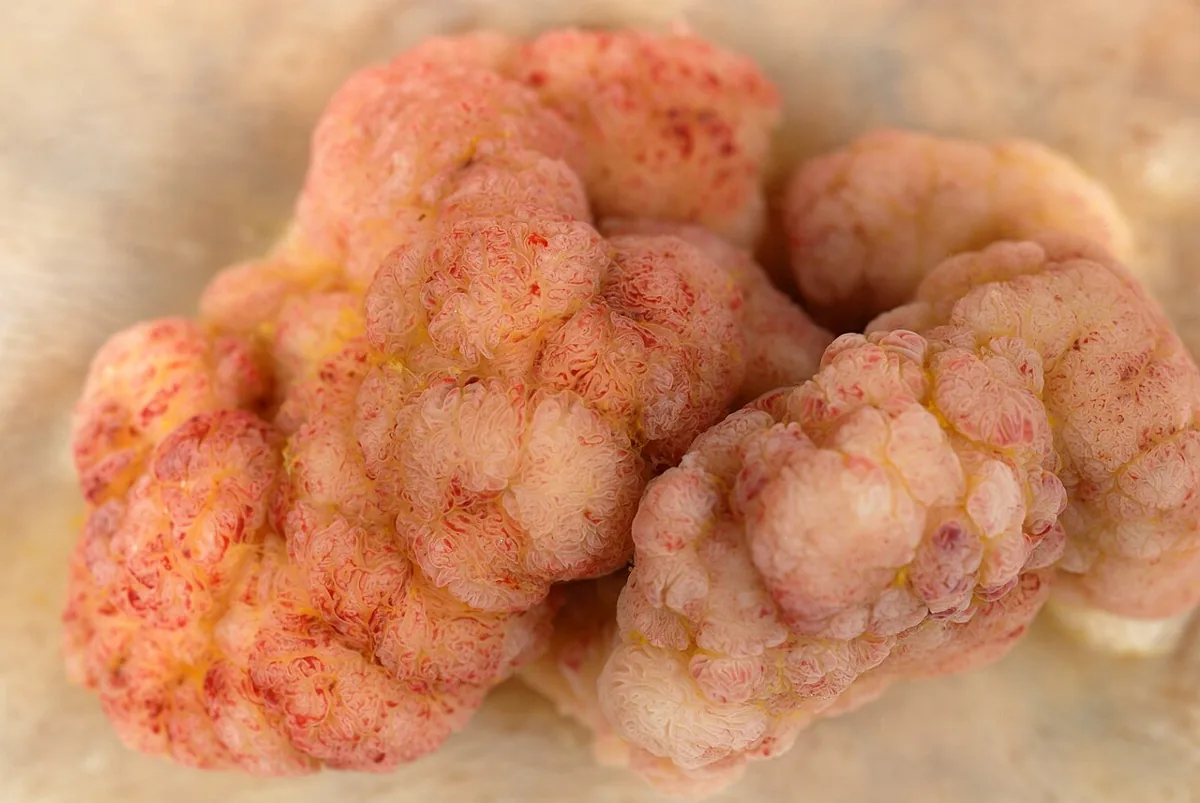 Gross specimen
Definition
An intestinal polyp is any mass of tissue arising from the bowel wall and protruding into the lumen. Polyps may be sessile or pedunculated and vary considerably in size. Adenomatous (neoplastic) polyps are of particular importance because most colon cancers arise in a previously benign adenoma.
Classification
- Adenomatous (neoplastic) polyps: tubular, tubulovillous and villous adenomas
- Advanced adenomas: adenomas of 10 mm or more, or with a villous component or high-grade dysplasia; they carry a higher risk of progression to cancer
- Non-adenomatous (non-neoplastic) polyps: hyperplastic polyps, hamartomas (e.g. in Peutz-Jeghers syndrome), juvenile polyps, inflammatory pseudopolyps, lipomas, leiomyomas and rarer tumors
- By shape: sessile or pedunculated
Occurrence & epidemiology
In colonoscopy studies, adenomas are found in 20–53% of people aged 50 or older and advanced adenomas in up to 9.7%. Polyps – often multiple – are most common in the rectum and sigmoid and decrease in frequency toward the cecum. The proportion of polyps that already contain cancer ranges from 0.2 to 5%. Advanced adenomas are estimated to progress to cancer at about 1–5% per year, at the lower end in women and at the higher end in older age groups.
Aetiopathogenesis
Most colorectal cancers arise through malignant transformation within adenomatous polyps. Numerous polyps may indicate familial adenomatous polyposis or its attenuated variant; multiple juvenile polyps (but not single sporadic ones) are associated with an increased cancer risk. Juvenile polyps occur in children, outgrow their blood supply and usually autoamputate during or after puberty. Inflammatory polyps and pseudopolyps occur in ulcerative colitis and Crohn's disease of the colon.
Clinical features
Most polyps cause no symptoms. The most common complaint is rectal bleeding, usually occult and only rarely massive. Large polyps can cause cramps, abdominal pain or bowel obstruction. Rectal polyps are sometimes palpable on digital examination; a polyp on a long pedicle may occasionally prolapse through the anus. Large villous adenomas can rarely cause watery diarrhea with hypokalemia.
Diagnosis
- Colonoscopy: the usual method for detecting polyps; all polyps found are examined histologically for cancer
- Because rectal polyps are often multiple and may coexist with cancer, the entire colon up to the cecum is examined even if a lesion is found at sigmoidoscopy
- Barium enema (especially double-contrast): can show polyps but is inferior to colonoscopy
- Digital rectal examination: palpable rectal polyps
- Stool tests for occult blood may be positive due to bleeding polyps
Keep learning in the app
Further reading (open access)
Cross-references
More topics: Gastroenterology
Note: Learning content for medical education – not a treatment recommendation and no substitute for diagnosis or treatment decisions in individual cases. Treatment and management are deliberately not covered on this page.