Neuroendocrine tumors and carcinoid syndrome
Board exam relevance: in 4 of 105 exam reports · rank 90- Synonyms
- NET, NEN, NEC, carcinoid tumor, carcinoid, insulinoma, gastrinoma, Zollinger-Ellison syndrome, flushing syndrome
- Specialty
- Internal medicine · Gastroenterology
- Images
- CT 1 · Histology 2 · Gross specimen 1
- Last updated
- 10/2026 · Dr. Pascal Bafteh
Contents
Images (4)
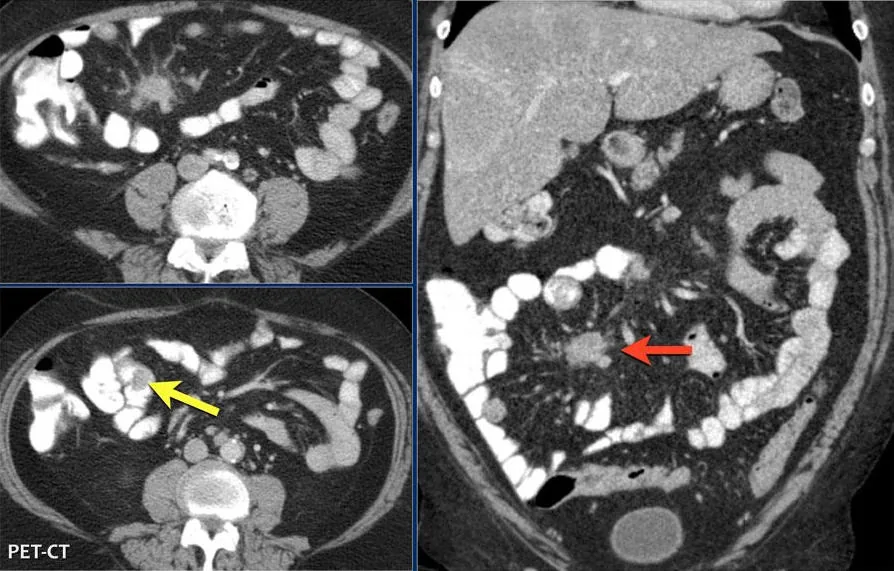 CT
CT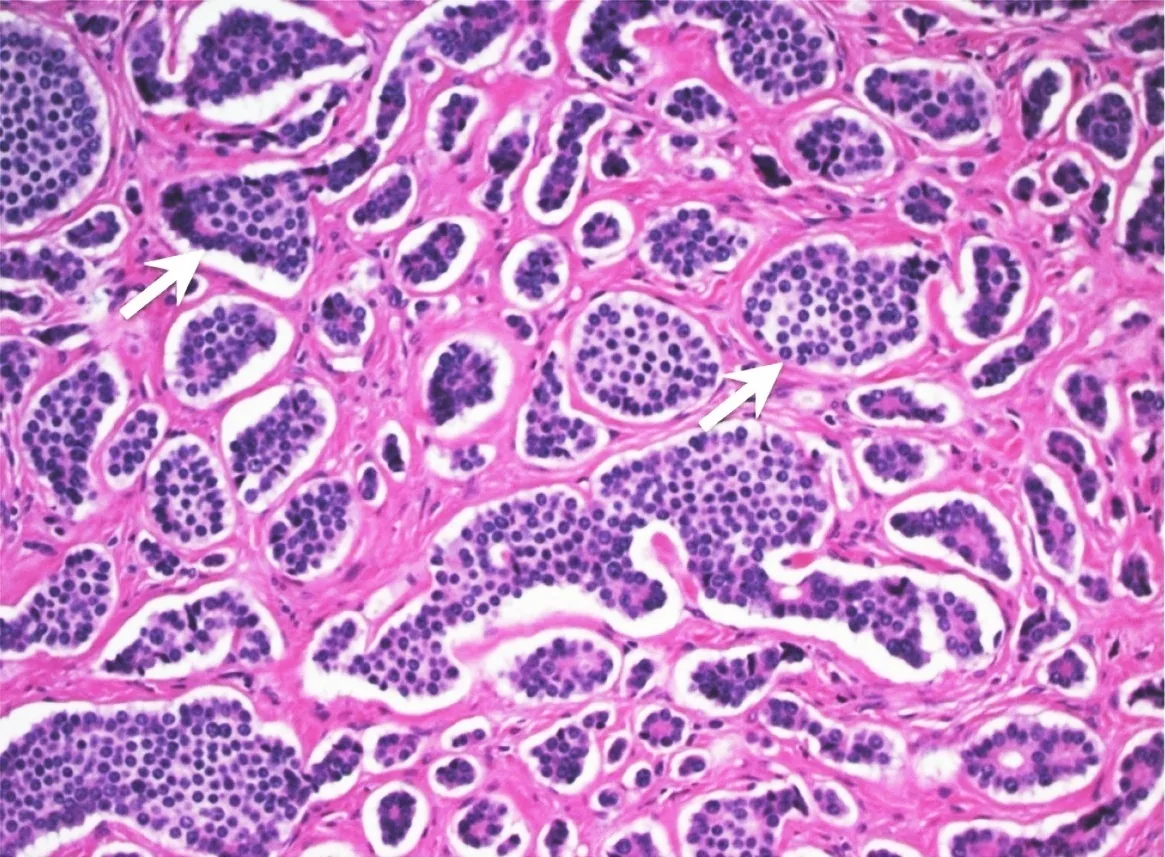 Histology
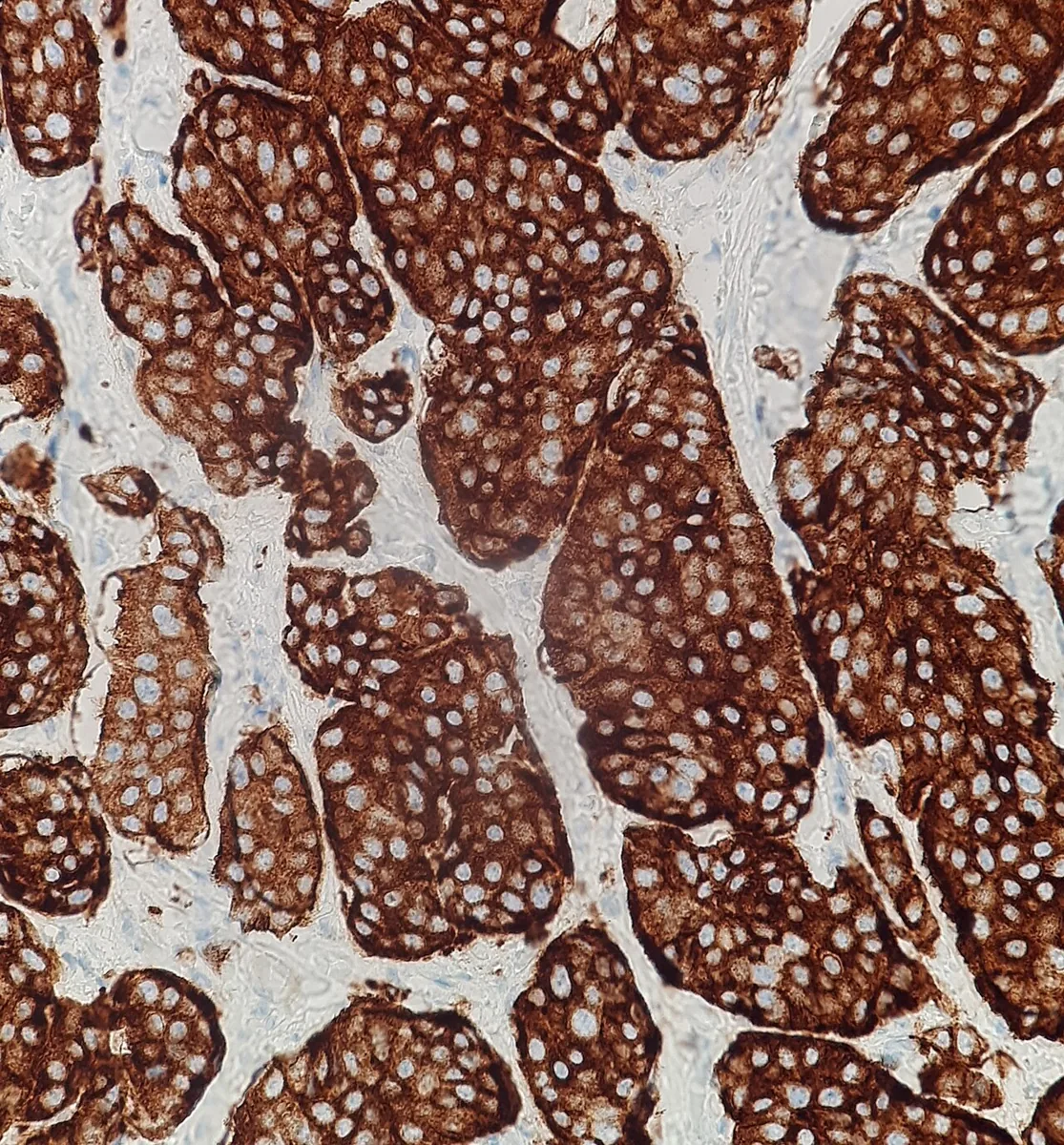 Histology
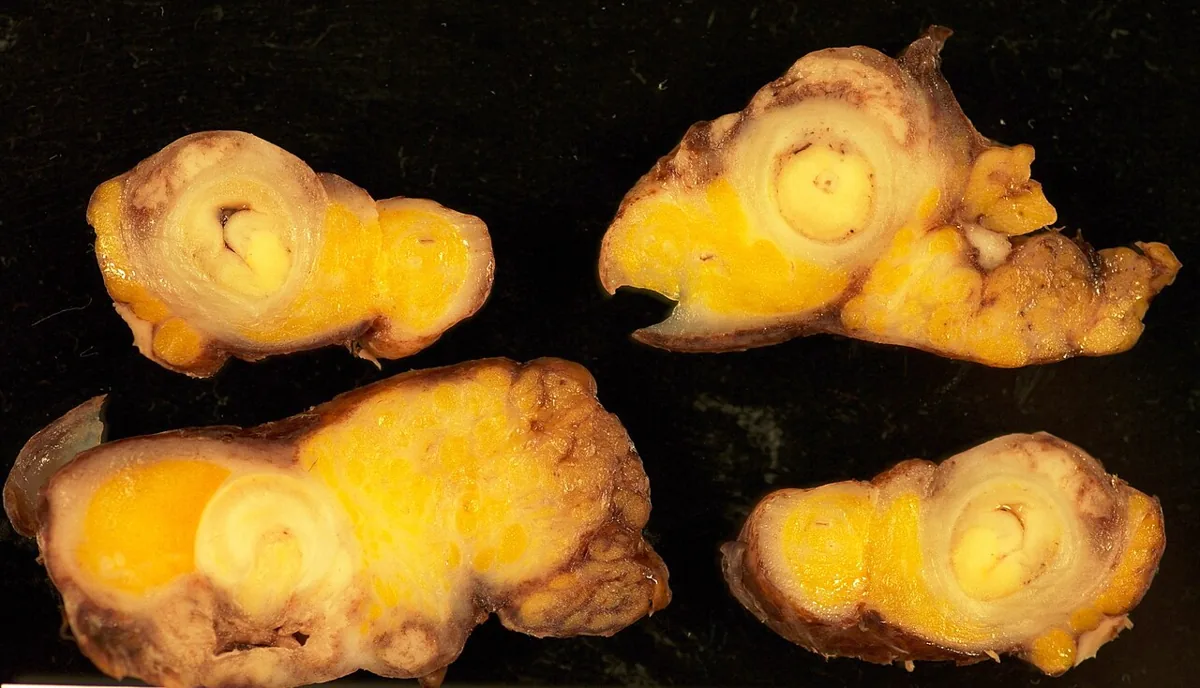 Gross specimen
Definition
Neuroendocrine tumors (NETs) arise from neural crest cells in the gastrointestinal tract, pancreas, bronchi and rarely the genitourinary tract. Neuroendocrine neoplasms (NENs) are classified as well-differentiated NETs or poorly differentiated neuroendocrine carcinomas (NECs, small cell or large cell). NETs either secrete hormones (endocrinologically active, functional) or are hormonally inactive.
Carcinoid syndrome is a complex of flushing, abdominal cramps and diarrhea caused by vasoactive substances released by the tumor (including serotonin, bradykinin, histamine, prostaglandins and polypeptide hormones) – typically in a metastatic intestinal neuroendocrine tumor.
Classification
- Grading: well-differentiated NETs G1 to G3 according to WHO 2019 by mitotic rate and Ki-67 proliferation index: G1 fewer than 2 mitoses per 2 mm² or Ki-67 below 3%, G2 2–20 mitoses or Ki-67 3–20%, G3 more than 20 mitoses or Ki-67 above 20%; the value yielding the higher grade determines the grade; poorly differentiated NECs with high proliferation
- Staging: AJCC TNM system with specific tables for well-differentiated NETs of the stomach, duodenum and ampulla, jejunum and ileum, pancreas, appendix, and colon and rectum; NECs are staged like the non-neuroendocrine carcinomas of the respective organ
- Functional pancreatic and gastrointestinal NETs by predominant hormone: gastrinoma (gastrin), vipoma (vasoactive intestinal peptide), glucagonoma (glucagon), insulinoma (insulin secretion); less often tumors producing ACTH or GRF
Occurrence & epidemiology
The most common sites of gastrointestinal NETs are the rectum, small intestine and pancreas; outside the digestive tract, NETs arise mainly in the lung. The likelihood of hormonal activity depends on the site of origin: it is highest for tumors of the ileum and proximal colon (40–50%), lower for bronchial, lower still for appendiceal NETs and essentially zero for rectal NETs. Metastases typically involve the liver and regional lymph nodes.
Aetiopathogenesis
Endocrinologically active NETs of the diffuse peripheral endocrine or paracrine system produce various amines and polypeptides. Carcinoid syndrome usually originates from serotonin-producing NETs of the ileum, less often from NETs of other parts of the gut (especially the appendix and rectum), pancreas, bronchi or rarely the gonads.
A serotonin-producing intestinal tumor usually causes carcinoid syndrome only after hepatic metastasis, because the released substances are rapidly degraded in the portal circulation (serotonin by hepatic monoamine oxidase). Liver metastases, however, release them via the hepatic veins directly into the systemic circulation; the products of primary pulmonary and ovarian NETs likewise do not pass through the portal circulation.
Effects: serotonin acts on smooth muscle and causes diarrhea, colic and malabsorption; histamine and bradykinin cause flushing through vasodilation. Some patients develop endocardial fibrosis of the right heart. Functional syndromes also occur in multiple endocrine neoplasia type 1 (MEN 1); about 6% of vipomas occur as part of MEN 1.
Clinical features
Hormonally inactive tumors
Hormonally inactive NETs present with pain, bleeding into the bowel lumen or bowel obstruction.
Carcinoid syndrome
- Flushing: the most common and often earliest sign; uncomfortable reddening mainly of the head and neck, often triggered by emotional stress, food, hot beverages or alcohol; striking color changes from pallor to erythema to a violaceous hue
- Abdominal cramps with recurrent diarrhea: often the main complaint; sometimes malabsorption
- Valvular changes of the right heart after several years (pulmonic stenosis, tricuspid regurgitation), audible as a heart murmur; left-sided lesions are rare because serotonin is degraded in the lungs
- wheezing due to bronchospasm in a few patients, decreased libido, erectile dysfunction
- rarely pellagra, because tryptophan is diverted to serotonin production
Functional pancreatic NETs
- Insulinoma: rare pancreatic beta-cell tumor; the main symptom is fasting hypoglycemia
- Gastrinoma: usually in the pancreas or duodenal wall; gastric acid hypersecretion with aggressive, hard-to-control peptic ulcers (Zollinger-Ellison syndrome), abdominal pain and diarrhea
- Glucagonoma: very rare alpha-cell tumor; hyperglycemia or glucose intolerance, characteristic rash (necrolytic migratory erythema), loss of body weight and anemia
- Vipoma: islet cell tumor producing vasoactive intestinal peptide; watery diarrhea, hypokalemia and achlorhydria (WDHA syndrome), sometimes flushing; more than half are malignant
Diagnosis
- 24-hour urinary 5-hydroxyindoleacetic acid (5-HIAA): confirms carcinoid syndrome; three days of abstaining from serotonin-containing foods beforehand (e.g. bananas, tomatoes, plums, avocados, pineapples, eggplant, walnuts), some drugs interfere with the test; normal below 52 µmol/day, in carcinoid syndrome usually above 260 µmol/day
- Serum chromogranin A: established NET marker; combined with 5-HIAA, sensitivity increases
- Hormone measurements in functional tumors: insulinoma – 48- or 72-hour fast with measurement of glucose and insulin levels; gastrinoma – serum gastrin; glucagonoma – glucagon; vipoma – serum VIP
- Localization and staging: multiphase CT of the abdomen and pelvis and/or contrast-enhanced MRI, angiography; receptor PET/CT with 68Ga-DOTATATE with high sensitivity, also for hormonally inactive tumors and metastases; endoscopic ultrasound for pancreatic NETs
- Histology: diagnosis and grading based on tumor tissue (biopsy)
Keep learning in the app
Further reading (open access)
- MSD Manual Professional: Overview of Gastrointestinal and Pancreatic Neuroendocrine Tumors (NETs)
- MSD Manual Professional: Gastrointestinal Neuroendocrine Tumors and Carcinoid Syndrome
- MSD Manual Professional: Insulinoma
- MSD Manual Professional: Gastrinoma
- MSD Manual Professional: Glucagonoma
- MSD Manual Professional: Vipoma
Cross-references
Note: Learning content for medical education – not a treatment recommendation and no substitute for diagnosis or treatment decisions in individual cases. Treatment and management are deliberately not covered on this page.