Acute lymphoblastic leukemia (ALL)
- Synonyms
- acute lymphocytic leukemia, childhood leukemia, blood cancer, B-ALL, T-ALL
- Specialty
- Internal medicine · Haematology & oncology
- Images
- Blood smear & cytology 3
- Last updated
- 10/2026 · Dr. Pascal Bafteh
Contents
Images (3)
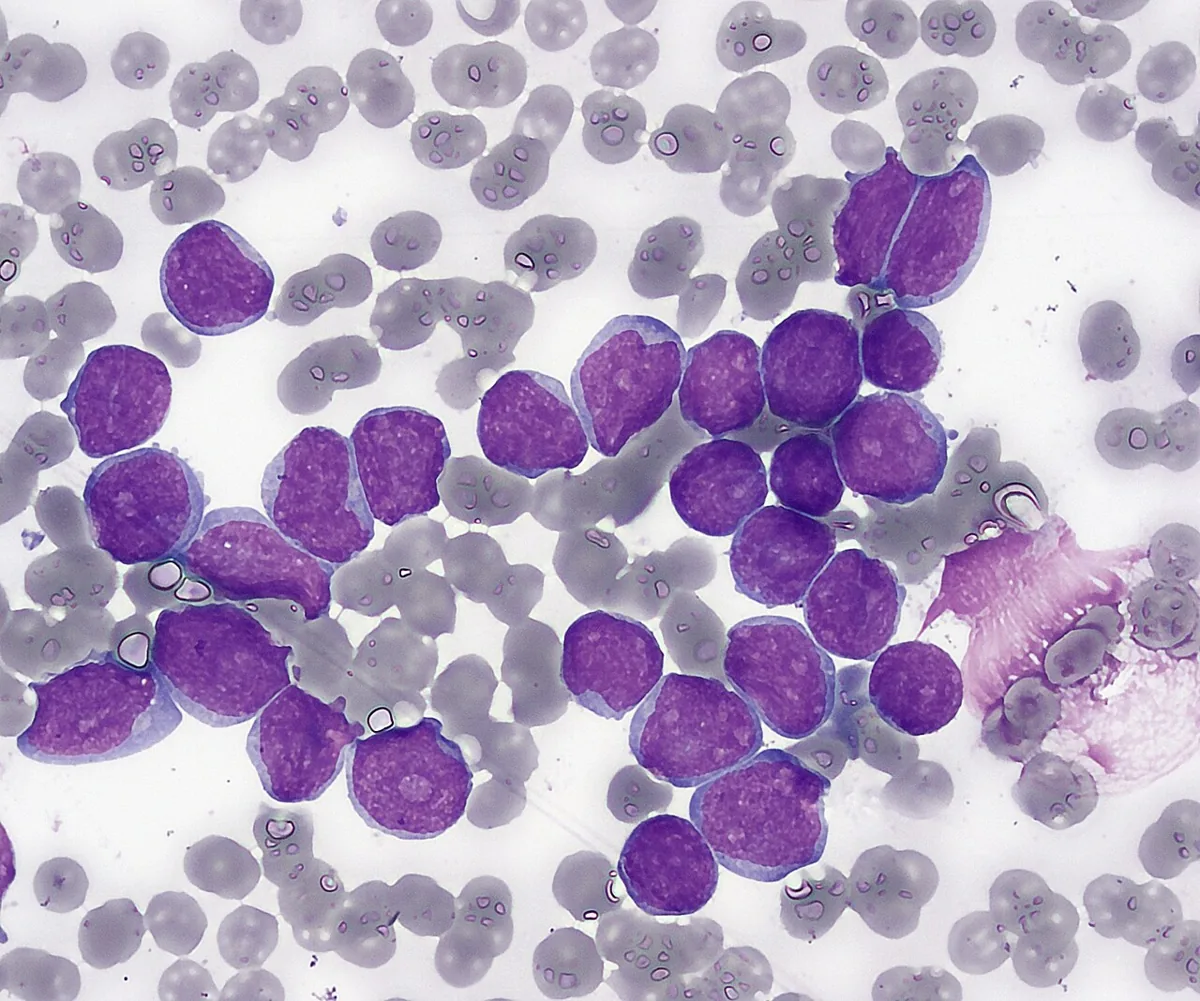 Blood smear & cytology
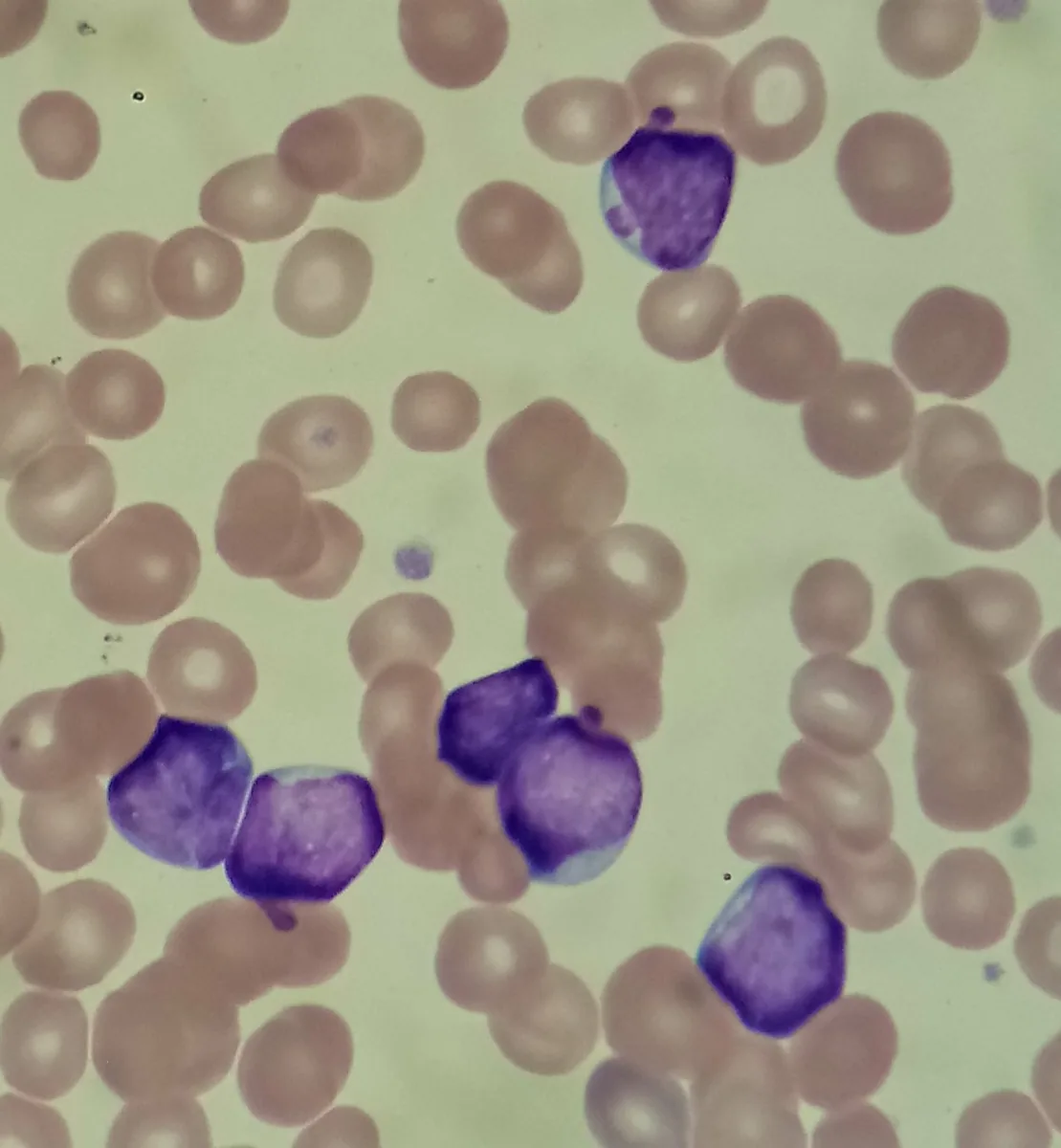 Blood smear & cytology
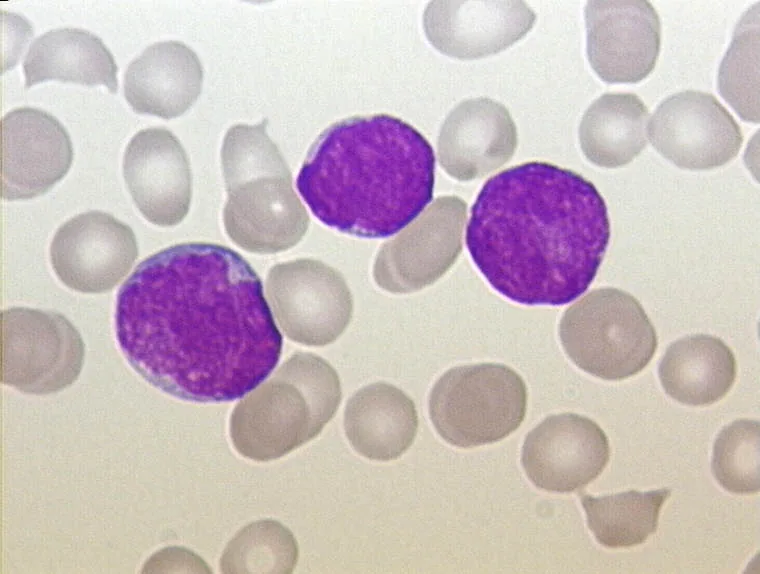 Blood smear & cytology
Definition
Acute lymphoblastic leukemia (ALL) is a malignant disease of lymphoid precursor cells. Uncontrollably proliferating lymphoblasts displace normal hematopoiesis and may infiltrate the central nervous system and the testes. ALL is the most common cancer in childhood but occurs at any age.
Classification
- By cell lineage: B-lymphoblastic leukemia/lymphoma (B-ALL/LBL) and T-lymphoblastic leukemia/lymphoma (T-ALL/LBL).
- The term leukemia is used when blood and bone marrow are involved, lymphoblastic lymphoma when involvement is mainly extramedullary.
- The WHO classification additionally considers genetic features, clinical presentation, morphology, and immunophenotype.
Occurrence & epidemiology
About 60 % of all ALL cases occur in children. Incidence peaks at age 2 to 5 years, with a second peak after age 50. In children, ALL accounts for about 75 % of all leukemias.
Aetiopathogenesis
The cause is a series of acquired genetic aberrations in a lymphoid precursor cell. Risk factors are ionizing radiation, certain chemicals such as benzene, and congenital syndromes such as Down syndrome, Fanconi anemia, Bloom syndrome, and ataxia-telangiectasia.
Typical cytogenetic abnormalities:
- t(9;22)/BCR::ABL1 (Philadelphia chromosome): in about 25 % of adults, about 5 % of children
- High hyperdiploidy (51–65 chromosomes): about 25 % of children
- t(12;21)/ETV6::RUNX1: 20–25 % of children
- Hypodiploidy: about 5 %
Clinical features
Symptoms are often present for only days to weeks before diagnosis:
- Anemia: fatigue, weakness, pallor, exertional dyspnea, tachycardia
- Thrombocytopenia: petechiae, bruising, nose and gum bleeding, mucosal bleeding
- Granulocytopenia: fever and severe or recurrent infections
- Organ infiltration: enlargement of the liver, spleen, and lymph nodes
- Bone and joint pain from bone marrow and periosteal infiltration, especially in children
- CNS involvement is common: cranial nerve palsies, headache, visual and auditory symptoms, altered mental status
Diagnosis
- Blood count and smear: pancytopenia with peripheral blasts; blasts up to 90 % of white cells. The white cell count is increased in about half of patients and normal or low in the other half.
- Bone marrow: diagnosis at ≥ 20 % lymphoid blasts among nucleated cells; typical blast count 25–95 %.
- Auer rods are never present in ALL.
- Cytochemistry: terminal deoxynucleotidyl transferase (TdT) positive in lymphoid cells.
- Immunophenotyping: CD19, CD20, and CD22 in B-cell origin, CD3 in T-cell origin.
- Cytogenetics and molecular genetics, e.g., detection of BCR::ABL1.
Keep learning in the app
Further reading (open access)
Cross-references
More topics: Haematology & oncology
- Anemia (classification and work-up)
- Hemolytic anemias
- Acute myeloid leukemia (AML)
- Iron deficiency anemia
- Non-Hodgkin lymphomas
- Vitamin B12 deficiency and pernicious anemia
- Multiple myeloma
- Paraneoplastic syndromes
- Autoimmune hemolytic anemia (AIHA)
- Febrile neutropenia
- Immune thrombocytopenia (ITP)
- Renal anemia
Note: Learning content for medical education – not a treatment recommendation and no substitute for diagnosis or treatment decisions in individual cases. Treatment and management are deliberately not covered on this page.