Acute limb ischemia
Board exam relevance: in 1 of 105 exam reports · rank 181- Synonyms
- acute arterial occlusion, ALI, arterial embolism of the leg, cold leg
- Specialty
- Internal medicine · Angiology
- Images
- Clinical 1 · Angiography 1
- Last updated
- 10/2026 · Dr. Pascal Bafteh
Contents
Images (2)
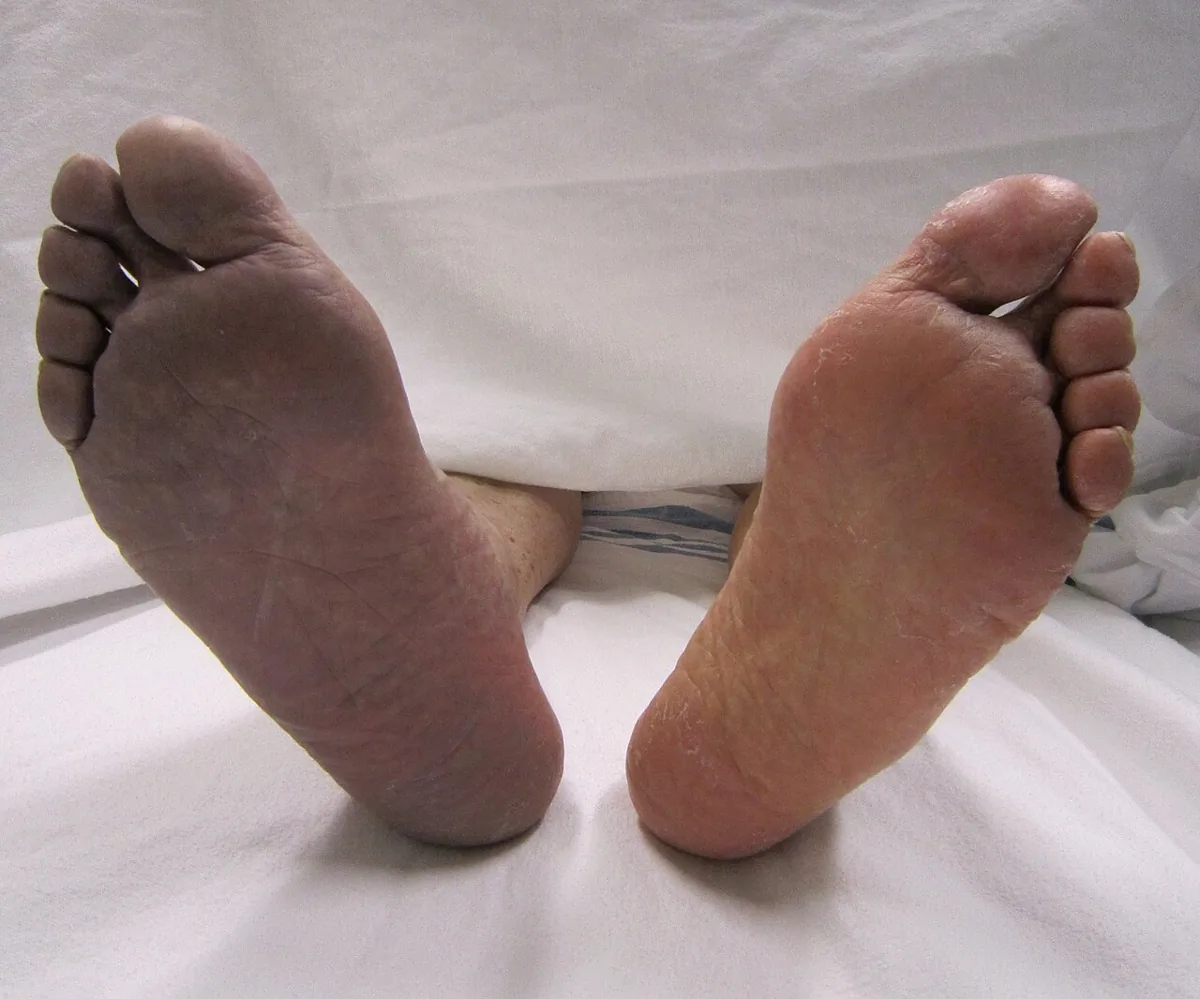
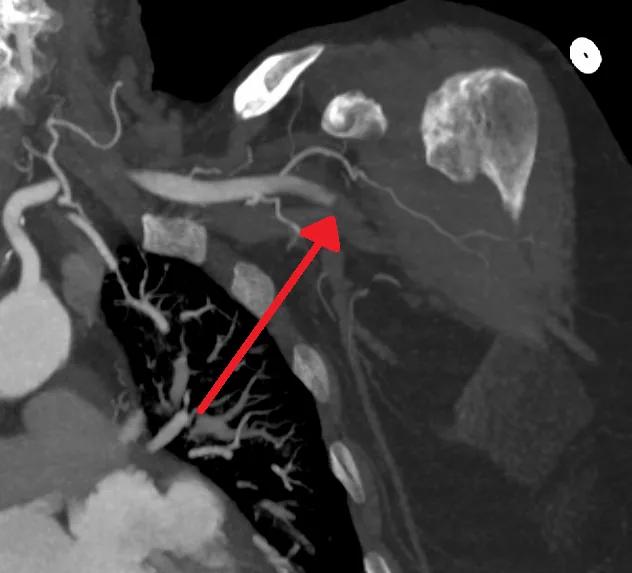 Angiography
Definition
Acute limb ischemia is a sudden occlusion of a limb artery with acute hypoperfusion of the dependent tissues. It is a vascular emergency, because outcomes are better the earlier the diagnosis is made.
It differs from chronic limb-threatening ischemia in advanced peripheral artery disease, which develops slowly.
Aetiopathogenesis
An artery can be acutely occluded by:
- Thrombosis: rupture and thrombosis of an atherosclerotic plaque
- Embolism: embolus from the heart or from the thoracic or abdominal aorta
- Aortic dissection
- Acute compartment syndrome
A special form is cholesterol embolisation from atherosclerotic vessels, for example after cardiac catheterisation; it causes painful blue toes and ulceration. Massive venous thrombosis (phlegmasia cerulea dolens) can also cause acute limb ischemia by completely blocking venous outflow.
Clinical features
Typical is the sudden onset of the “5 Ps” in one limb:
- Pain: severe pain
- Pallor: pale limb
- Paraesthesia: sensory disturbance up to anesthesia
- Poikilothermia: cold limb
- Pulselessness: absent pulses
Severe cases lead to loss of motor function; paralysis is often considered the sixth “P”. After 6–8 hours the muscles may become tender on palpation.
Pain is usually the earliest but a non-specific symptom. Pain out of proportion to the physical findings is characteristic, especially with sudden onset and in people with known or suspected peripheral artery disease.
Diagnosis
The diagnosis is usually made clinically.
- Pulse status: the occlusion can be roughly localised to the arterial bifurcation just distal to the last palpable pulse – for example at the femoral bifurcation if the femoral pulse is palpable, or at the popliteal bifurcation if the popliteal pulse is palpable
- Assessment of sensation and motor function: sensory loss and paralysis indicate the extent of ischemia
- Angiography: confirms the site of the occlusion and shows whether collaterals are present
Keep learning in the app
Further reading (open access)
Cross-references
Note: Learning content for medical education – not a treatment recommendation and no substitute for diagnosis or treatment decisions in individual cases. Treatment and management are deliberately not covered on this page.