Peripheral artery disease (PAD)
Board exam relevance: in 3 of 105 exam reports · rank 111- Synonyms
- PAD, PAOD, peripheral arterial occlusive disease, intermittent claudication, poor circulation in the legs
- Specialty
- Internal medicine · Angiology
- Images
- Clinical 2 · Angiography 1 · X-ray 1 · Histology 1
- Last updated
- 10/2026 · Dr. Pascal Bafteh
Contents
Images (5)
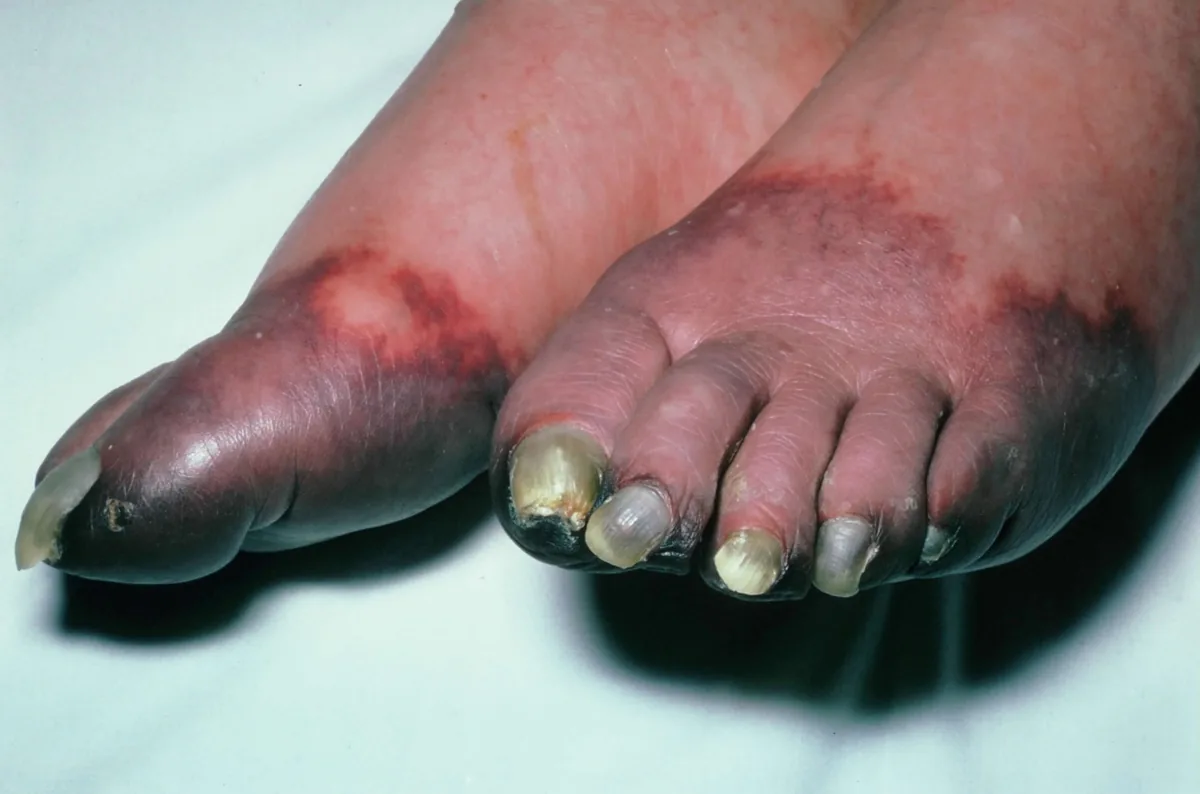
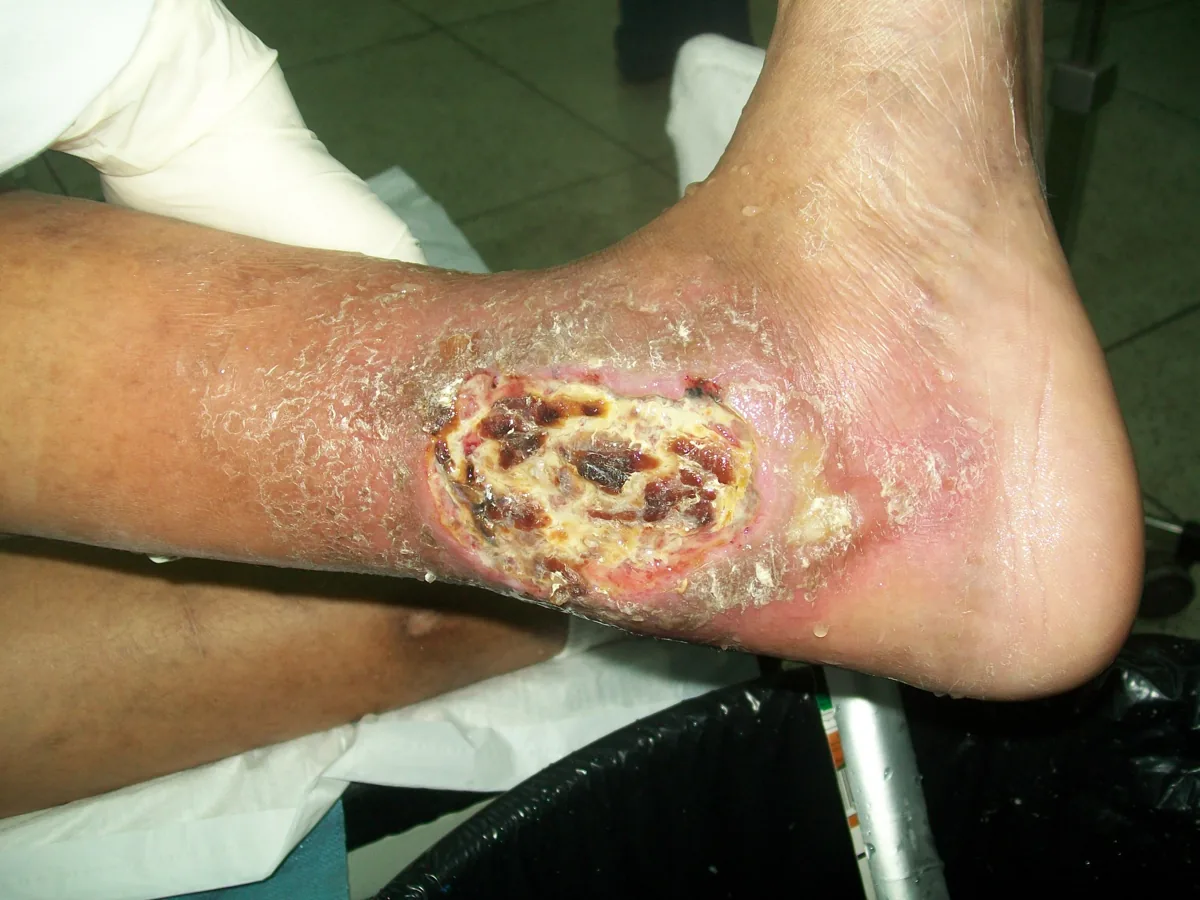
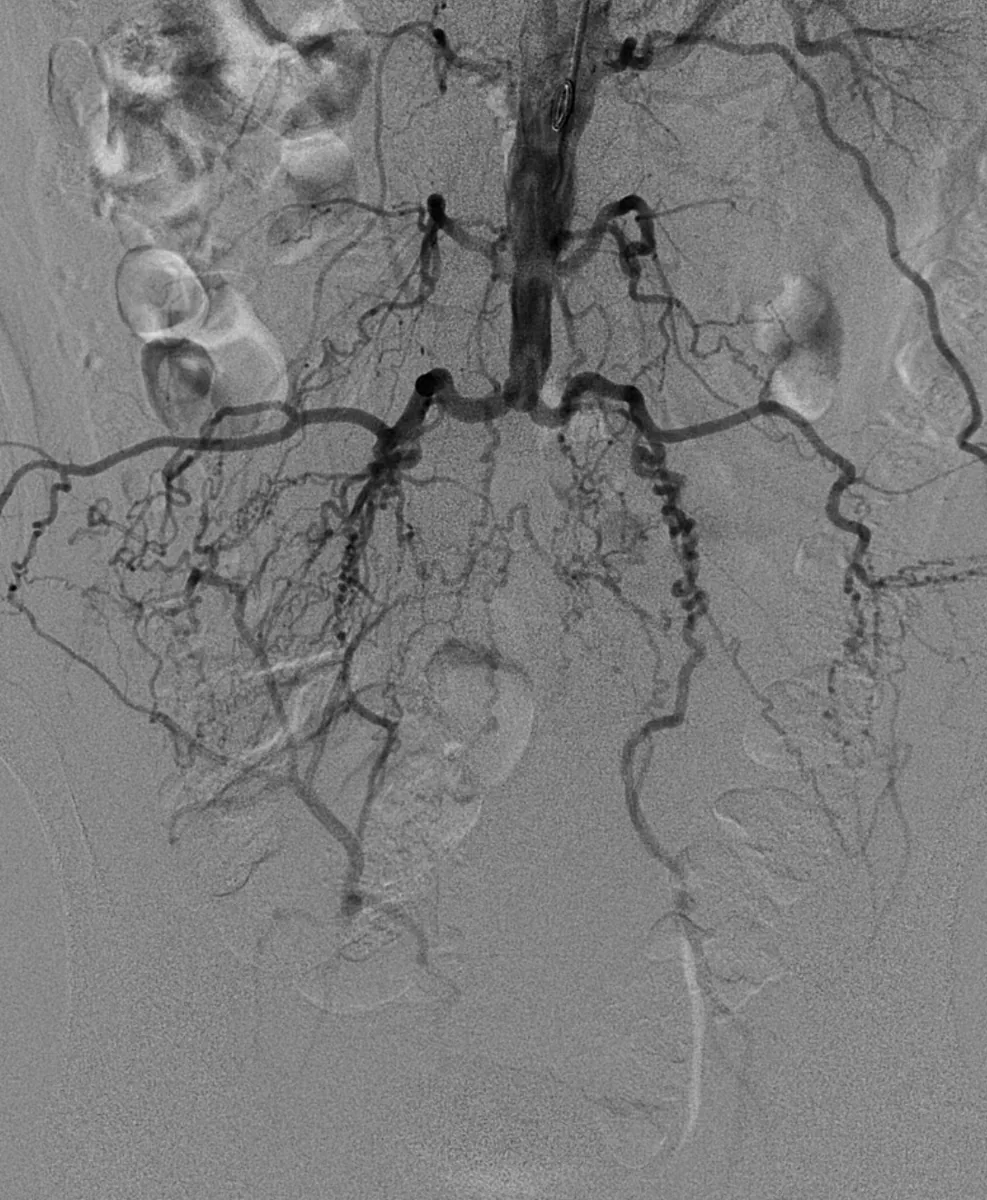 Angiography
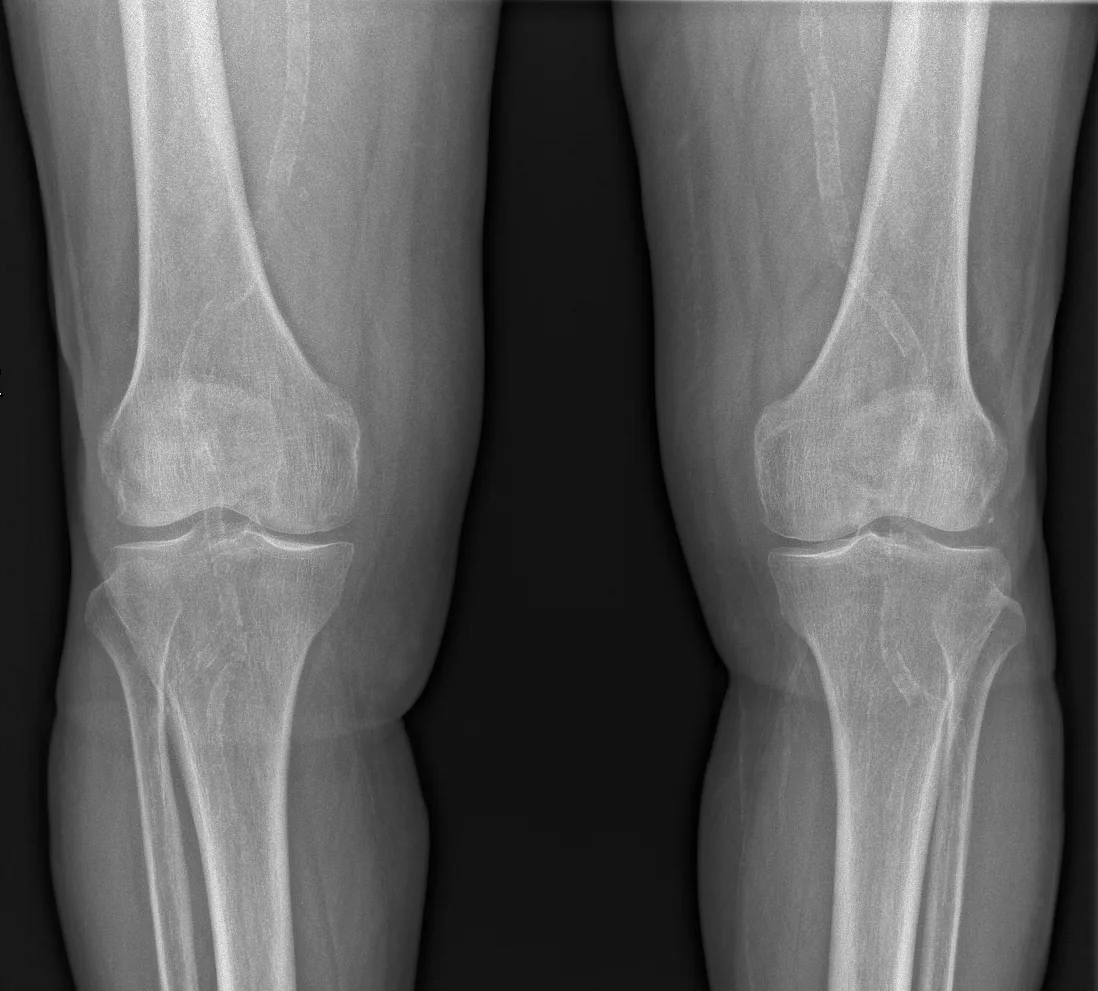 X-ray
X-ray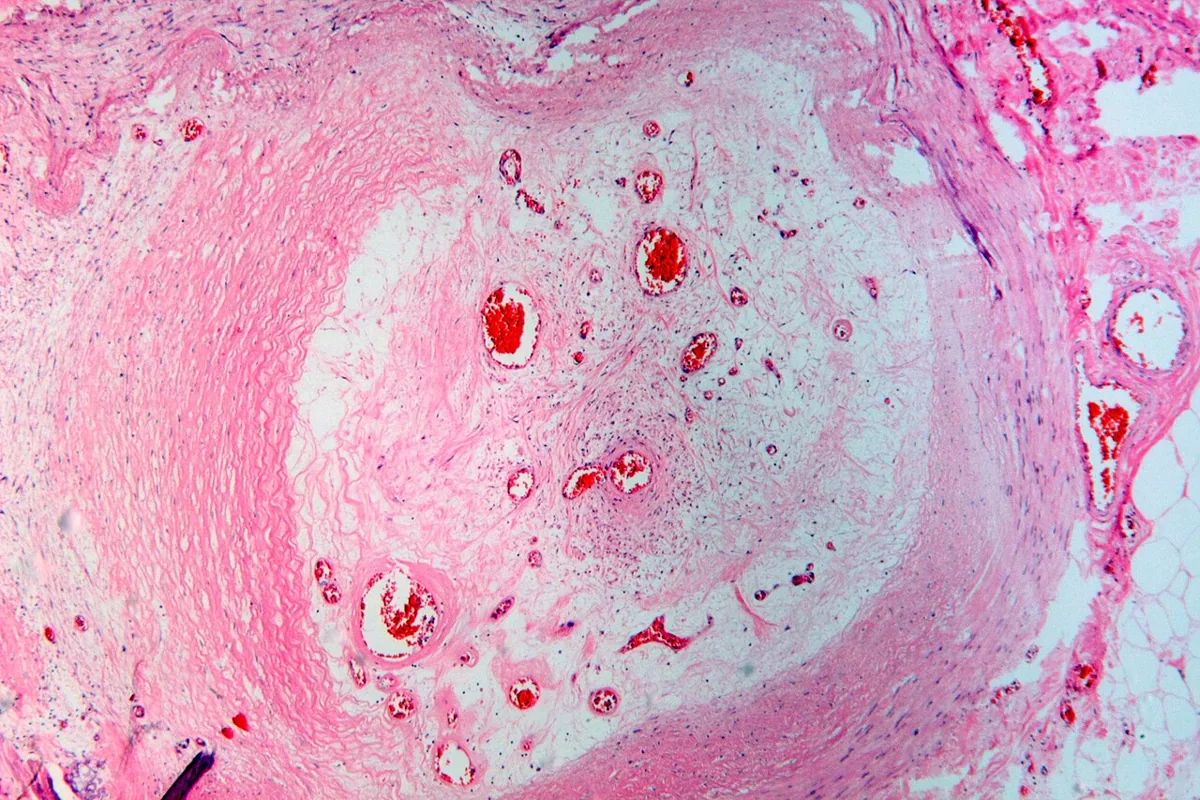 Histology
Definition
Peripheral artery disease (PAD) is impaired blood flow in the arteries supplying the limbs – either gradual, due to a stenosis, or complete, due to an occlusion. The legs are affected in the vast majority of cases; PAD of the arms mainly involves the left subclavian artery.
About 95 % of cases are caused by atherosclerosis. Myocardial infarction, stroke and PAD are different manifestations of the same systemic disease: most patients also have significant coronary artery disease or cerebrovascular atherosclerosis.
Classification
Fontaine stages
- Stage I: asymptomatic despite detectable stenosis.
- Stage IIa: claudication, walking distance > 200 m.
- Stage IIb: pain-free walking distance < 200 m.
- Stage III: rest pain (nocturnal, relieved by dependency).
- Stage IV: trophic lesions / gangrene — clinically often corresponds to CLTI.
Further classifications
The internationally used Rutherford classification distinguishes:
- Category 0: asymptomatic
- Categories 1–3: mild, moderate and severe claudication
- Category 4: ischemic rest pain
- Category 5: minor tissue loss
- Category 6: major tissue loss
The stages with rest pain or tissue loss (Fontaine III–IV) are now referred to as chronic limb-threatening ischemia (CLTI).
Symptoms occur at different sites depending on the level of the occlusions: aorto-iliac disease causes pain in the buttock, hip and thigh, femoropopliteal disease typically causes calf pain, and disease of the lower leg arteries causes pain in the sole of the foot.
Occurrence & epidemiology
The overall prevalence of PAD is reported as 3–10 % and is strongly age-dependent: from the age of 60 it is about 10 %, from 70 years 15–20 %. For every person with claudication, there are about four people with asymptomatic PAD.
In younger age groups claudication is more common in men; in older age there is hardly any difference between the sexes. Women are usually older at diagnosis and more often have atypical symptoms.
Aetiopathogenesis
The risk factors are those of atherosclerosis:
- smoking and other forms of tobacco use, including passive smoking
- diabetes mellitus
- arterial hypertension
- dyslipidemia (high LDL, low HDL cholesterol)
- older age and male sex
- chronic kidney disease: the frequency of PAD rises as kidney function declines
Atherosclerotic plaques narrow the vessel lumen. Symptoms often only appear once the diameter is reduced by 50–70 %. During exercise, blood flow cannot be increased sufficiently, resulting in reversible, exercise-induced muscle ischemia, comparable to angina pectoris.
Inflammatory, genetic and traumatic causes together account for about 5 % of cases. In diabetes mellitus, Mönckeberg medial calcification can make the arteries rigid and poorly compressible.
Clinical features
The leading symptom is intermittent claudication: a painful, cramping or tired feeling in the legs during walking that is quickly relieved by rest. It usually occurs in the calf but, depending on the level of occlusion, may also affect the foot, thigh, hip or buttock. More than 20 % of patients have no symptoms, and a similar proportion have atypical symptoms.
In CLTI, ischemic rest pain develops, usually in the forefoot. It worsens when the leg is elevated (hence often at night) and eases when the leg is lowered. Typical findings are:
- thin, pale, atrophic skin with hair loss, cool feet
- redness of the dependent foot and pallor on elevation
- ischemic ulcers on the toes or heel, often surrounded by black, necrotic tissue (dry gangrene)
- with infection, wet gangrene with rapidly spreading soft-tissue inflammation
In polyneuropathy, for example in diabetes mellitus, ulcers may be painless. Occlusion of the aortic bifurcation and iliac arteries can additionally cause erectile dysfunction in men (Leriche syndrome).
Diagnosis
- History and basic examination: inspection, palpation of pulses on both sides and auscultation of the iliac, femoral and popliteal arteries; pulse palpation alone is not sufficient for detection
- Ratschow elevation test: lying supine, the patient raises the legs and rotates the feet for two minutes; normally the foot flushes within 5 seconds of sitting up, and the veins fill within the following 5 seconds. In PAD the sole turns pale, and flushing and venous filling are delayed
- Ankle-brachial index (ABI): ratio of systolic ankle artery pressure to systolic arm artery pressure. An ABI ≤ 0.9 is regarded as diagnostic of PAD
- Severity by ABI: above 0.9 normal, 0.75–0.9 mild, 0.5 to below 0.75 moderate, below 0.5 severe PAD (critical ischemia)
- Medial calcification: an ABI above 1.3 is falsely high; this applies to 10–30 % of people with diabetes. Toe pressure and the toe-brachial index are then helpful
- Exercise testing: standardised measurement of walking distance, e.g. on a treadmill at 3.2 km/h and a 12 % incline; a fall in ankle pressure of more than 20 % after exercise reveals PAD that is masked at rest
- Toe pressure and transcutaneous oxygen pressure (tcPO₂): a great toe pressure ≤ 30 mmHg and a tcPO₂ below 30 mmHg indicate critical ischemia
- Color duplex ultrasound: the central imaging method for assessing the aorta, iliac and leg arteries
- CT and MR angiography, digital subtraction angiography: when duplex findings are inconclusive, or to depict the entire arterial tree
Keep learning in the app
Further reading (open access)
Cross-references
Note: Learning content for medical education – not a treatment recommendation and no substitute for diagnosis or treatment decisions in individual cases. Treatment and management are deliberately not covered on this page.