IgA vasculitis (Henoch-Schönlein purpura)
- Synonyms
- IgA vasculitis, Henoch-Schönlein purpura, HSP
- Specialty
- Dermatology · Vascular skin disorders
- Images
- Clinical 4 · Histology 1
- In the app
- 5 flashcards
- Last updated
- 10/2026 · Dr. Pascal Bafteh
Contents
Images (5)
 Histology
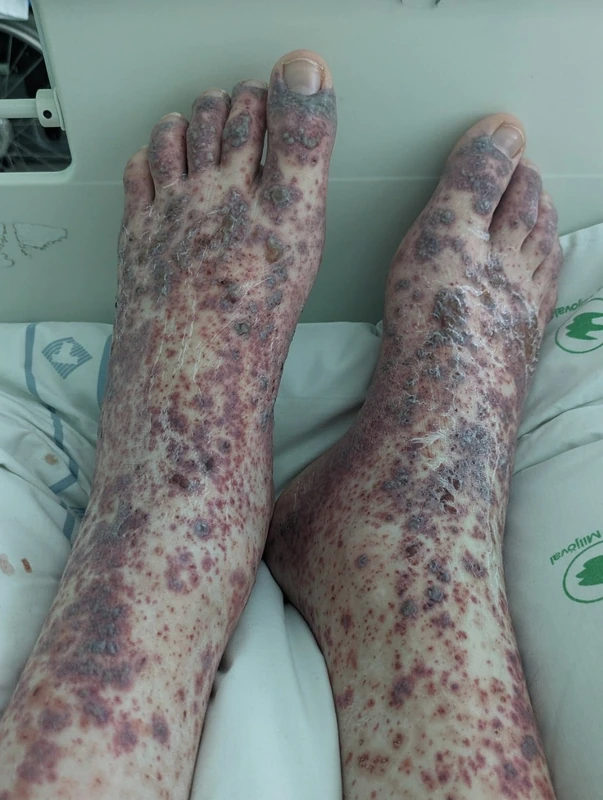
Definition
IgA vasculitis (formerly Henoch-Schönlein purpura) is a small-vessel vasculitis with deposition of IgA-containing immune complexes in the walls of small vessels of the skin, joints, gut and kidneys.
- Most common vasculitis in childhood. Tetrad: Purpura + arthritis + abdominal pain + GN.
- DIF: Perivascular IgA deposition.
Occurrence & epidemiology
About 75% of cases occur in children under 10 years; 15–40% of children have at least one recurrence. In adults the disease is less frequent but often more severe, with kidney damage more common.
Clinical features
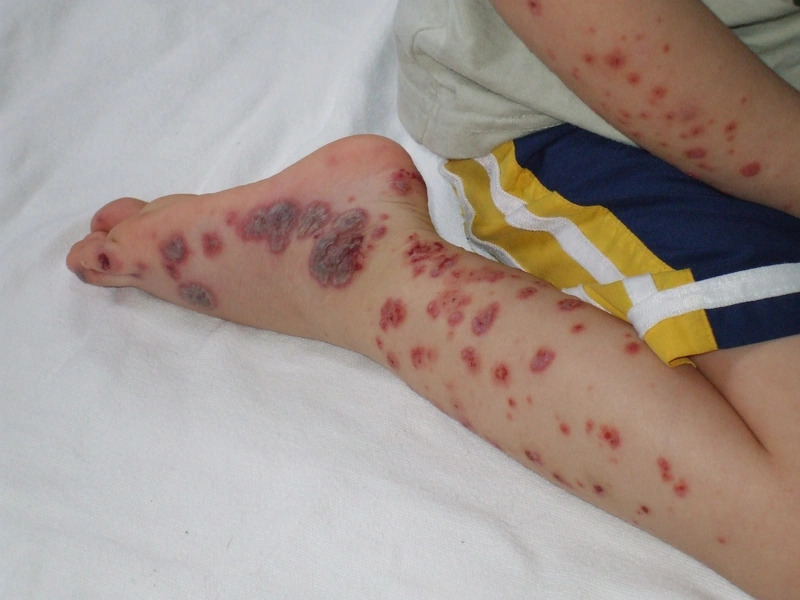
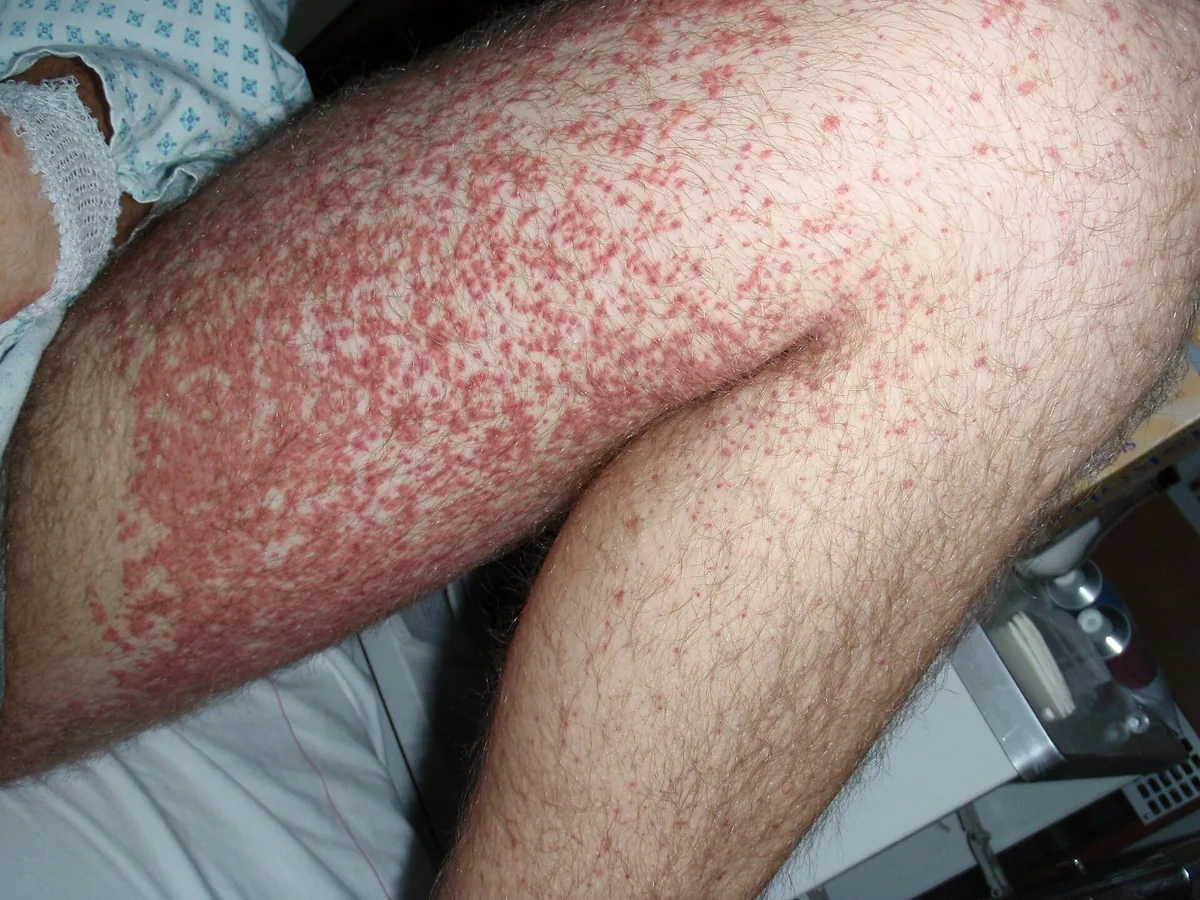
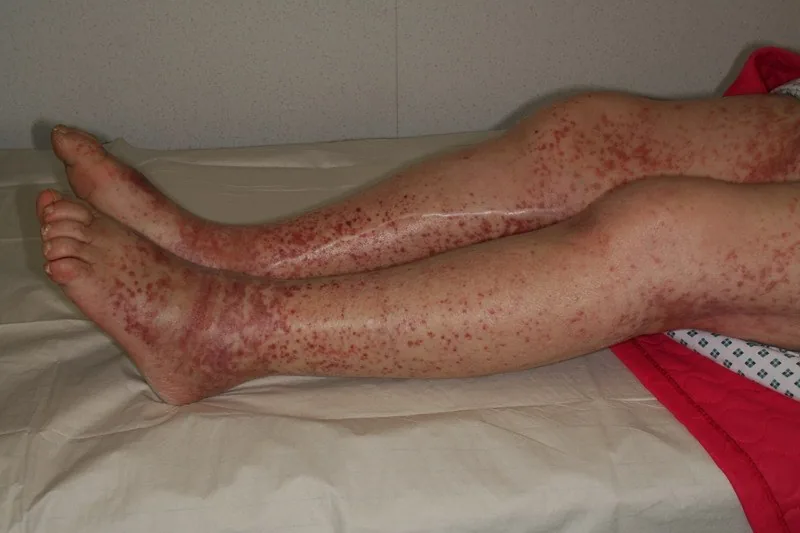
- Palpable purpura, symmetrical, accentuated on the lower legs, buttocks, elbows and knees, sometimes with blisters or ulcers; present in virtually all patients.
- Arthritis (in about 75%, usually one to four joints, especially ankles and knees), abdominal pain (in half to three quarters, preceding the rash in up to one third) with diarrhoea or bowel bleeding; possible complications are intussusception and orchitis.
- Renal involvement in up to 50%, usually mild and self-limiting, usually within days to one month of the other symptoms; 1–5% progress to end-stage kidney failure in the long term – the kidneys determine the long-term course.
Diagnosis
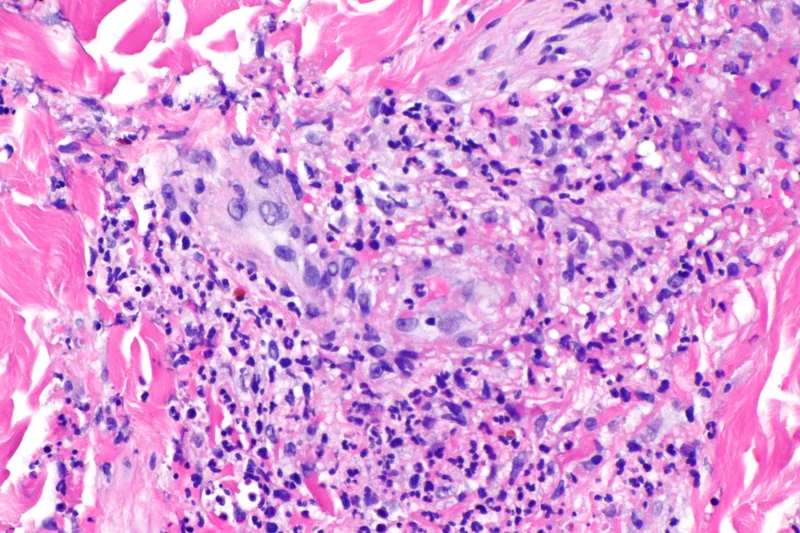
- Skin biopsy (often unnecessary in children): leucocytoclastic vasculitis with IgA deposits in the vessel walls.
- Urine and blood tests for kidney involvement and blood pressure measurement, repeated at regular intervals initially.
Differential diagnoses
 Purpura fulminans
 Leukocytoclastic vasculitis
 Erythema migrans (Lyme disease)
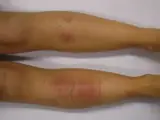 Erythema nodosum
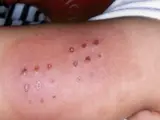 Kawasaki disease (mucocutaneous lymph node syndrome)
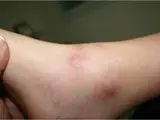 Polyarteritis nodosa
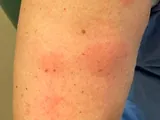 Urticarial vasculitis (normocomplementaemic and hypocomplementaemic)
Image credits for the thumbnails
- Purpura fulminans: Глей А.І., Шкурба А.В., Public domain, via Wikimedia Commons · Public domain · Source
- Leukocytoclastic vasculitis: James Heilman, MD, “LV22010 (leukocytoclastic vasculitis)”, CC BY-SA 3.0, via Wikimedia Commons · CC BY-SA 3.0 · Source
- Erythema migrans (Lyme disease): James Gathany (CDC), “Erythema migrans - erythematous rash in Lyme disease - PHIL 9875”, Public Domain, via Wikimedia Commons · Public domain · Source · CDC PHIL #9875
- Erythema nodosum: James Heilman, MD, “ENlegs”, CC BY-SA 3.0, via Wikimedia Commons · CC BY-SA 3.0 · Source
- Kawasaki disease (mucocutaneous lymph node syndrome): Dong Soo Kim, CC BY-SA 4.0, via Wikimedia Commons · CC BY-SA 4.0 · Source
- Polyarteritis nodosa: Ruby Haviv, Maya Capua, Jacob Amir, Liora Harel, “Cutaneous polyarteritis nodosa”, CC BY 4.0, via Wikimedia Commons · CC BY 4.0 · Source
- Urticarial vasculitis (normocomplementaemic and hypocomplementaemic): Young JN, Rivera-Oyola R, Poplausky D et al. (JAAD Case Rep 2024), CC BY 4.0, via PubMed Central (PMC10757233) · CC BY 4.0 · Source
Treatment principles
- In children, IgA vasculitis is usually self-limiting; treatment is supportive, with analgesics for joint and muscle pain; general immobilisation is not needed.
- Severe courses with gastrointestinal or renal involvement require systemic glucocorticoids, if necessary further immunosuppressants, and interdisciplinary care with (paediatric) nephrology.
- Because nephritis may develop, sometimes with delay, urine and blood pressure monitoring during follow-up is important.
Specific treatment regimens with drugs and doses are covered in the DermaFuchs app.
Keep learning in the app
References (selection)
Cross-references
Mentioned in
Keep learning: test yourself
One question from the DermaFuchs app on IgA vasculitis (Henoch-Schönlein purpura) – tap an answer.
Question 1 of 1
What immunofluorescence finding is characteristic of Henoch-Schönlein purpura?
Answer
Correct: Perivascular IgA deposition. Perivascular IgA deposition is a hallmark of Henoch-Schönlein purpura, detected via direct immunofluorescence.
More questions like these – with explanations and spaced repetition – in the app.
Note: This page is intended for medical education and does not replace diagnosis or treatment decisions in individual cases.