Erythropoietic protoporphyria
Exam relevance: in 1 of more than 50 board exam reports · rank 93
- Synonyms
- EPP, Protoporphyrie, X-chromosomale Protoporphyrie, XLPP, X-linked protoporphyria, light sensitivity pain
- Specialty
- Dermatology · Metabolic skin disorders
- Images
- Clinical 2 · Histology 1
- In the app
- 2 flashcards
- Last updated
- 10/2026 · Dr. Pascal Bafteh
Contents
Images (3)
 Histology
Definition
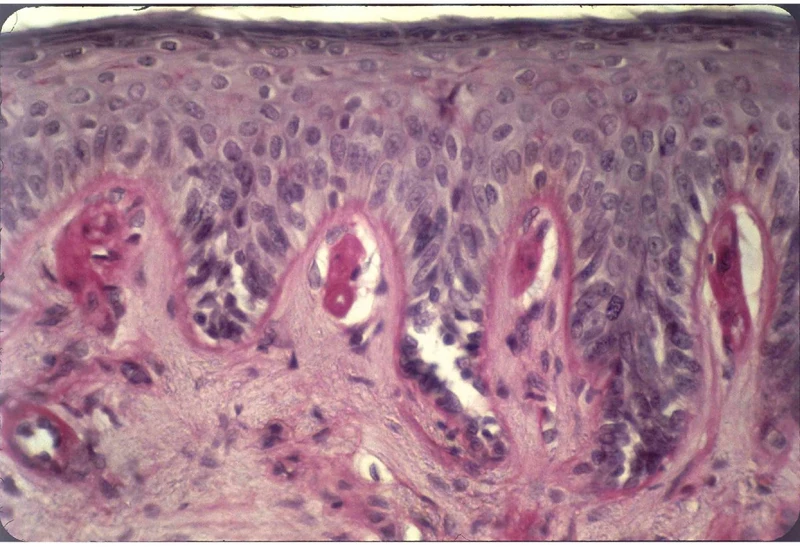
Erythropoietic protoporphyria (EPP) is an inherited cutaneous porphyria. Reduced activity of the haem synthesis enzyme ferrochelatase (gene FECH) leads to accumulation of protoporphyrin IX in the bone marrow, red blood cells, plasma, skin and liver. On exposure to visible light, protoporphyrin is released from the red cells into the skin and causes phototoxic reactions.
Classification
- EPP (about 90% of cases with this phenotype): ferrochelatase deficiency, autosomal recessive – usually one disease-causing FECH variant together with a low-expressing second allele, less often two defective alleles.
- X-linked protoporphyria (XLPP) (about 10%): gain-of-function variants of erythroid-specific delta-aminolaevulinic acid synthase 2 (ALAS2); clinically nearly identical, often with more severe photosensitivity and liver disease; heterozygous females range from asymptomatic to the phenotype of affected males.
- Very rarely acquired in myelodysplasia or myeloid leukaemia.
Occurrence & epidemiology
EPP is the second most common cutaneous porphyria. Its prevalence is given as about 1 in 75,000 to 1 in 100,000; an analysis of the UK Biobank found about 1 in 17,000, suggesting underdiagnosis. Males and females are equally affected, and the family history is usually negative.
Clinical features
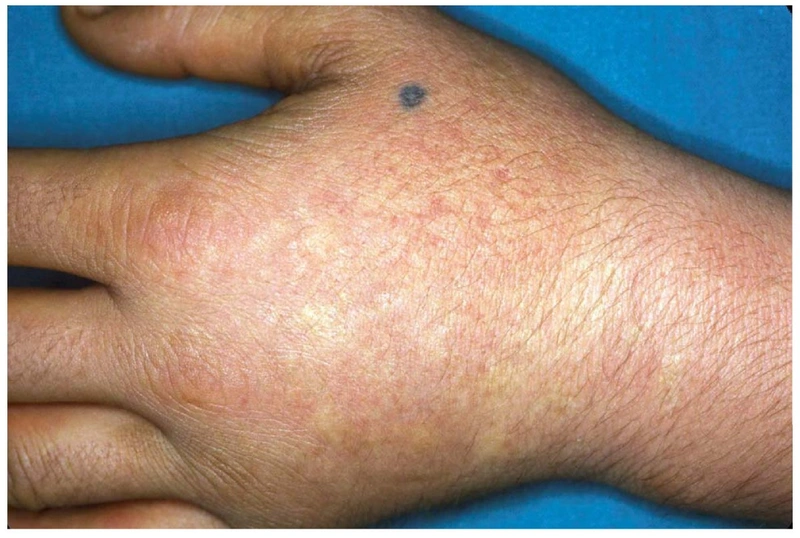
- Onset usually in infancy or early childhood: seconds to hours after sun exposure, burning, often severe pain on the backs of the hands and feet, face and ears, which can last for days; toddlers cry in the sun or in the car; worse in summer.
- Often little or nothing is visible; after prolonged exposure redness, swelling and crusting, rarely blisters; marked blistering and scarring as in porphyria cutanea tarda are absent. Children are therefore often wrongly labelled as having 'sun allergy'.
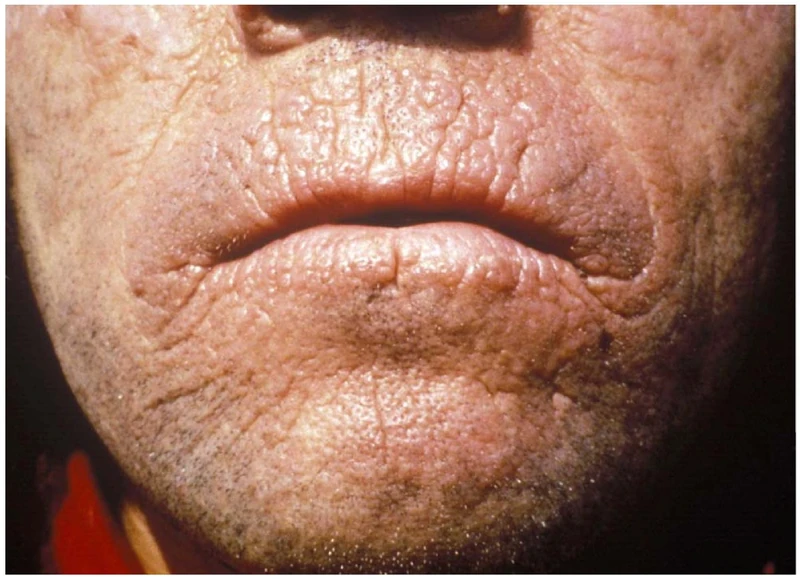
- Chronic changes: thickened, leathery skin especially over the knuckles, fine pitted scars on the cheeks and backs of the hands, linear perioral furrows.
- Complications: pigment gallstones (common) and chronic liver disease in about 10%, rarely with cirrhosis progressing to liver failure.
Diagnosis
- Raised protoporphyrin in red blood cells and plasma; the blood sample is sent protected from light (in aluminium foil). The peak plasma fluorescence is at 634 nm (excitation at 410 nm).
- In EPP, almost always more than 85% of red cell protoporphyrin is metal-free; more than 15% zinc protoporphyrin suggests XLPP.
- Urinary porphyrins and plasma coproporphyrin are normal.
- Genetic testing for variants in FECH or ALAS2.
- Gallstones in childhood are a clue to possible EPP. A skin biopsy is rarely needed, as the skin often looks normal.
Differential diagnoses
 Urticaria
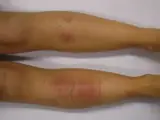 Erythema nodosum
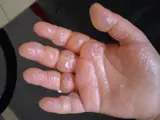 Phototoxic dermatitis
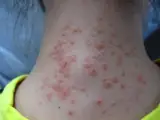 Hydroa vacciniforme
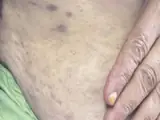 Erythema dyschromicum perstans (ashy dermatosis)
- Porphyria cutanea tarda
Image credits for the thumbnails
- Urticaria: Gzzz, “Urticaria child”, CC BY-SA 4.0, via Wikimedia Commons · CC BY-SA 4.0 · Source
- Erythema nodosum: James Heilman, MD, “ENlegs”, CC BY-SA 3.0, via Wikimedia Commons · CC BY-SA 3.0 · Source
- Phototoxic dermatitis: Dragan Marjanovic, “Phytophotodermatitis-Severe-Case”, CC BY-SA 3.0, via Wikimedia Commons · CC BY-SA 3.0 · Source
- Hydroa vacciniforme: Dr utsavsharma, “Hydroa-Vacciniforme-girl”, CC BY-SA 3.0, via Wikimedia Commons · CC BY-SA 3.0 · Source · cropped
- Erythema dyschromicum perstans (ashy dermatosis): Golani S, Khan S, Saeed Z et al. (Cureus 2025), CC BY 4.0, via PubMed Central (PMC12168861) · CC BY 4.0 · Source
Treatment principles
- The foundation is consistent protection from visible light, particularly in the blue-violet range, through clothing and behaviour, as conventional UV filters offer little protection.
- In specialised centres, treatment with a melanocortin receptor agonist can improve light tolerance.
- Because of the risk of protoporphyrin-induced liver damage, regular monitoring of liver function, porphyrin levels and vitamin D status as well as multidisciplinary care are necessary.
More on this topic in the DermaFuchs app.
Keep learning in the app
References (selection)
Cross-references
Keep learning
Keep learning with flashcards, exam questions and spot diagnoses in the DermaFuchs app – free, in your browser or as an app.
Related pages: Urticaria · Erythema nodosum · Phototoxic dermatitis
Note: This page is intended for medical education and does not replace diagnosis or treatment decisions in individual cases.