Cutaneous porphyrias
- Synonyms
- porphyria
- Specialty
- Dermatology · Metabolic skin disorders
- Images
- Clinical 4 · Histology 1
- In the app
- 5 flashcards
- Last updated
- 10/2026 · Dr. Pascal Bafteh
Contents
Images (5)
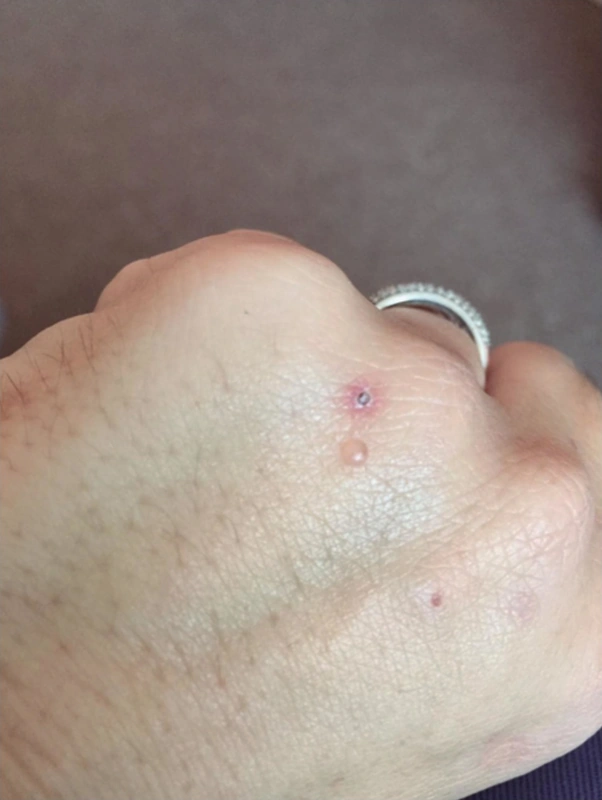
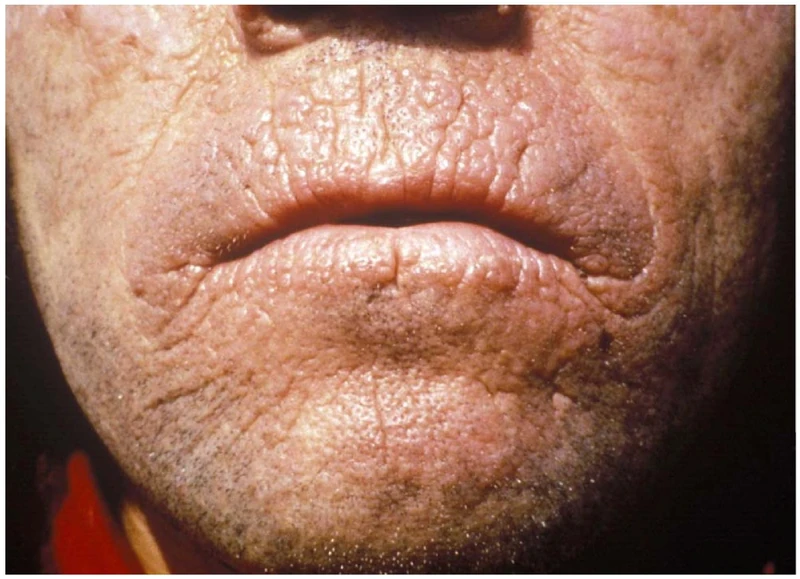
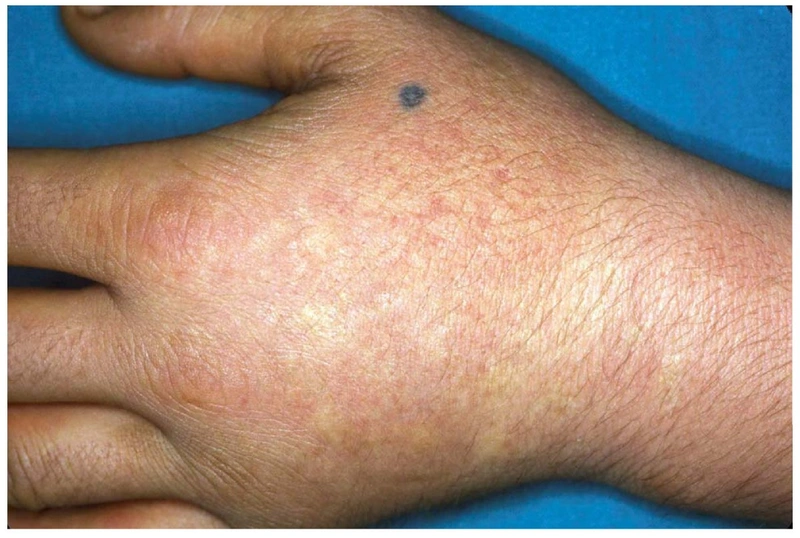
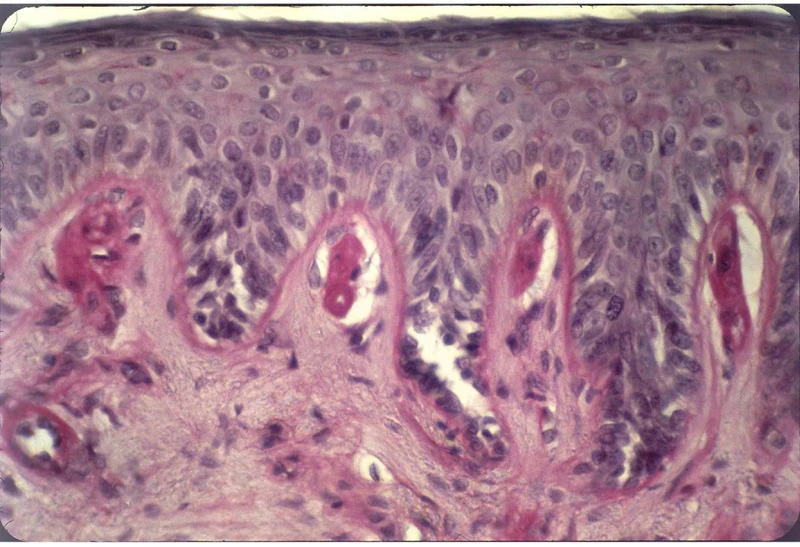 Histology
Classification
Porphyria cutanea tarda (PCT)
- Most common porphyria. Defect: Uroporphyrinogen decarboxylase. Triggers: Alcohol, estrogens, hepatitis C, iron.
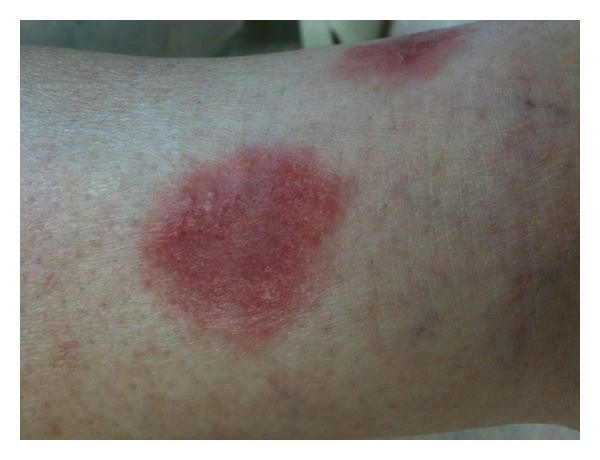
- Clinical features: Blisters + erosions + milia on sun-exposed areas. Facial hypertrichosis, scleroderma-like changes.
- Diagnostics: Porphyrins in 24h urine (Uroporphyrin ↑↑). Wood's light: Coral-red fluorescence of urine.
Acute intermittent porphyria (AIP)
- No skin involvement! Defect: Porphobilinogen deaminase.
- Clinical features: Acute Abdominal pain + neuropsychiatric symptoms + tachycardia.
Erythropoietic protoporphyria (EPP)
- Defect: Ferrochelatase. Onset: Early childhood.
- Clinical features: Immediate painful photosensitivity, usually without blisters. Skin appears after repeated light exposure waxy thickened.
- Diagnostics: Protoporphyrin in EDTA blood ↑.
- Complication: Hepatopathy (rarely up to liver failure), gallstones.
- PCT Diagnostics: Urine: Uroporphyrin ↑↑ (coral-red fluorescence). Wood's light urine: coral-red. Plasma fluorescence at 620nm.
Pseudo-Porphyria cutanea tarda (Pseudo-PCT)
- Definition: Clinically and histologically like PCT (subepidermal blisters, erosions, milia, skin fragility on photoexposed skin) but porphyrin metabolism normal — no rise in urinary or plasma uroporphyrin.
- Triggers:
- NSAIDs (classic): Naproxen (classic, frequently reported trigger), ibuprofen, diclofenac, ketoprofen, mefenamic acid
- Diuretics: Furosemide, hydrochlorothiazide, bumetanide
- Clinical features: Skin fragility, subepidermal bullae, erosions, milia on dorsal hands, extensor forearms, forehead — NO hypertrichosis and NO scleroderma-like induration (key DD vs. classic PCT, which adds hypertrichosis/sclerodermatoid changes).
- Histology: subepidermal blister with festooned dermal papillae and PAS-positive perivascular material — identical to PCT, therefore not diagnostically helpful. DIF: IgG/C3 perivascular and at DEJ.
Treatment principles
- For most porphyrias there is no causal treatment; in the cutaneous forms, strict protection from UV and visible light is the most important measure, as conventional UV filters alone are often insufficient.
- In porphyria cutanea tarda, triggers such as alcohol, smoking, oestrogens and iron intake are avoided and concomitant hepatitis C or HIV infection is treated; venesection or low-dose antimalarials reduce the porphyrin load, whereas higher doses can worsen the porphyria.
- In acute hepatic porphyrias, avoiding porphyrinogenic drugs and other triggers takes priority; acute attacks are managed by internal medicine.
Specific treatment regimens with drugs and doses are covered in the DermaFuchs app.
Keep learning in the app
References (selection)
Cross-references
Keep learning
Keep learning with flashcards, exam questions and spot diagnoses in the DermaFuchs app – free, in your browser or as an app.
Related pages: Pseudo-porphyria cutanea tarda · Acrodermatitis enteropathica (zinc deficiency) · Diabetic dermopathy (shin spots)
Note: This page is intended for medical education and does not replace diagnosis or treatment decisions in individual cases.