Pseudo-porphyria cutanea tarda
Overview
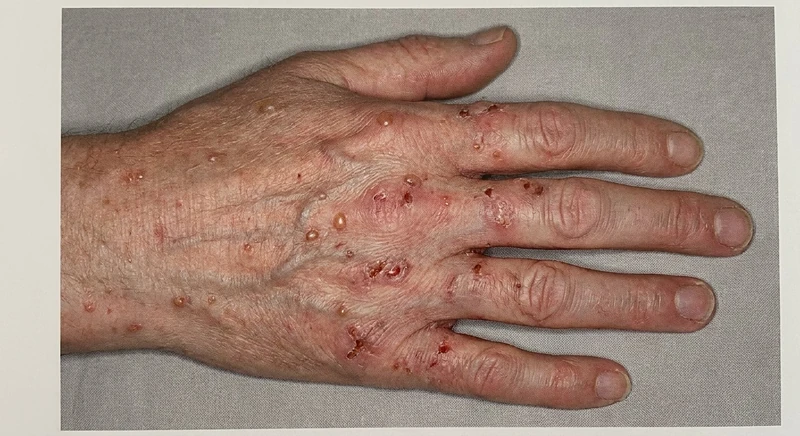
- Definition: Clinically and histologically like PCT (subepidermal blisters, erosions, milia, skin fragility on photoexposed skin) but porphyrin metabolism normal — no rise in urinary or plasma uroporphyrin.
- Triggers:
- NSAIDs (classic): Naproxen (most common, ~ 50 % of drug-induced cases) , ibuprofen, diclofenac, ketoprofen, mefenamic acid
- Antibiotics / antifungals: Voriconazole (also accelerates SCC), tetracyclines, nalidixic acid
- Diuretics: Furosemide, hydrochlorothiazide, bumetanide
- Other: Haemodialysis / chronic renal failure (= dialysis-pseudo-PCT), excessive UV-A (tanning beds), high-dose pyridoxine, ciclosporin, etretinate, sirolimus
- Clinical features: Skin fragility, subepidermal bullae, erosions, milia on dorsal hands, extensor forearms, forehead — NO hypertrichosis and NO scleroderma-like induration (key DD vs. classic PCT, which adds hypertrichosis/sclerodermatoid changes).
- Histology: subepidermal blister with festooned dermal papillae and PAS-positive perivascular material — identical to PCT, therefore not diagnostically helpful. DIF: IgG/C3 perivascular and at DEJ.
- Pathogenesis: Photo-activation of the offending drug (e.g. naproxen, voriconazole) → reactive oxygen species → lipid peroxidation at dermo-epidermal junction.
- Practice: dialysis patient with „PCT-like" picture → pseudo-PCT due to accumulation of porphyrin-like toxins not effectively removed by dialysis — manage with extra UV avoidance, naproxen avoidance, careful EPO/iron substitution.
Differential diagnoses
- Porphyria cutanea tarda
- Urticaria
- Scabies
- Dermatitis herpetiformis (Duhring disease)
- Erythema dyschromicum perstans
Practise Pseudo-porphyria cutanea tarda in the app
Flashcards with spaced repetition, exam questions and spot-the-diagnosis on this topic – in DermaFuchs, free of charge.
In the DermaFuchs app: 1 flashcards · 1 clinical images
Open in browser Download on the App StoreSources (selection)
More metabolic skin disorders
Note: This page is intended for medical education and does not replace diagnosis or treatment decisions in individual cases. Treatment and follow-up content is available in the app.