Sick sinus syndrome
Board exam relevance: in 2 of 105 exam reports · rank 142- Synonyms
- sinus node dysfunction, SSS, tachy-brady syndrome, bradycardia-tachycardia syndrome, sinus arrest, sinoatrial block, slow heart rate
- Specialty
- Internal medicine · Cardiology
- Images
- ECG 1
- Last updated
- 10/2026 · Dr. Pascal Bafteh
Contents
Images (1)
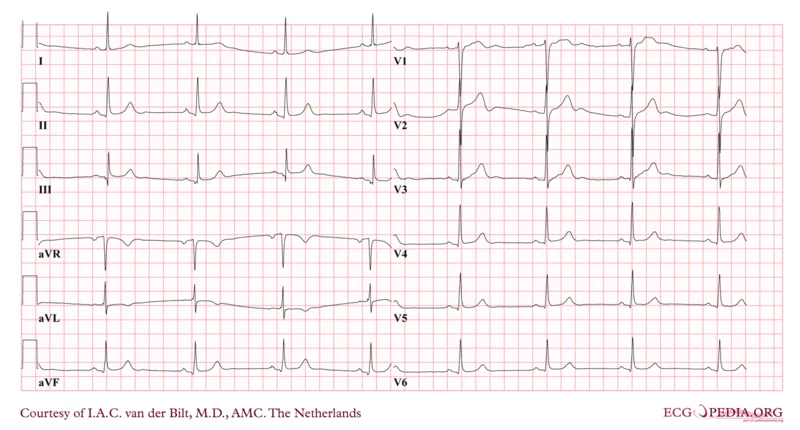 ECG
ECGDefinition
Sick sinus syndrome (sinus node dysfunction) refers to a dysfunction of the sinus node causing slow, physiologically inappropriate heart rates. It comprises several forms that occur alone or in combination.
Classification
- Inappropriate sinus bradycardia
- Sinus pause or sinus arrest: temporary cessation of sinus node activity, seen on the ECG as absent P waves for seconds to minutes; lower escape pacemakers usually take over
- Sinoatrial (SA) exit block: the sinus node depolarizes, but conduction to the atria is delayed or blocked. In first-degree SA block the ECG is normal; in type I second-degree block (SA Wenckebach) the P-P intervals shorten until a P wave drops, and the pause is shorter than two P-P cycles; in type II the pause is a multiple (usually twice) of the P-P interval; third-degree SA block looks like sinus arrest.
- Bradycardia-tachycardia syndrome: alternation between bradycardia and atrial tachyarrhythmias, most commonly atrial fibrillation
- Chronotropic incompetence: inability to increase heart rate with exercise, usually defined as reaching less than 80 % of the age-predicted maximum heart rate (220 minus age) on exercise testing
Occurrence & epidemiology
Sick sinus syndrome mainly affects older people, especially those with other cardiac disorders or diabetes mellitus.
Aetiopathogenesis
The most common cause is idiopathic fibrosis of the sinus node. Lower parts of the conduction system are often also affected, so that AV block or bundle branch block may coexist. Other causes are sleep apnea, drugs, increased vagal tone and many ischemic, inflammatory and infiltrative disorders; hypothyroidism needs to be excluded.
Clinical features
- Many patients are asymptomatic.
- Bradycardic phases: weakness, fatigue, effort intolerance, dizziness, presyncope and syncope with long pauses
- Tachycardic phases (bradycardia-tachycardia syndrome): palpitations and the other symptoms of atrial tachyarrhythmias
- Syncope typically occurs when the sinus node does not resume function immediately after spontaneous termination of an atrial tachyarrhythmia (post-conversion pause).
Diagnosis
- A slow, irregular pulse raises suspicion; the diagnosis is confirmed by ECG, rhythm strip or 24-hour ECG recording.
- Rhythm recording serves to establish a correlation between symptoms and bradyarrhythmia; with infrequent symptoms, implantable cardiac monitors are helpful.
- Sometimes sinus node dysfunction becomes apparent only when atrial fibrillation ends, as a pause on return to sinus rhythm.
- Targeted tests: TSH (hypothyroidism), polysomnography (sleep apnea), exercise testing (chronotropic incompetence), echocardiography (structural heart disease); rarely an electrophysiological study.
Keep learning in the app
Further reading (open access)
Cross-references
More topics: Cardiology
- Acute coronary syndrome (heart attack, STEMI/NSTEMI)
- Heart failure
- Atrial fibrillation
- Arterial hypertension (high blood pressure)
- Atrioventricular block
- Secondary hypertension
- Hypercholesterolemia and familial hypercholesterolemia
- Infective endocarditis
- Long QT syndrome and torsades de pointes
- Myocarditis
- Bundle branch block (left and right)
- Ventricular tachycardia
Note: Learning content for medical education – not a treatment recommendation and no substitute for diagnosis or treatment decisions in individual cases. Treatment and management are deliberately not covered on this page.