Acute pyelonephritis
Board exam relevance: in 1 of 105 exam reports · rank 181- Synonyms
- kidney infection, upper urinary tract infection, pyelonephritis, urosepsis
- Specialty
- Internal medicine · Nephrology
- Images
- Histology 1 · Gross specimen 1
- Last updated
- 10/2026 · Dr. Pascal Bafteh
Contents
Images (2)
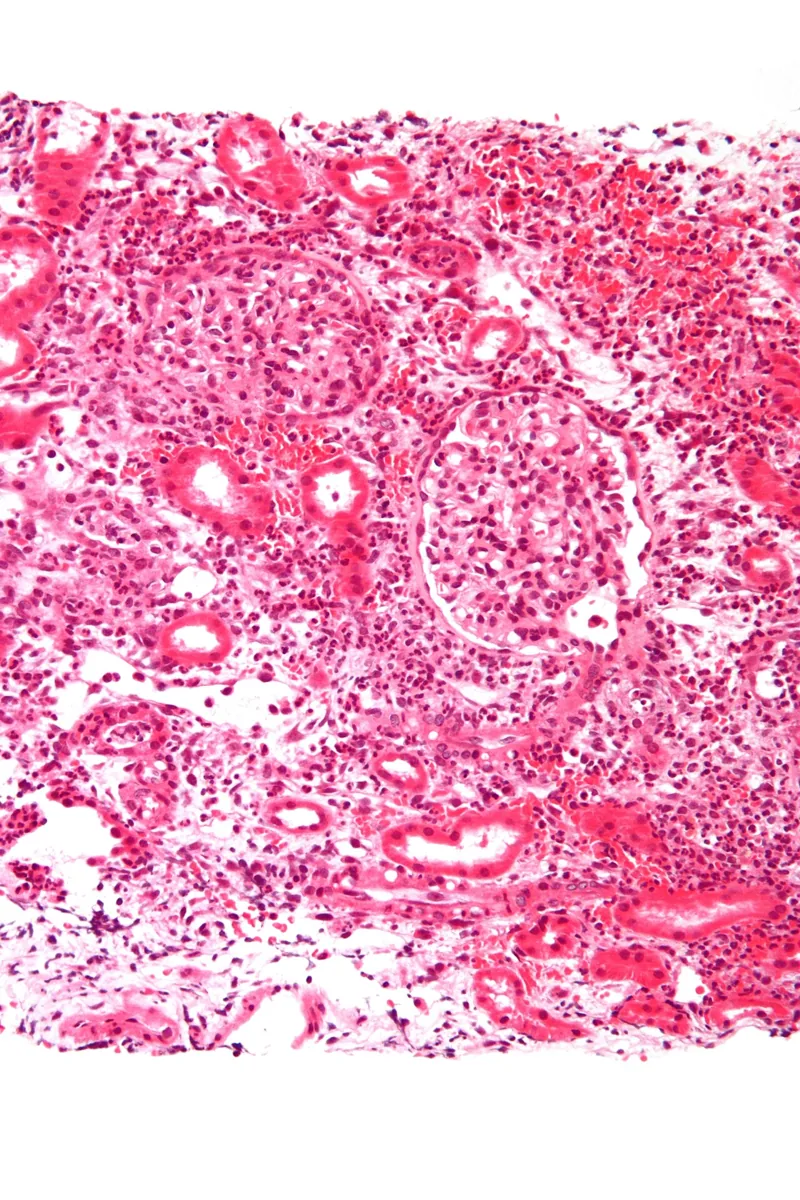 Histology
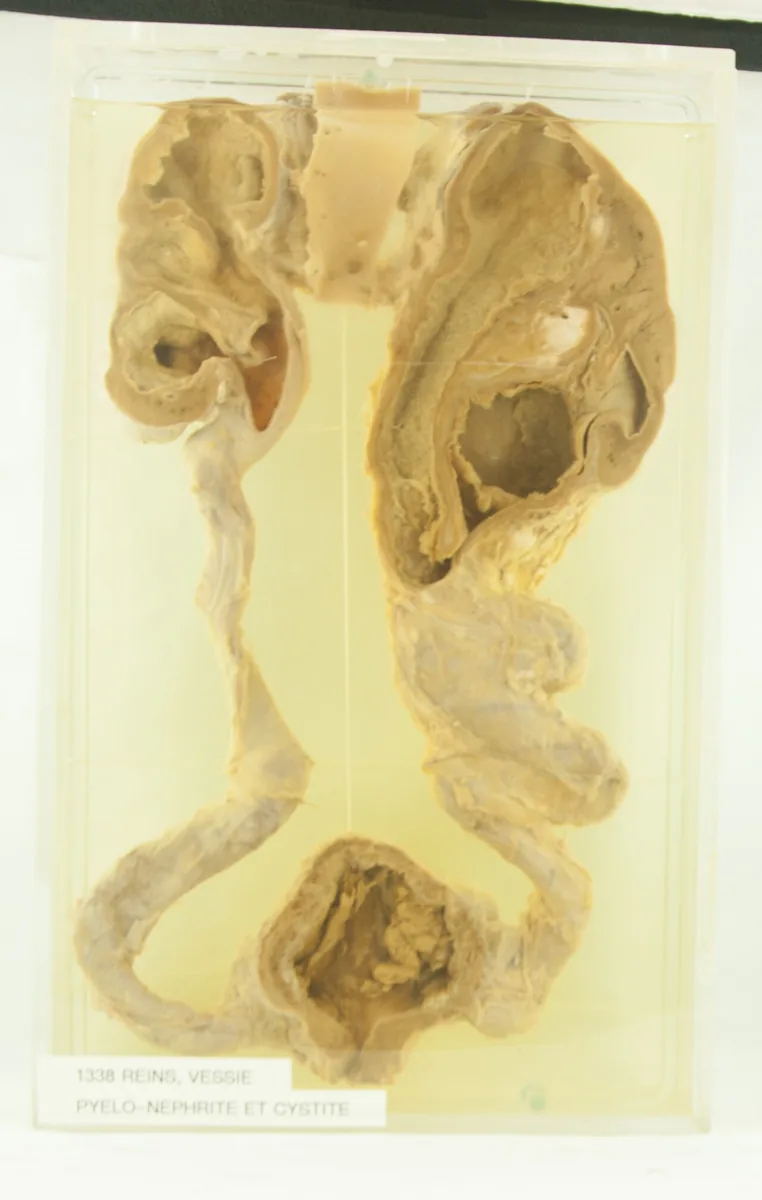 Gross specimen
Definition
Acute pyelonephritis is a bacterial infection of the renal pelvis and renal parenchyma. In international classifications (e.g. of the Infectious Diseases Society of America) it is classed as a complicated urinary tract infection because the infection has spread beyond the bladder; the German S3 guideline, by contrast, also recognizes uncomplicated pyelonephritis in the absence of complicating factors. Pyelonephritis can lead to urosepsis.
Occurrence & epidemiology
In women, pyelonephritis is a common cause of community-acquired bacteremia; it is also common among young girls and among pregnant patients after bladder catheterization. In men with a normal urinary tract it is uncommon.
Aetiopathogenesis
Usually, bacteria ascend from the bladder via the ureter to the kidney; the most common pathogen is Escherichia coli. Predisposing factors are obstruction (strictures, stones, tumors, neurogenic bladder, vesicoureteral reflux) and reduced ureteral peristalsis, e.g. in pregnancy. However, most women with pyelonephritis have no demonstrable abnormality, whereas in men a functional or anatomic cause is always present. Hematogenous infections are typical of Staphylococcus aureus, Pseudomonas aeruginosa, Salmonella and Candida.
Clinical features
Symptoms and complications
Typical are chills, fever, flank pain, colicky abdominal pain, nausea and vomiting. About one third of patients also have cystitis symptoms such as frequency and dysuria. There is usually costovertebral angle percussion tenderness on the affected side; occasionally an enlarged, tender kidney is palpable. Older adults sometimes present only with confusion or sepsis.
- urosepsis with circulatory instability and organ dysfunction
- renal abscesses in the medulla and beneath the cortex
- papillary necrosis, especially in diabetes, obstruction, sickle cell disease or analgesic nephropathy
- renal scarring in children, usually not in adults without reflux or obstruction
Histology
The kidney is enlarged by edema and neutrophilic infiltration. Inflammation is focal and patchy, starts in the pelvis and medulla and extends into the cortex as an enlarging wedge; normal tissue often lies in between. Within a few days, chronic inflammatory cells appear.
Diagnosis
- Urine: dipstick and microscopy with pyuria, bacteriuria and possibly white cell casts; in urine culture, > 10⁴ CFU/mL are generally considered significant in symptomatic patients.
- High fever, costovertebral angle tenderness and marked pyuria with casts make pyelonephritis highly likely.
- Blood in severe illness: blood count, electrolytes, lactate, urea, creatinine and blood cultures to evaluate for sepsis
- Imaging: ultrasound or CT to look for obstruction, stones, abscesses or other abnormalities; informative especially in men, recurrent or complicated cases (e.g. diabetes, immunocompromise), a history of stones, prior urologic procedures or lack of improvement
Keep learning in the app
Further reading (open access)
Cross-references
More topics: Nephrology
- Acute kidney injury
- Nephrotic syndrome
- Chronic kidney disease
- Nephritic syndrome and glomerulonephritis
- Acute interstitial nephritis
- Goodpasture syndrome (anti-GBM disease)
- Membranous nephropathy
- Renal artery stenosis
- Diabetic kidney disease
- Urinary tract infection and cystitis
- Autosomal dominant polycystic kidney disease (ADPKD)
- Hantavirus infection (nephropathia epidemica)
Note: Learning content for medical education – not a treatment recommendation and no substitute for diagnosis or treatment decisions in individual cases. Treatment and management are deliberately not covered on this page.