Goodpasture syndrome (anti-GBM disease)
Board exam relevance: in 3 of 105 exam reports · rank 111- Synonyms
- anti-GBM disease, Goodpasture disease, anti-glomerular basement membrane disease, pulmonary-renal syndrome
- Specialty
- Internal medicine · Nephrology
- Images
- Histology 1 · Gross specimen 1
- Last updated
- 10/2026 · Dr. Pascal Bafteh
Contents
Images (2)
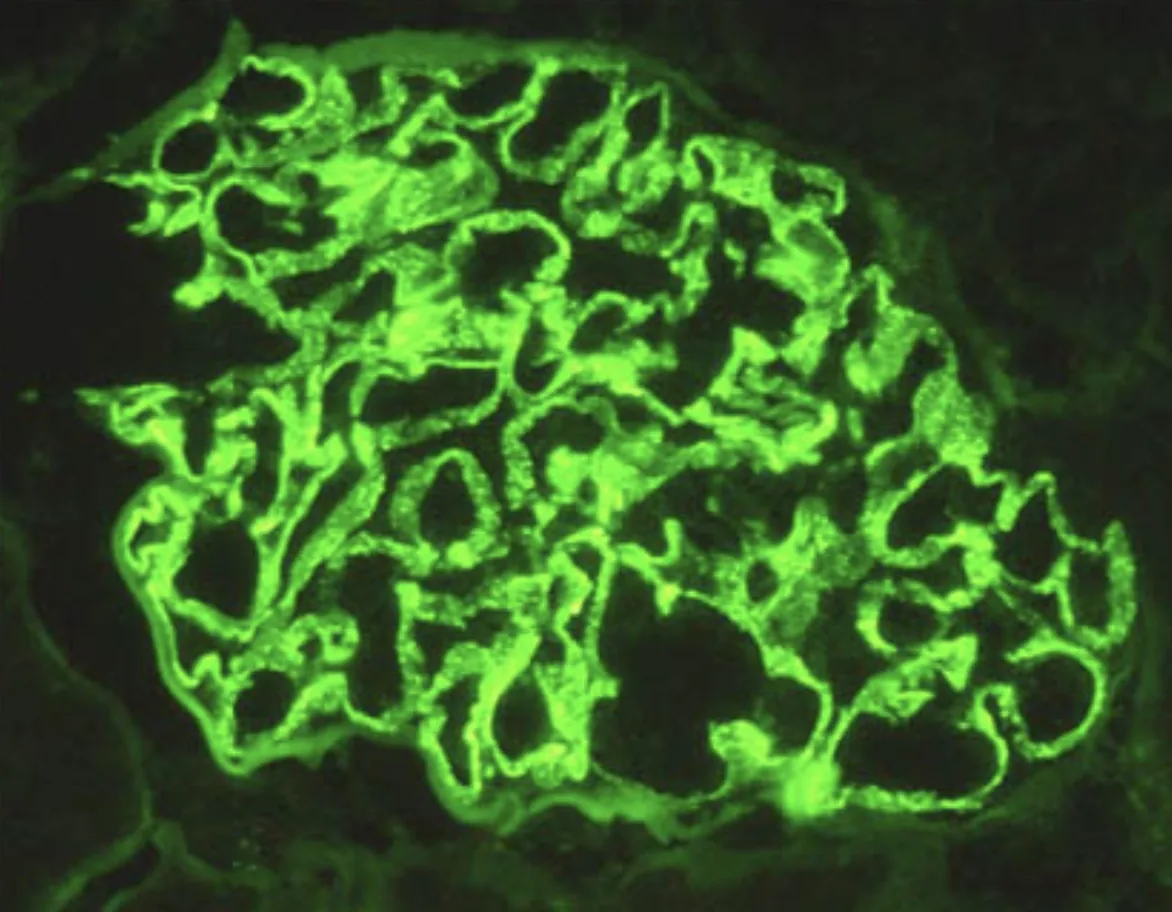 Histology
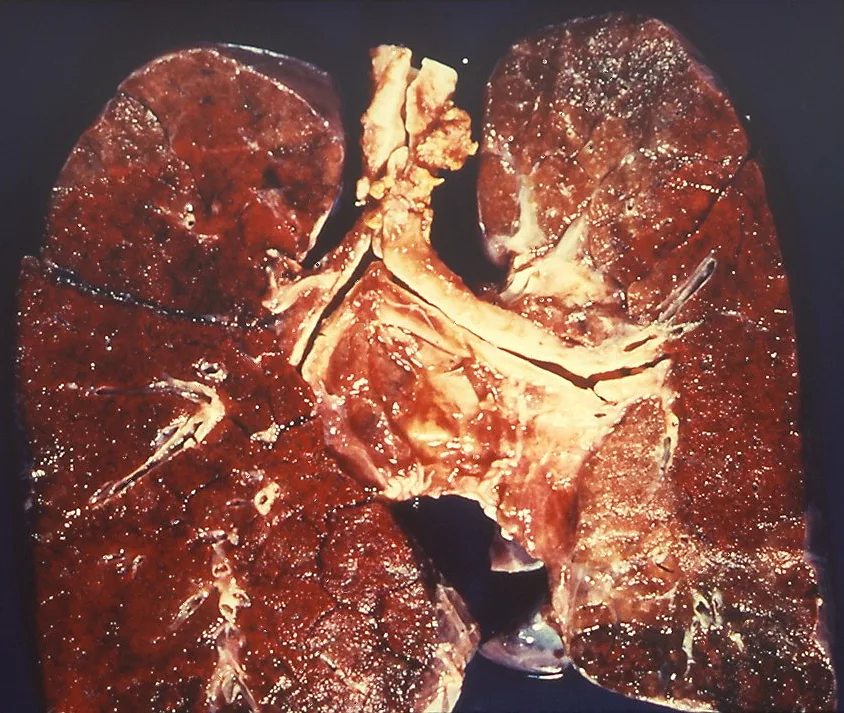 Gross specimen
Definition
Anti-GBM disease (Goodpasture disease) is an autoimmune small-vessel disease in which circulating antibodies are directed against the glomerular and alveolar basement membrane. Goodpasture syndrome refers to the combination of rapidly progressive glomerulonephritis and pulmonary hemorrhage (diffuse alveolar hemorrhage) in the presence of anti-GBM antibodies; without lung involvement it is called anti-GBM glomerulonephritis.
Occurrence & epidemiology
The disease is rare; men are slightly more often affected. Pulmonary hemorrhage and glomerulonephritis usually occur together; glomerulonephritis alone is present in 10–20% and lung involvement alone in about 10%.
Aetiopathogenesis
The autoantigen is the noncollagenous NC1 domain of the alpha3 chain of type IV collagen, which is particularly abundant in the basement membranes of renal and pulmonary capillaries. In genetically susceptible people (certain HLA-DR alleles), environmental factors expose the alveolar antigens: most often cigarette smoke, less often viral respiratory infections or inhalation of hydrocarbon solvents. The antibodies bind to basement membranes, fix complement and trigger a cell-mediated inflammatory reaction.
Clinical features
The leading symptom is hemoptysis; it may be absent despite alveolar hemorrhage. Other symptoms are cough, dyspnea up to respiratory failure, fatigue, fever, weight loss and hematuria, sometimes gross hematuria. Pulmonary hemorrhage may precede renal involvement by weeks to years. Auscultation ranges from normal to crackles; edema indicates kidney failure, pallor indicates anemia.
Diagnosis
- Imaging: chest radiograph or CT with bilateral patchy or diffuse airspace opacities, usually without cavitation, nodules or pleural effusions
- Anti-GBM antibodies in serum (indirect immunofluorescence or ELISA against the NC1 domain of the alpha3 chain); their detection confirms the diagnosis
- ANCA: additionally positive in about 10–40%, mostly perinuclear pattern (double-positive form)
- Urine and kidney function: hematuria, proteinuria, red blood cell casts, rising creatinine
- Kidney biopsy, especially if antibodies are not detected: focal segmental necrotizing glomerulonephritis with crescents and linear IgG deposition along the glomerular capillaries
Keep learning in the app
Further reading (open access)
Cross-references
More topics: Nephrology
- Acute kidney injury
- Nephrotic syndrome
- Chronic kidney disease
- Nephritic syndrome and glomerulonephritis
- Acute interstitial nephritis
- Membranous nephropathy
- Renal artery stenosis
- Diabetic kidney disease
- Urinary tract infection and cystitis
- Acute pyelonephritis
- Autosomal dominant polycystic kidney disease (ADPKD)
- Hantavirus infection (nephropathia epidemica)
Note: Learning content for medical education – not a treatment recommendation and no substitute for diagnosis or treatment decisions in individual cases. Treatment and management are deliberately not covered on this page.