Urinary tract infection and cystitis
Board exam relevance: in 2 of 105 exam reports · rank 142- Synonyms
- bladder infection, cystitis, UTI, urine infection, asymptomatic bacteriuria, burning urination
- Specialty
- Internal medicine · Nephrology
- Images
- Blood smear & cytology 2
- Last updated
- 10/2026 · Dr. Pascal Bafteh
Contents
Images (2)
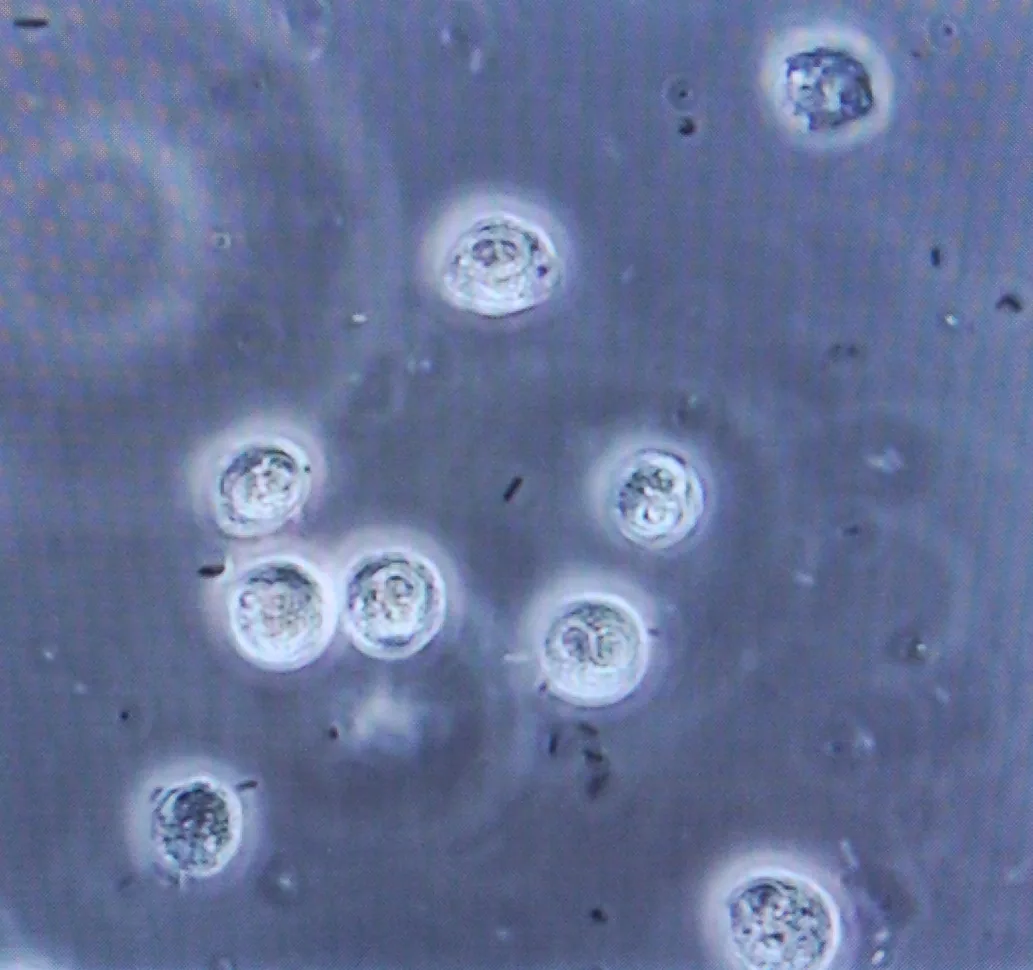 Blood smear & cytology
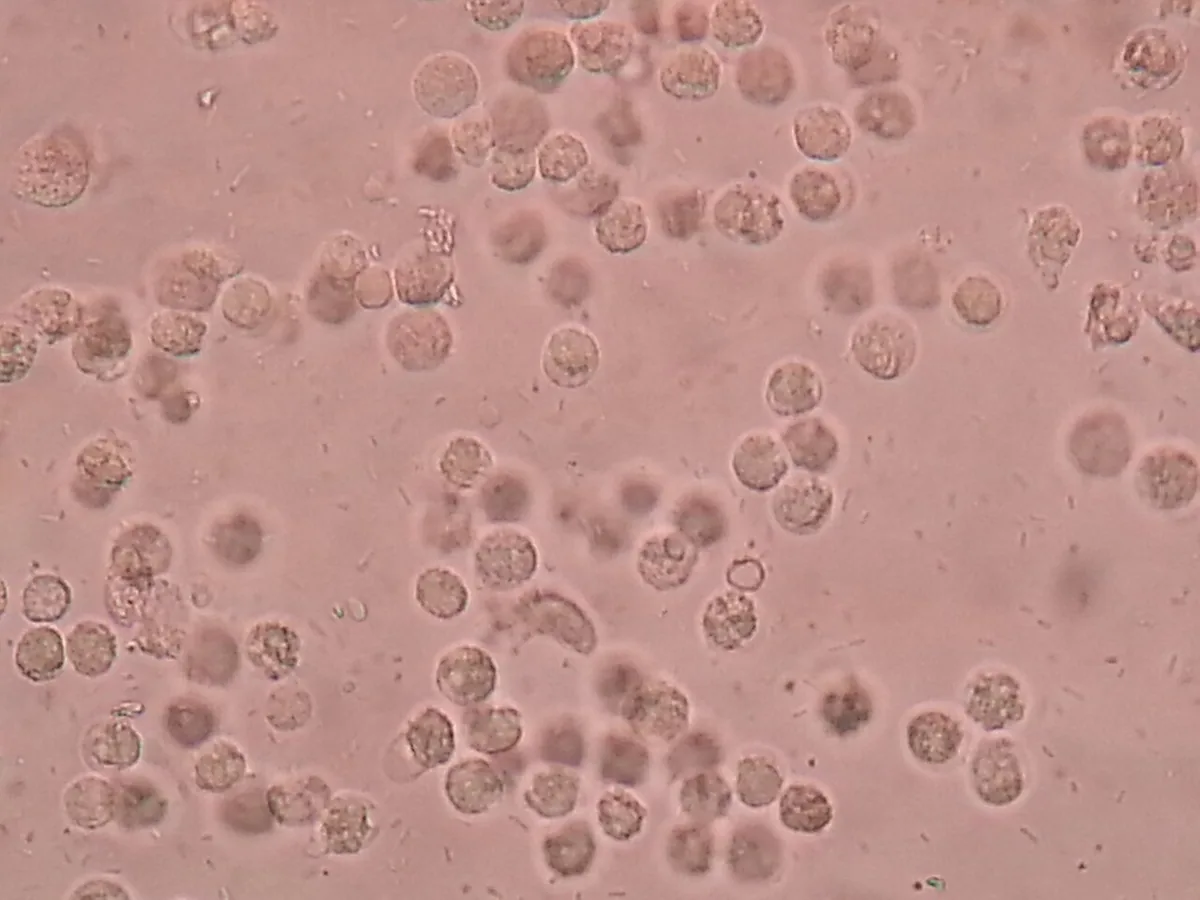 Blood smear & cytology
Definition
A urinary tract infection (UTI) is a mostly bacterial infection of the urinary tract. Cystitis is infection of the bladder (lower urinary tract), pyelonephritis is infection of the renal parenchyma (upper urinary tract). Asymptomatic bacteriuria is present when the urine culture meets the criteria for UTI but there are no symptoms.
Classification
Uncomplicated urinary tract infection
- According to the German S3 guideline, a UTI is uncomplicated if there are no relevant functional or anatomic abnormalities of the urinary tract, no relevant impairment of kidney function and no relevant comorbidities that favor a UTI or serious complications.
- A lower UTI (cystitis) is assumed when the acute symptoms relate only to the lower urinary tract, e.g. new-onset pain on urination, urgency, frequency and suprapubic pain.
- An upper UTI (pyelonephritis) is suggested by additional flank pain, costovertebral angle tenderness and/or fever (> 38 °C).
- The guideline distinguishes patient groups: premenopausal women without relevant comorbidities (standard group), pregnant women, postmenopausal women, younger men, people with diabetes mellitus and stable metabolic status, and geriatric patients.
Complicated urinary tract infection
- A UTI is considered complicated if relevant functional or anatomic abnormalities of the urinary tract, relevant impairment of kidney function or relevant comorbidities are present that favor a UTI or serious complications.
- Diabetes mellitus: with a stable metabolic status and no other complicating factors, the UTI is considered uncomplicated; with an unstable metabolic status or manifest late diabetic complications, it is considered complicated.
- Men: UTIs in younger men without comorbidities are generally regarded as complicated because the prostate may be involved.
- International classifications (e.g. of the Infectious Diseases Society of America) draw the line differently: uncomplicated means infection confined to the bladder without fever; pyelonephritis, febrile or bacteremic UTI, catheter-associated UTI and prostatitis are considered complicated.
Occurrence & epidemiology
Women are affected much more often: about 40–50% of women have at least one UTI in their lifetime, but only about 5–12% of men. In men, the frequency increases with age, mainly due to impaired bladder emptying from prostatic enlargement. UTIs are among the common healthcare-associated infections.
Aetiopathogenesis
Usually, intestinal bacteria ascend via the urethra into the bladder; hematogenous infections are rare. In anatomically normal urinary tracts, Escherichia coli strains with specific adhesion factors cause about 80% of cases. Other pathogens are Klebsiella, Proteus mirabilis, occasionally Pseudomonas aeruginosa and Staphylococcus saprophyticus (about 10–15%). Enterococci and group B streptococci are often contaminants in uncomplicated cystitis.
- General risk factors: previous UTIs, urinary catheters and instrumentation, anatomic abnormalities (strictures, diverticula), kidney stones, neurogenic bladder dysfunction, incontinence, immunosuppression, pregnancy
- In women: sexual intercourse, diaphragm and spermicide use, a new sex partner, UTIs in first-degree female relatives, first UTI at a young age
- In men: prostatic enlargement with obstruction, other obstructions (prostate cancer, urethral stricture), prostatitis
Clinical features
Cystitis usually begins suddenly with frequent voiding of small volumes (frequency), urgency and burning on urination (dysuria). Nocturia, suprapubic pain and low back pain are common; the urine is often cloudy, microscopic hematuria is possible, gross hematuria rare. A low-grade fever may occur.
Older adults and persons with a neurogenic bladder or an indwelling catheter sometimes present only with confusion or sepsis without urinary symptoms. In men, perineal pain or pressure suggests prostatitis. High fever, chills and flank pain indicate kidney involvement.
Diagnosis
- Urine collection: clean-catch midstream urine after cleansing the urethral opening; in older women or with vaginal discharge or bleeding, a catheter specimen if needed. Testing within 2 hours, otherwise refrigeration; many squamous epithelial cells indicate contamination.
- Urine dipstick: a positive nitrite test is highly specific but not very sensitive; leukocyte esterase is specific for > 10 white cells/µL and fairly sensitive.
- Microscopy: pyuria from ≥ 8 white cells/µL in uncentrifuged urine (corresponding to 2–5 per high-power field in the sediment); bacteria without pyuria usually indicate contamination.
- Urine culture: particularly informative e.g. in pregnant patients, men, children, suspected pyelonephritis or sepsis, urinary tract abnormalities, immunosuppression and recurrent UTIs (≥ 3 per year).
Culture criteria: in symptomatic patients, > 10⁴ colony-forming units (CFU)/mL are generally considered significant. For asymptomatic bacteriuria, > 10⁵ CFU/mL of the same organizm are required (in women in two consecutive midstream specimens, in men in one), and > 10² CFU/mL in a catheter specimen. In urine obtained by suprapubic bladder puncture, any bacterial growth is significant.
Keep learning in the app
Further reading (open access)
Cross-references
More topics: Nephrology
- Acute kidney injury
- Nephrotic syndrome
- Chronic kidney disease
- Nephritic syndrome and glomerulonephritis
- Acute interstitial nephritis
- Goodpasture syndrome (anti-GBM disease)
- Membranous nephropathy
- Renal artery stenosis
- Diabetic kidney disease
- Acute pyelonephritis
- Autosomal dominant polycystic kidney disease (ADPKD)
- Hantavirus infection (nephropathia epidemica)
Note: Learning content for medical education – not a treatment recommendation and no substitute for diagnosis or treatment decisions in individual cases. Treatment and management are deliberately not covered on this page.