Ehlers-Danlos syndrome
- Synonyms
- EDS, hyperelastic skin
- Specialty
- Dermatology · Hereditary skin diseases
- Images
- Clinical 2
- In the app
- 1 flashcard
- Last updated
- 10/2026 · Dr. Pascal Bafteh
Contents
Images (2)
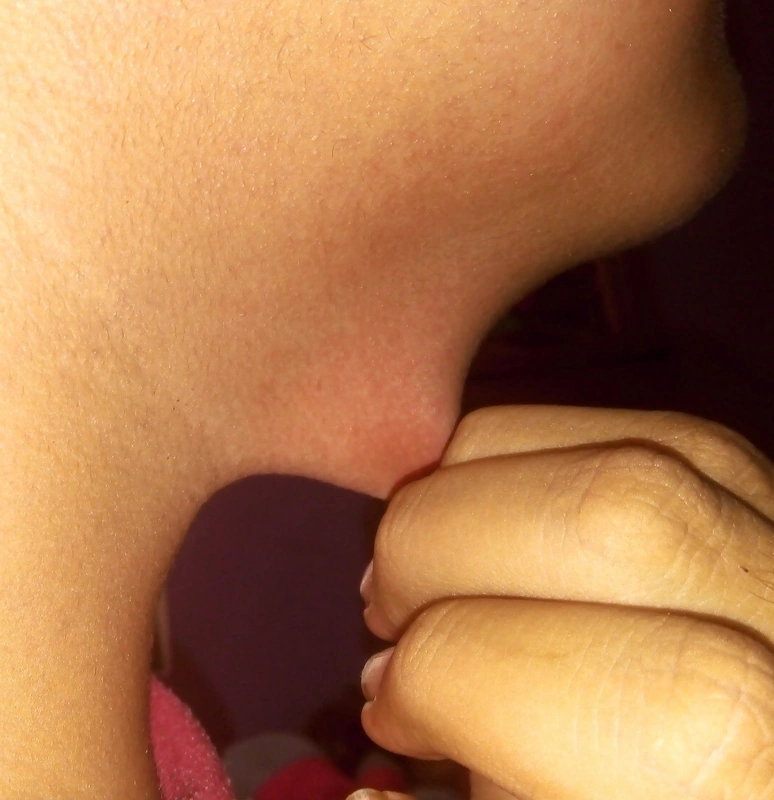
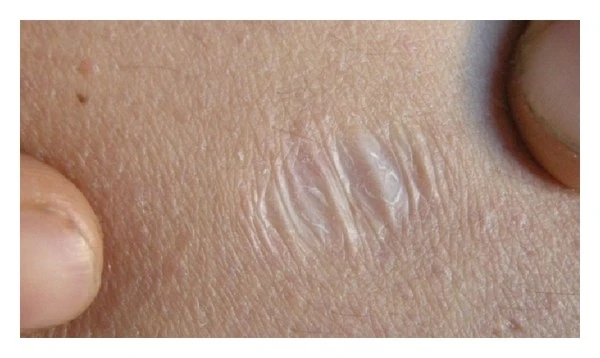
Definition
The Ehlers-Danlos syndromes are a group of inherited connective tissue disorders with defects in collagen formation or processing. They share hyperextensible skin, hypermobile joints and increased tissue fragility.
- Incidence: 1: 5 000 – 1: 10 000, 13 subtypes according to the 2017 international classification: classical / vascular / hypermobile + 10 others.
- Clinical features: Hyperextensibility of the skin + hypermobile joints + fragile skin + hematomas + atrophic scars (velvety skin, cigarette-paper scars).
Diagnosis
- Clinical criteria of the 2017 international classification; Beighton score to assess joint hypermobility.
- Molecular genetic testing depending on the suspected type; the exception is the most common, hypermobile type, whose genetic basis is unknown and which is diagnosed clinically.
Differential diagnoses
 Cutis laxa (generalised elastolysis)
 Marfan Syndrome
 Pseudoxanthoma elasticum (PXE, Grönblad-Strandberg)
Image credits for the thumbnails
- Cutis laxa (generalised elastolysis): APSP J Case Rep, CC BY 4.0, via Wikimedia Commons · CC BY 4.0 · Source
- Marfan Syndrome: Seans22, “MarfanwristMT”, CC0, via Wikimedia Commons · CC0 · Source
- Pseudoxanthoma elasticum (PXE, Grönblad-Strandberg): kilbad, “Pseudoxanthoma elasticum 3”, CC BY 3.0, via Wikimedia Commons · CC BY 3.0 · Source
Treatment principles
- There is no causal treatment; management is symptomatic and preventive.
- This includes protection from injury, careful low-tension wound closure because of the tendency to wide, atrophic scars, and physiotherapy for joint hypermobility.
- Depending on the type, multidisciplinary care is required, in the vascular type particularly for vascular surveillance; genetic counselling is offered.
Specific treatment regimens with drugs and doses are covered in the DermaFuchs app.
Keep learning in the app
References (selection)
Cross-references
Mentioned in
Keep learning
Keep learning with flashcards, exam questions and spot diagnoses in the DermaFuchs app – free, in your browser or as an app.
Related pages: Cutis laxa (generalised elastolysis) · Marfan Syndrome · Pseudoxanthoma elasticum (PXE, Grönblad-Strandberg)
Note: This page is intended for medical education and does not replace diagnosis or treatment decisions in individual cases.