Keratosis pilaris
- Synonyms
- Reibeisenhaut, Keratosis follicularis, Hühnerhaut, chicken skin, bumps on upper arms
- Specialty
- Dermatology · Hereditary skin diseases
- Images
- Clinical 4
- Last updated
- 10/2026 · Dr. Pascal Bafteh
Contents
Images (4)
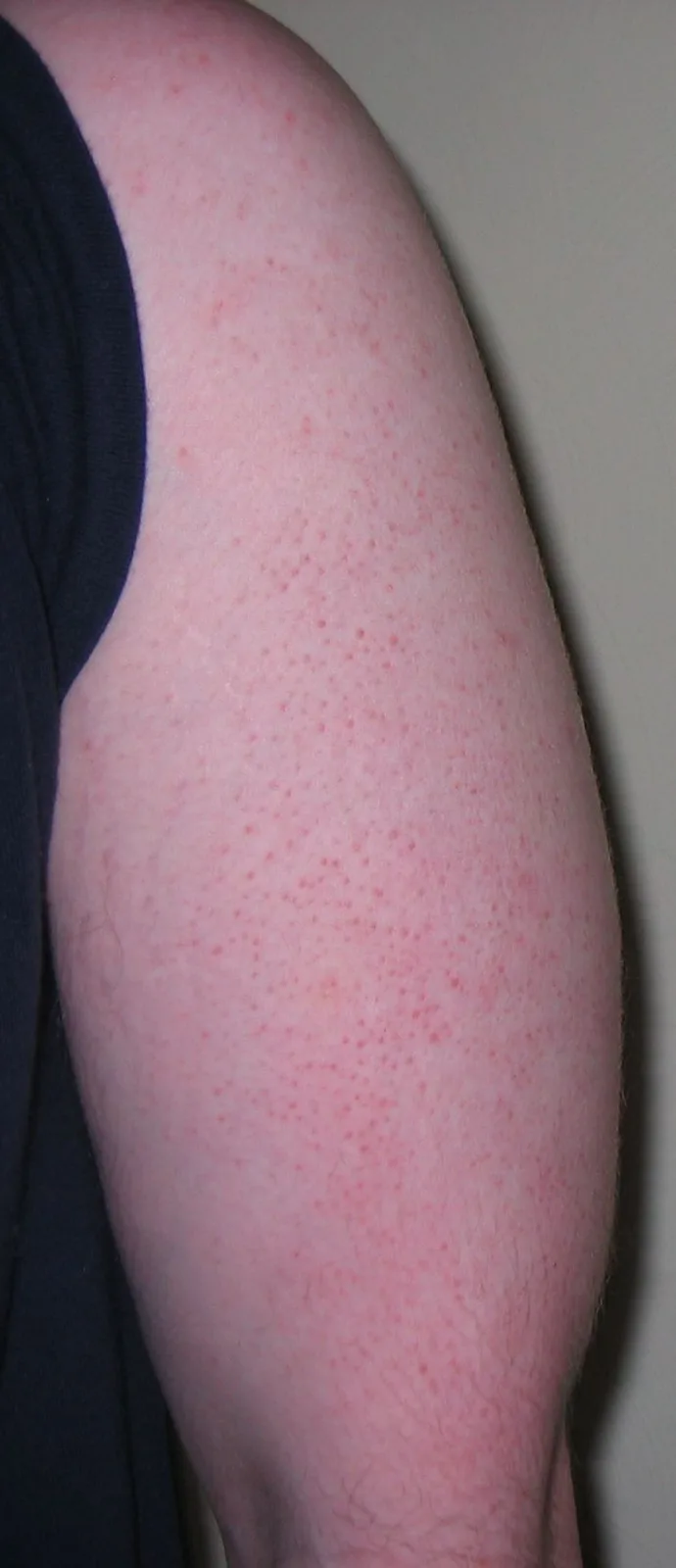
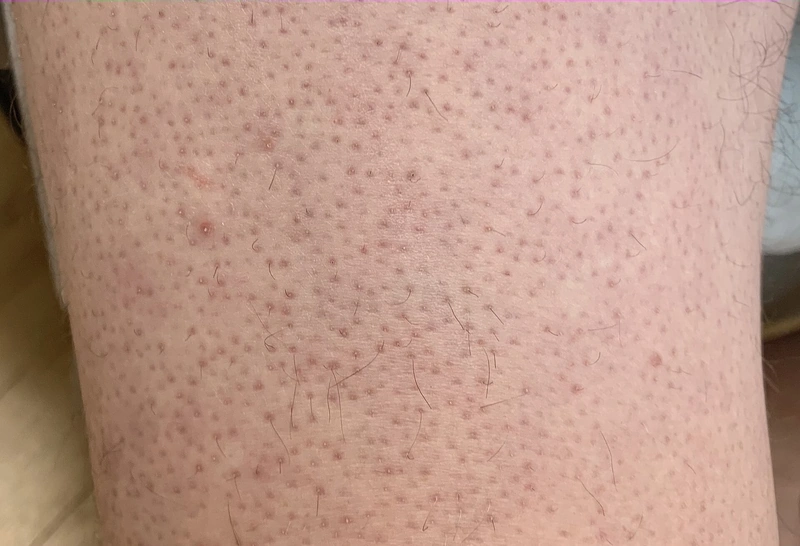
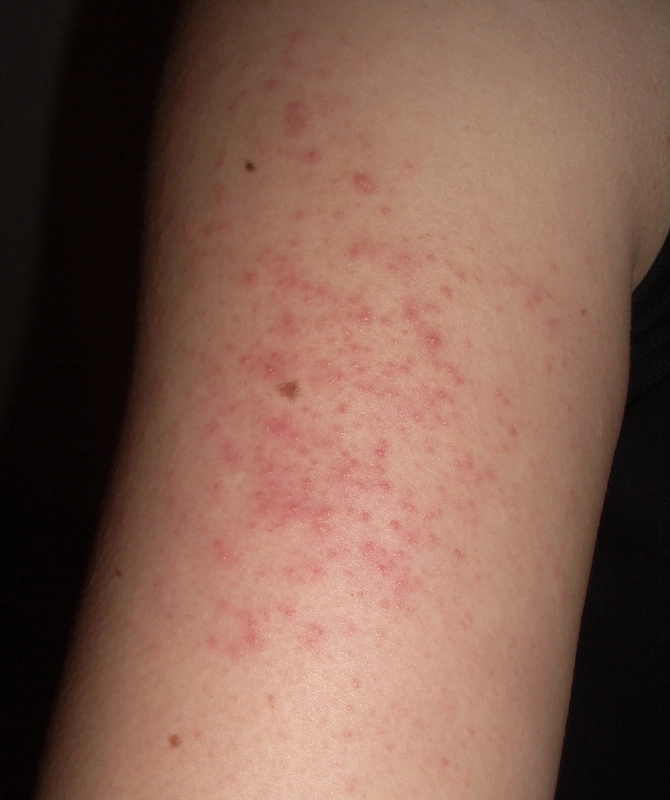
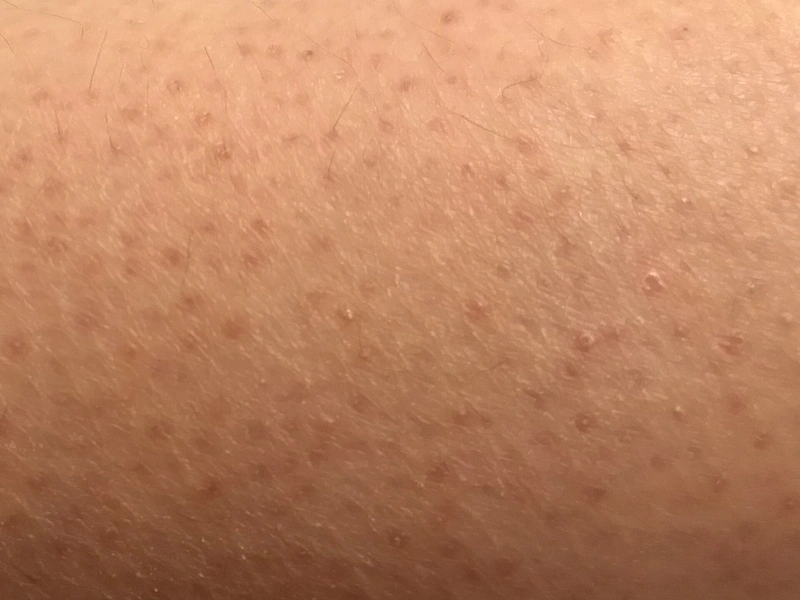
Definition
Keratosis pilaris is a very common, harmless, non-infectious keratinisation disorder in which keratin accumulates in the hair follicles. The name combines "keratosis" (scaly skin) and "pilaris" (hair).
Occurrence & epidemiology
It usually starts in childhood and becomes more obvious in the teenage years and adulthood; it affects 50–70% of teenagers and 40% of adults. It is associated with atopic eczema and ichthyosis. Autosomal dominant inheritance is thought likely; correlations with filaggrin mutations have been described. It tends to be more prominent in winter because of drier air.
Clinical features
- Small skin-coloured, red or brown follicular bumps with a "goosebump" or "chicken skin" appearance; the skin feels rough and dry and is occasionally itchy.
- Redness is often found around the bumps.
- Mainly on the extensor surfaces of the upper arms and thighs, also on the buttocks, trunk, face and distal limbs; on the cheeks sometimes with redness and pigmentation.
Diagnosis
- Clinical diagnosis.
- Dermoscopy: abnormal hair shafts (thin, short, coiled or embedded in the stratum corneum), scaling and erythema.
- Histology (rarely needed): hyperkeratosis, hypergranulosis, plugged hair follicles and mild superficial perivascular lymphocytic inflammation.
Treatment principles
- Keratosis pilaris is harmless, runs a chronic course and often improves with age; it cannot be cured.
- Treatment is symptomatic with emollient and keratolytic topical preparations, and topical retinoids if the effect is insufficient.
- For marked erythema, laser or light-based procedures may be considered; relapse after stopping treatment is the rule.
Specific treatment regimens with drugs and doses are covered in the DermaFuchs app.
Keep learning in the app
References (selection)
Cross-references
Keep learning: test yourself
One question from the DermaFuchs app on Keratosis pilaris – tap an answer.
Question 1 of 1
What is keratosis pilaris commonly associated with?
Answer
Correct: atopy-associated. Keratosis pilaris is often associated with atopic conditions like eczema.
More questions like these – with explanations and spaced repetition – in the app.
Note: This page is intended for medical education and does not replace diagnosis or treatment decisions in individual cases.