Chilblains (pernio)
- Synonyms
- Frostbeulen, Pernio, Perniosis, Chilblains, Kältebeulen
- Specialty
- Dermatology · Environmental & photodermatoses
- Images
- Clinical 2
- In the app
- 2 flashcards
- Last updated
- 10/2026 · Dr. Pascal Bafteh
Contents
Images (2)
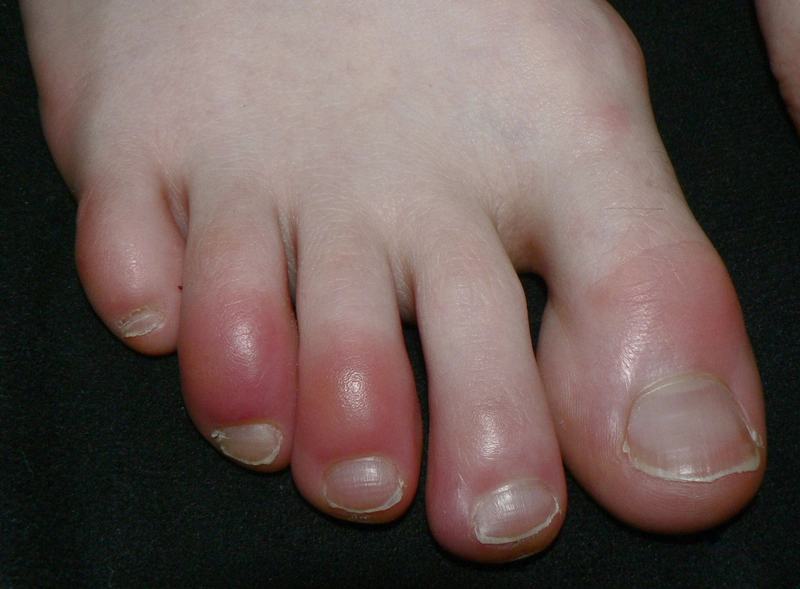
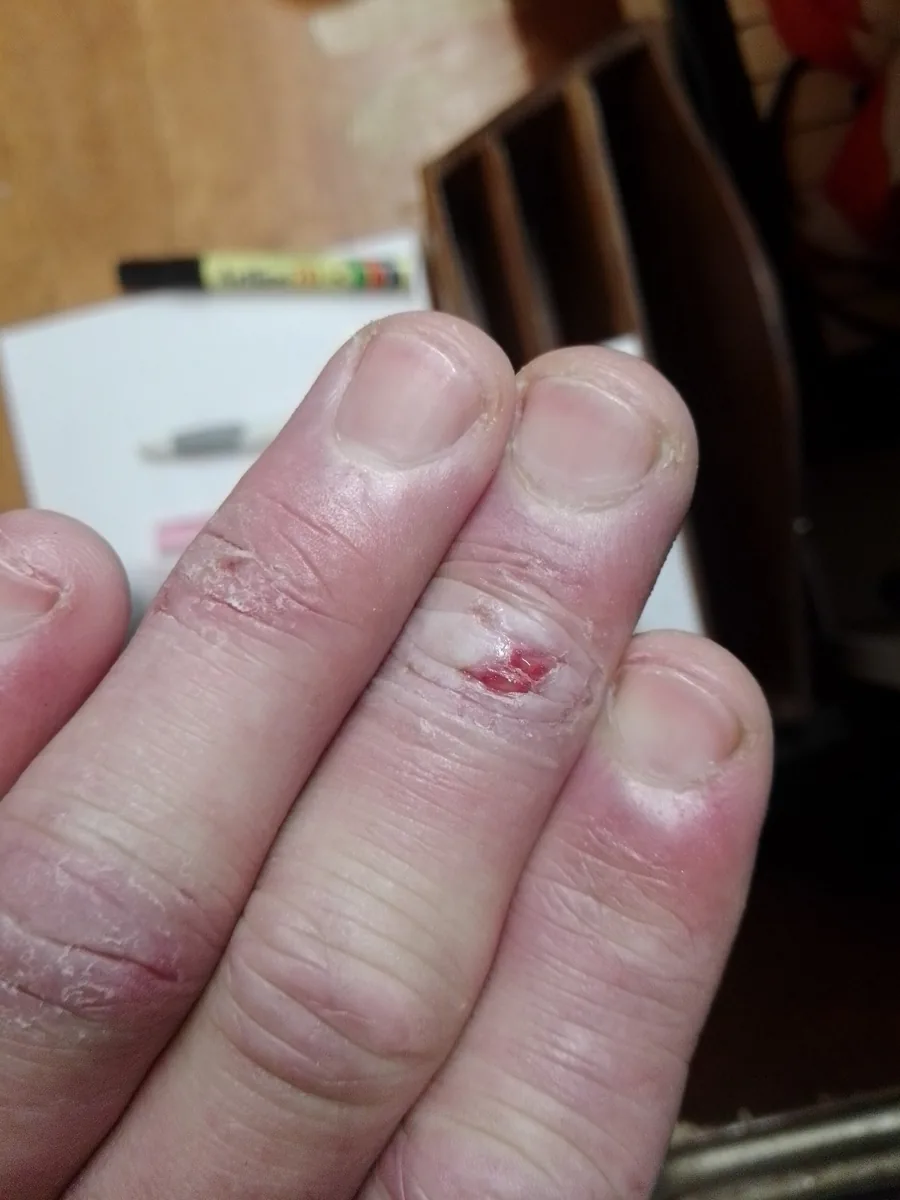
Definition
Chilblains (pernio) are inflammatory, itchy or burning skin lesions on the acral parts of the body that develop after exposure to damp cold above freezing. They result from an abnormal vascular reaction with prolonged vasoconstriction and subsequent inflammation.
Occurrence & epidemiology
They mainly affect young to middle-aged adults, more often women; chilblains are uncommon in children, and in older people they are unusual and point to an underlying disease. They occur in temperate, damp cold climates, especially in late winter and spring. Predisposing factors are smoking, low body mass index, outdoor work, acrocyanosis and Raynaud phenomenon; secondary chilblains occur in connective tissue diseases (chilblain lupus in SLE) and bone marrow disorders. Without cold exposure, a reaction after SARS-CoV-2 infection is possible.
Clinical features
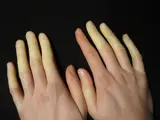
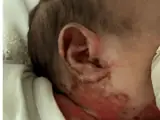
- Red to purple, blanchable swellings and nodules on the fingers, toes and ears, and other sites chronically exposed to cold, several hours after exposure to damp cold and lasting more than 24 hours.
- Itch and/or burning pain; in severe cases blisters, erosions and ulceration.
- Usually resolve within 1–3 weeks, recurring every cold season.
Diagnosis
- Clinical diagnosis with history of cold exposure.
- To look for secondary causes: blood count, ANA, rheumatoid factor, antiphospholipid antibodies, complement, protein electrophoresis, cold agglutinins; biopsy if in doubt (superficial and deep lymphocytic vasculitis, lymphocytes around eccrine glands, subepidermal oedema).
Differential diagnoses
- Livedo reticularis
- Erythema perstans faciei
Image credits for the thumbnails
- Erythema nodosum: James Heilman, MD, “ENlegs”, CC BY-SA 3.0, via Wikimedia Commons · CC BY-SA 3.0 · Source
- Erythema ab igne: James Heilman, MD, “Hotbottlerash”, CC BY-SA 3.0, via Wikimedia Commons · CC BY-SA 3.0 · Source
- Raynaud syndrome: Niklas D, “Raynaud-Syndrom”, CC BY-SA 3.0, via Wikimedia Commons · CC BY-SA 3.0 · Source
- Acrodermatitis enteropathica (zinc deficiency): AlFadhel N, AlQusaimi R, Mosbeh A et al. (Cureus 2026), CC BY 4.0, via PubMed Central (PMC13503144) · CC BY 4.0 · Source · cropped
Treatment principles
- Chilblains usually resolve spontaneously once cold exposure ends; the priorities are protection from cold and damp, keeping the acral sites warm and smoking cessation.
- Symptomatic treatment uses topical glucocorticoids, with vasodilating drugs for persistent or recurrent disease.
- In atypical or persistent cases, chilblain lupus and other underlying conditions should be excluded.
Specific treatment regimens with drugs and doses are covered in the DermaFuchs app.
Keep learning in the app
References (selection)
Cross-references
Keep learning
Keep learning with flashcards, exam questions and spot diagnoses in the DermaFuchs app – free, in your browser or as an app.
Related pages: Erythema nodosum · Erythema ab igne · Livedo reticularis
Note: This page is intended for medical education and does not replace diagnosis or treatment decisions in individual cases.