Acanthosis nigricans
- Synonyms
- Schwarze Akanthose, Acanthosis nigricans maligna, Insulinresistenz Haut, dark velvety skin, insulin resistance skin
- Specialty
- Dermatology · Pigmentation disorders
- Images
- Clinical 2
- In the app
- 6 flashcards
- Last updated
- 10/2026 · Dr. Pascal Bafteh
Contents
Images (2)
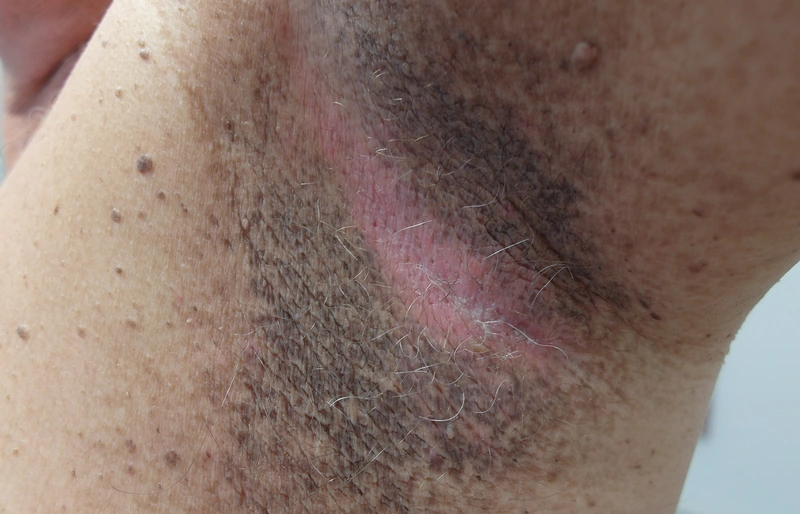
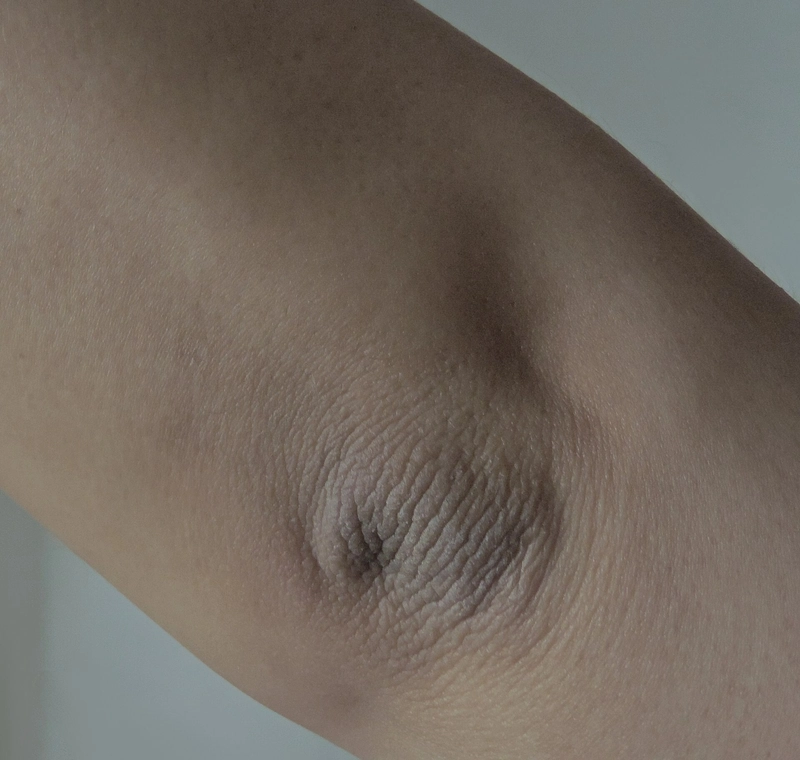
Definition
Acanthosis nigricans is a velvety, brownish-grey thickening and darkening of the skin, mainly in body folds. It usually reflects insulin resistance; rarely it is a paraneoplastic sign of internal malignancy.
Classification
- Benign forms: in obesity and insulin resistance (the most common form, also in children and adolescents), type 2 diabetes, polycystic ovary syndrome, other endocrinopathies, familial or drug-induced.
- Acanthosis nigricans maligna: an obligate paraneoplastic sign, usually with adenocarcinoma of the stomach; rapid, extensive onset, also on mucosa and palms ("tripe palms"), often itchy.
Clinical features
- Symmetrical, brown-grey, velvety to papillomatous thickening with accentuated skin markings.
- Mainly the neck, axillae, groins and under the breasts, in women also the nipples/areolae, vulva and perineum; often accompanied by multiple skin tags (acrochordons).
Diagnosis
- Clinical diagnosis; history and search for underlying metabolic and hormonal disorders (especially insulin resistance, diabetes, polycystic ovary syndrome) and causative drugs; biopsy if in doubt.
- With sudden onset in adulthood without obesity, or with mucosal or palmar involvement: search for a tumour, especially of the gastrointestinal tract.
Differential diagnoses
 Seborrhoeic dermatitis
 Ichthyosis
 Psoriasis vulgaris (plaque psoriasis)
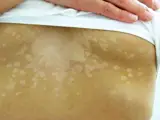 Pityriasis versicolor (tinea versicolor)
 Acrodermatitis enteropathica (zinc deficiency)
Image credits for the thumbnails
- Seborrhoeic dermatitis: Roymishali, “Seborrhoeic dermatitis highres”, CC BY-SA 3.0, via Wikimedia Commons · CC BY-SA 3.0 · Source
- Ichthyosis: Skoch3, “2012 April mosaic lines left calf”, CC BY-SA 3.0, via Wikimedia Commons · CC BY-SA 3.0 · Source
- Psoriasis vulgaris (plaque psoriasis): MediaJet, “An Arm Covered With Plaque Type Psoriasis”, CC BY-SA 3.0, via Wikimedia Commons · CC BY-SA 3.0 · Source
- Pityriasis versicolor (tinea versicolor): Sarahrosenau on Flickr.com, “Tinea versicolor1”, CC BY-SA 2.0, via Wikimedia Commons · CC BY-SA 2.0 · Source
- Acrodermatitis enteropathica (zinc deficiency): AlFadhel N, AlQusaimi R, Mosbeh A et al. (Cureus 2026), CC BY 4.0, via PubMed Central (PMC13503144) · CC BY 4.0 · Source · cropped
Treatment principles
- Treatment focuses on the underlying condition: in the common benign form mainly weight reduction and improvement of insulin resistance, and in drug-induced cases withdrawal of the causative agent.
- Sudden, extensive onset in adulthood calls for a thorough search for malignancy, as the paraneoplastic form usually improves only with treatment of the tumour.
- Topical keratolytics or retinoids may improve the cosmetic appearance.
Specific treatment regimens with drugs and doses are covered in the DermaFuchs app.
Keep learning in the app
References (selection)
Cross-references
More pigmentation disorders
Keep learning
Keep learning with flashcards, exam questions and spot diagnoses in the DermaFuchs app – free, in your browser or as an app.
Related pages: Acne conglobata · Seborrhoeic dermatitis · Psoriasis inversa
Note: This page is intended for medical education and does not replace diagnosis or treatment decisions in individual cases.