Renal tubular acidosis
- Synonyms
- RTA, distal RTA, proximal RTA, hyperchloremic acidosis, type 4 RTA
- Specialty
- Internal medicine · Nephrology
- Images
- Ultrasound 1
- Last updated
- 10/2026 · Dr. Pascal Bafteh
Contents
Images (1)
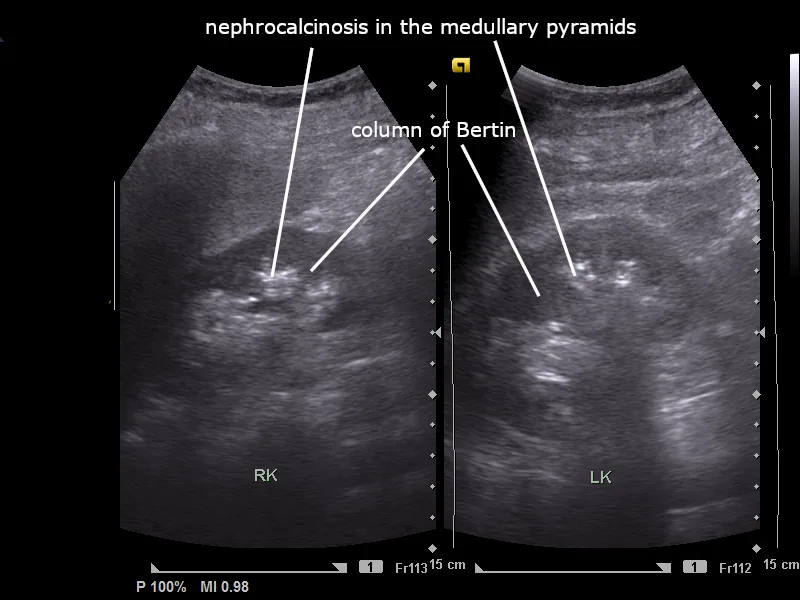 Ultrasound
Definition
Renal tubular acidosis (RTA) comprises disorders in which the kidney excretes hydrogen ions inadequately or reabsorbs filtered bicarbonate inadequately. The result is a chronic metabolic acidosis with a normal anion gap, usually with hyperchloremia and frequently with disturbances of potassium balance.
Classification
Type 1 (distal)
- Defect RTA-1: impaired H⁺ secretion in collecting duct (α-intercalated cell).
- Urine pH in RTA-1: > 5.5 despite severe acidosis.
- Potassium in RTA-1: hypokalemia.
- Classic complication RTA-1: nephrocalcinosis, calcium-phosphate stones, osteomalacia.
Type 2 (proximal)
- Defect RTA-2: impaired HCO₃ reabsorption in proximal tubule.
- Urine pH in RTA-2: variable, < 5.5 with severe acidosis (distal intact).
- Potassium RTA-2: hypokalemia (often).
- Complication/associated disease: Fanconi syndrome (glucosuria, phosphaturia, aminoaciduria, uricosuria).
Type 4 (hyperkalemic)
- Potassium RTA-4: hyperkalemia.
- Classic cause RTA-4: hyporeninemic hypoaldosteronism in diabetes mellitus, lupus, HIV.
Laboratory values by type
Plasma bicarbonate: in type 1 frequently < 15 mmol/L, occasionally < 10 mmol/L; in type 2 usually 12–20 mmol/L; in type 4 usually > 17 mmol/L. Type 3 is very rare (carbonic anhydrase II deficiency) and is considered a mixed form of types 1 and 2.
Occurrence & epidemiology
Type 4 is the most common form; type 1 is rare and type 2 very rare. Sporadic cases of type 1 mainly affect adults (primary forms almost always women), while familial forms usually present in childhood.
Aetiopathogenesis
Causes
- Type 1: autoimmune diseases with hypergammaglobulinemia (especially Sjögren syndrome, rheumatoid arthritis), nephrocalcinosis, medullary sponge kidney, chronic obstructive uropathy, liver cirrhosis, sickle cell anemia, certain drugs; familial forms usually autosomal dominant
- Type 2: mostly as part of Fanconi syndrome or light chain nephropathy in multiple myeloma; also vitamin D deficiency, heavy metals, Wilson disease, cystinosis and certain drugs
- Type 4: aldosterone deficiency or lack of aldosterone action on the distal tubule, usually as hyporeninemic hypoaldosteronism in diabetic nephropathy or chronic interstitial nephritis; also primary adrenal insufficiency, obstruction, pseudohypoaldosteronism and drugs affecting the renin-angiotensin-aldosterone system
Clinical features
RTA is often asymptomatic and is detected through laboratory findings. In types 1 and 2, hypokalemia may cause muscle weakness, hyporeflexia and even paralysis. Type 1 leads to nephrocalcinosis and kidney stones through hypercalciuria, hypocitraturia and alkaline urine; chronic kidney disease is common. Bone pain and osteomalacia in adults or rickets in children occur in type 2 and sometimes type 1. Type 2 may cause volume depletion through renal salt and water losses. Type 4 is usually mild; severe hyperkalemia may cause cardiac arrhythmias or paralysis.
Diagnosis
- Suspected in any unexplained metabolic acidosis with a normal anion gap and in unexplained hypokalemia or hyperkalemia
- Arterial blood gas to confirm metabolic acidosis and to exclude respiratory alkalosis with compensatory acidosis
- Serum electrolytes, creatinine, urea and urine pH in all patients
- Urine anion gap (urine sodium + potassium − chloride): markedly negative with extrarenal losses (mostly gastrointestinal; about −30 to −50 mmol/L), positive with renal bicarbonate loss or RTA
- Type 1: urine pH remains > 5.5 during systemic acidosis; normal kidneys lower urine pH to < 5.2 within 6 hours of acidosis (acid loading test if needed)
- Type 2: during bicarbonate loading, urine pH rises above 7.5 and the fractional excretion of bicarbonate exceeds 15%
- Type 4: an appropriate underlying condition, chronically elevated potassium, normal or mildly decreased bicarbonate; usually low plasma renin activity and low aldosterone with normal cortisol
Keep learning in the app
Further reading (open access)
Cross-references
More topics: Nephrology
- Acute kidney injury
- Nephrotic syndrome
- Chronic kidney disease
- Nephritic syndrome and glomerulonephritis
- Acute interstitial nephritis
- Goodpasture syndrome (anti-GBM disease)
- Membranous nephropathy
- Renal artery stenosis
- Diabetic kidney disease
- Urinary tract infection and cystitis
- Acute pyelonephritis
- Autosomal dominant polycystic kidney disease (ADPKD)
Note: Learning content for medical education – not a treatment recommendation and no substitute for diagnosis or treatment decisions in individual cases. Treatment and management are deliberately not covered on this page.