Hashimoto's thyroiditis
Board exam relevance: in 5 of 105 exam reports · rank 69- Synonyms
- Hashimoto's disease, Hashimoto disease, autoimmune thyroiditis, chronic lymphocytic thyroiditis, thyroid inflammation, TPO antibodies
- Specialty
- Internal medicine · Endocrinology & diabetes
- Images
- Histology 1
- Last updated
- 10/2026 · Dr. Pascal Bafteh
Contents
Images (1)
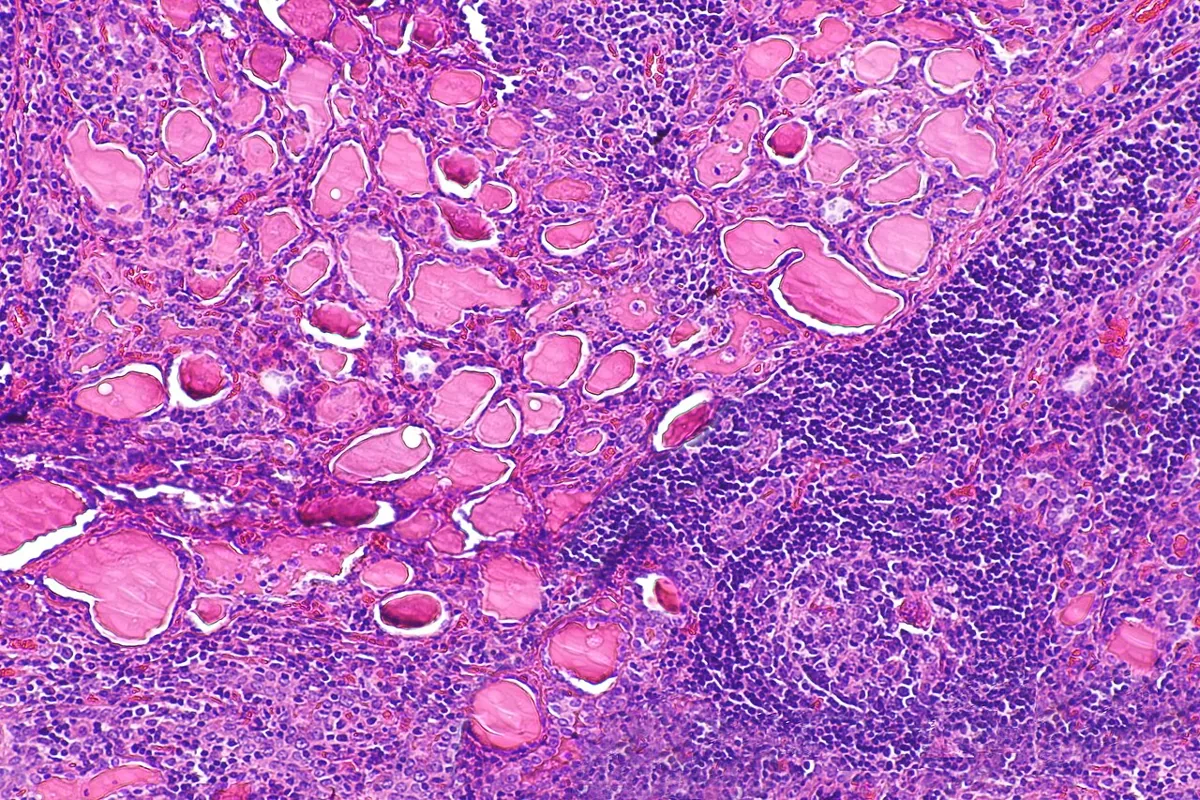 Histology
Definition
Hashimoto's thyroiditis (chronic lymphocytic thyroiditis, autoimmune thyroiditis) is a chronic autoimmune inflammation of the thyroid gland with lymphocytic infiltration. It is considered the most common cause of primary hypothyroidism in North America. Silent lymphocytic thyroiditis is regarded as a variant.
Occurrence & epidemiology
Women are affected several times more often than men. The frequency increases with age and is raised in chromosomal disorders such as Down, Turner and Klinefelter syndromes. A family history of thyroid disease is common.
Aetiopathogenesis
Autoreactive lymphocytes infiltrate the thyroid and progressively destroy the follicular epithelium; antibodies against thyroid peroxidase (TPO) and thyroglobulin are formed. Over time, functioning tissue is lost, so that initially normal function can progress to subclinical and eventually overt hypothyroidism.
The disease is associated with other autoimmune disorders: Addison's disease, type 1 diabetes, hypoparathyroidism, vitiligo, premature graying of hair, pernicious anemia, rheumatoid arthritis, systemic lupus erythematosus, Sjögren's syndrome, celiac disease and autoimmune polyglandular syndrome type 2 (Schmidt syndrome).
Clinical features
- Goiter: painless enlargement of the thyroid or a sense of fullness in the throat; on palpation the thyroid is non-tender, smooth or nodular, firm and rubbery. Later the gland may shrink and become fibrotic.
- Hypothyroidism: fatigue, cold intolerance, weight gain and other signs of hormone deficiency.
- Hyperthyroid phase (hashitoxicosis): at the onset, transient overactivity can occur because stored hormone is released from the inflamed tissue; rarely, Hashimoto's thyroiditis and Graves' disease coexist.
- Tumors: thyroid tumors may occur more often; rarely, primary thyroid lymphoma.
Histology
Typical features are extensive lymphocytic infiltration with lymphoid follicles and germinal centers, loss of thyroid follicles and increasing fibrosis (scarring) of the tissue. A biopsy is usually not required for diagnosis.
Diagnosis
Findings at a glance
- Antibodies: TPO antibodies in almost all patients; thyroglobulin antibodies only in some
- Ultrasound: heterogeneous, hypoechoic parenchyma
- Course: initially normal thyroid function tests, sometimes a transient hyperthyroid phase; later hypothyroidism
- Associated autoimmune diseases: e.g. type 1 diabetes, celiac disease, Addison's disease, vitiligo
- Antibodies: high titers of TPO antibodies are the key finding; thyroglobulin antibodies are found less often.
- Thyroid function: initially TSH and T4 are normal; later T4 falls and TSH rises.
- Ultrasound: heterogeneous, hypoechoic parenchyma with septations and hypoechoic micronodules, sometimes reduced vascularity.
- Associated diseases: testing for other autoimmune disorders if corresponding symptoms or a family history are present.
Keep learning in the app
Further reading (open access)
Cross-references
More topics: Endocrinology & diabetes
Note: Learning content for medical education – not a treatment recommendation and no substitute for diagnosis or treatment decisions in individual cases. Treatment and management are deliberately not covered on this page.