Hypopituitarism
- Synonyms
- panhypopituitarism, pituitary insufficiency, Sheehan syndrome, pituitary apoplexy, underactive pituitary
- Specialty
- Internal medicine · Endocrinology & diabetes
- Images
- Histology 1 · MRI 1
- Last updated
- 10/2026 · Dr. Pascal Bafteh
Contents
Images (2)
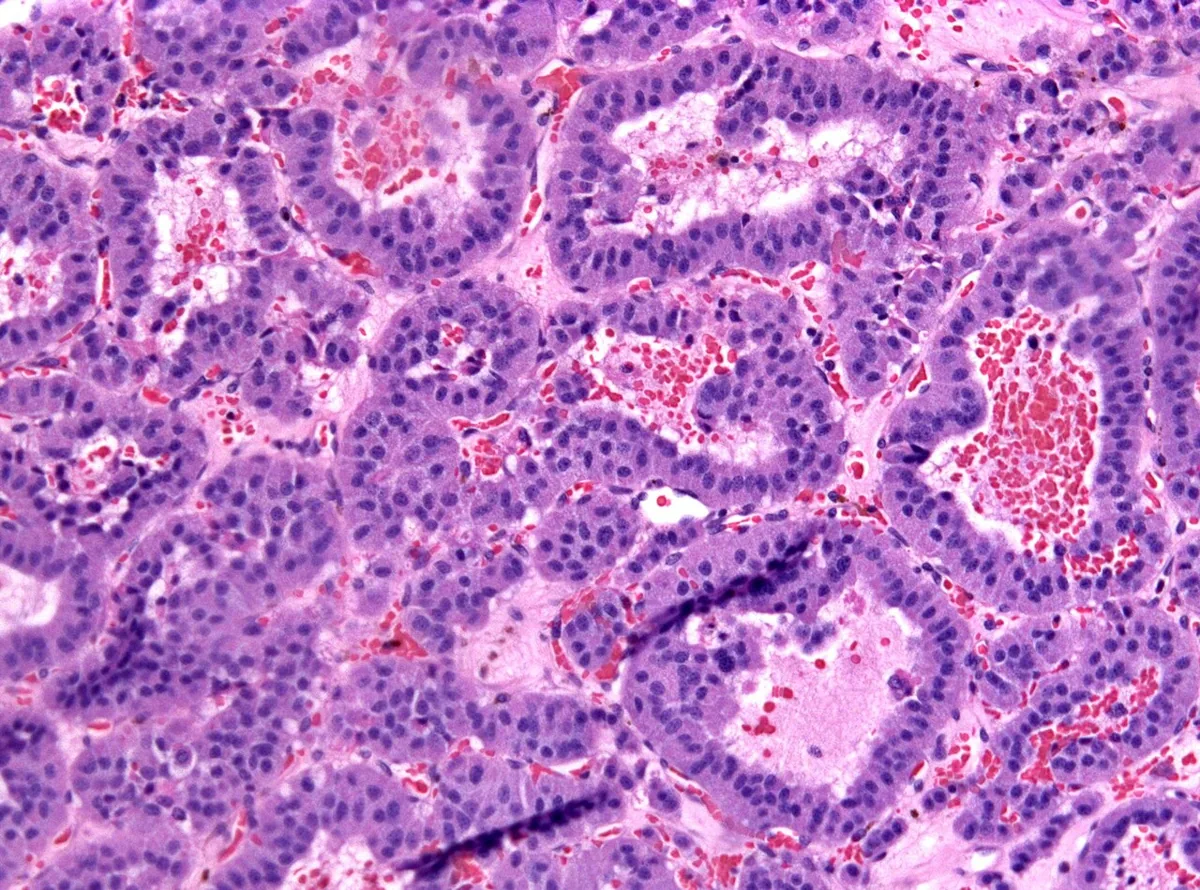 Histology
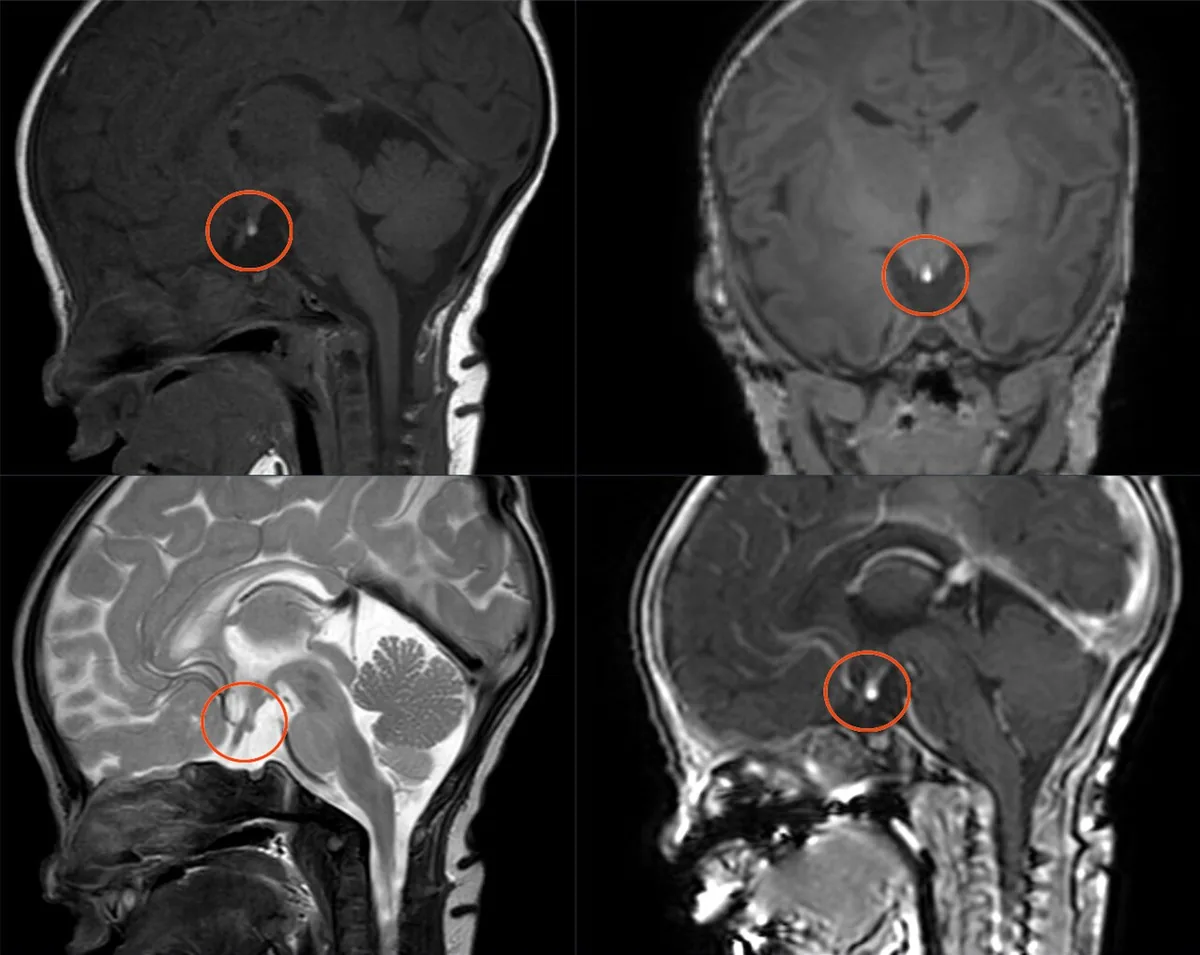 MRI
MRIDefinition
Hypopituitarism is partial or complete loss of hormone production by the anterior pituitary. When all anterior pituitary hormones are lost, the condition is called panhypopituitarism, and the function of all downstream glands is reduced. The clinical picture depends on which hormones are deficient.
Classification
- Primary: disorders of the pituitary itself.
- Secondary: disorders of the hypothalamus or pituitary stalk.
- Typical order of loss: usually growth hormone first, then gonadotropins (LH, FSH), and finally TSH and ACTH.
- Posterior lobe: vasopressin deficiency is rare in primary pituitary disorders but common with lesions of the pituitary stalk and hypothalamus.
Aetiopathogenesis
Causes
- Tumors: pituitary adenomas, craniopharyngioma; hypothalamic tumors such as ependymoma, meningioma, pinealoma and metastases.
- Autoimmune and drug-related: lymphocytic hypophysitis; drug-induced hypophysitis.
- Iatrogenic: after radiation exposure of the pituitary region, after surgery on the pituitary, transection of the pituitary stalk.
- Infarction and necrosis: pituitary apoplexy (hemorrhage), shock – especially peripartum (Sheehan syndrome) –, diabetes mellitus, sickle cell disease; vascular thrombosis or aneurysm of the internal carotid artery.
- Infiltration and inflammation: hemochromatosis, Langerhans cell histiocytosis, sarcoidosis, meningitis, pituitary abscess.
- Trauma: e.g. basal skull fracture.
- Idiopathic isolated or multiple hormone deficiencies.
Clinical features
Symptoms of hormone deficiency
Onset is usually insidious and often goes unnoticed; occasionally symptoms begin suddenly.
- Gonadotropin deficiency: delayed puberty in children; in premenopausal women amenorrhoea, reduced libido, infertility and regression of secondary sexual characteristics; in men erectile dysfunction, testicular atrophy, reduced libido and decreased spermatogenesis.
- Growth hormone deficiency: often unnoticed in adults; reduced energy, abnormal body composition, dyslipidemia.
- TSH deficiency: hypothyroidism with facial puffiness, a hoarse voice, bradycardia and cold intolerance.
- ACTH deficiency: fatigue, hypotension, poor tolerance of stress and infection. Unlike primary adrenal insufficiency, hyperpigmentation, hyponatremia due to aldosterone deficiency and hyperkalemia are absent because the renin–angiotensin–aldosterone system remains intact.
- Hypothalamic lesions: disturbed appetite regulation with an anorexia-like picture or hyperphagia and obesity.
Acute forms
- Sheehan syndrome: necrosis of the pituitary, which enlarges during pregnancy, due to hypovolaemia and shock around delivery. Lactation does not start; fatigue and loss of pubic and axillary hair follow.
- Pituitary apoplexy: hemorrhagic infarction, usually of a pituitary tumor. Acutely severe headache, neck stiffness, fever, visual field defects and oculomotor palsies; edema may cause somnolence or coma; sudden hypopituitarism with circulatory collapse due to ACTH and cortisol deficiency.
Diagnosis
- Thyroid axis: low free T4 with normal or inappropriately low TSH (central hypothyroidism); a raised TSH instead suggests primary thyroid disease.
- Adrenal axis: ACTH alone is of little help. A very low morning cortisol (below 3.5 µg/dl or 96.6 nmol/l between 7:30 and 9:00 am) strongly suggests cortisol deficiency; values above 18 µg/dl (500 nmol/l, polyclonal assays) or above 15 µg/dl (415 nmol/l, monoclonal assays or LC-MS/MS) exclude it.
- Short ACTH stimulation test: abnormal with a peak cortisol below 18 µg/dl (polyclonal assays) or below 15 µg/dl (monoclonal assays or LC-MS/MS); in recent-onset ACTH deficiency it becomes informative only 2–4 weeks after onset.
- Hypoglycemia stimulation test: the most accurate assessment of ACTH and GH secretory capacity, performed only under medical supervision because of its risks.
- Gonadal axis: testosterone or oestradiol; LH and FSH are most informative in postmenopausal women, in whom they are normally above 30 IU/l. Before menopause the menstrual history is more informative.
- Growth hormone: a low IGF-1 suggests deficiency, a normal value does not exclude it; with three or more other hormone deficiencies and a low IGF-1, GH deficiency is almost certain.
- Prolactin: often raised up to fivefold with large tumors due to stalk compression.
- Imaging: high-resolution MRI or CT with contrast to detect structural causes; where cross-sectional imaging is unavailable, a lateral sella radiograph can show macroadenomas larger than 10 mm.
Keep learning in the app
Further reading (open access)
Cross-references
Note: Learning content for medical education – not a treatment recommendation and no substitute for diagnosis or treatment decisions in individual cases. Treatment and management are deliberately not covered on this page.