Hepatitis C
Board exam relevance: in 2 of 105 exam reports · rank 142- Synonyms
- HCV, hep C, non-A non-B hepatitis, chronic hepatitis C
- Specialty
- Internal medicine · Liver & biliary tract
- Images
- Histology 1
- Last updated
- 10/2026 · Dr. Pascal Bafteh
Contents
Images (1)
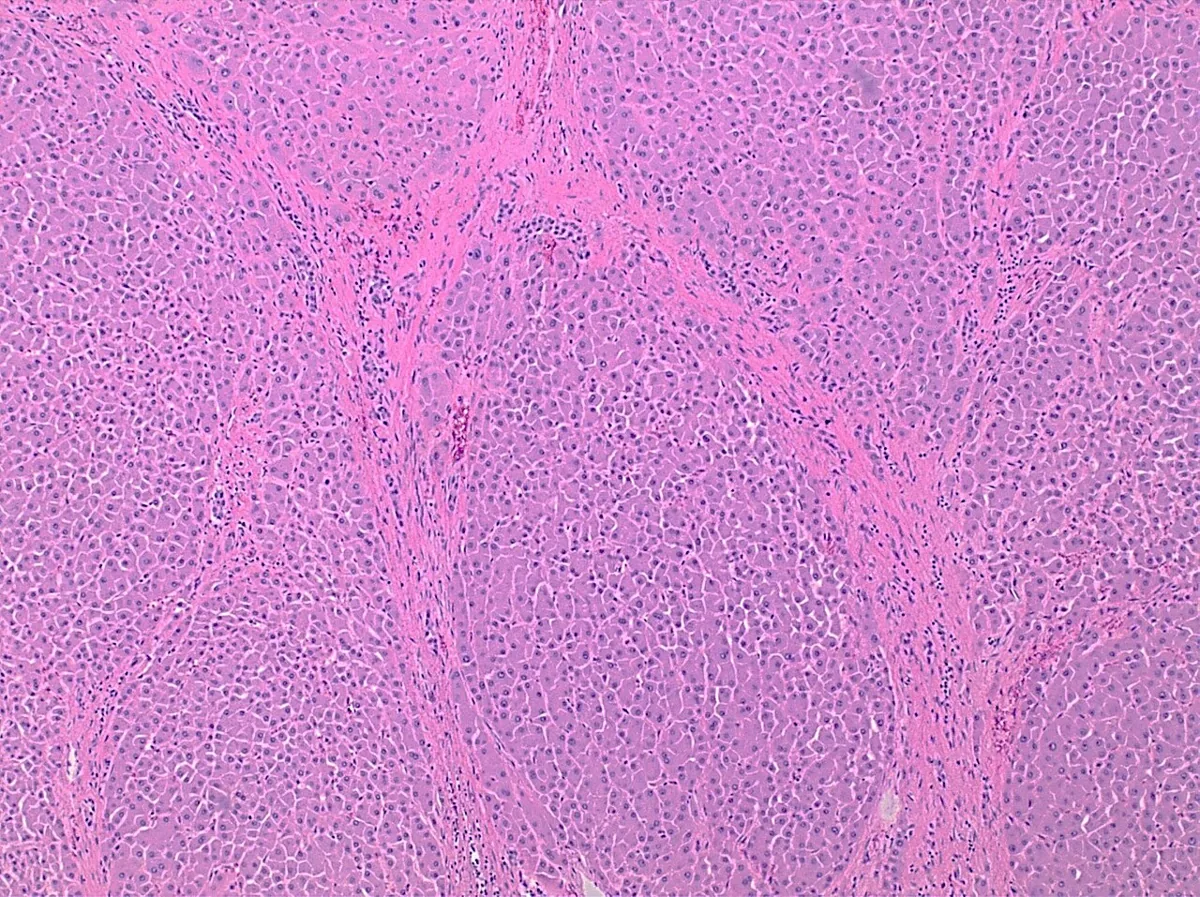 Histology
Definition
Hepatitis C is an infection of the liver with hepatitis C virus (HCV), an enveloped, single-stranded positive-sense RNA virus of the family Flaviviridae. The virus was identified in 1989; before that, the term "non-A, non-B hepatitis" was used. Because of a high mutation rate, HCV is genetically very variable.
During the first 6 months the infection is called acute; if it persists longer, chronic hepatitis C is present.
Classification
Genotypes 1 to 7 with more than 60 subtypes are distinguished. Worldwide, including Europe and North America, genotype 1 is the most common (46%), followed by genotype 3 (30%).
Occurrence & epidemiology
According to WHO estimates, about 71 million people are chronically infected with HCV, around 1% of the world population. In Germany, anti-HCV prevalence in the general population was 0.3% in the DEGS1 study. It is much higher among people who use drugs by the parenteral route (37–75%) and among prisoners (8.6–17.6%). Reported first diagnoses affect men more than twice as often as women, with a peak at the age of 30–39 years.
Aetiopathogenesis
HCV is transmitted parenterally via blood. Worldwide, unsafe reuse of needles in healthcare and drug use are the main causes of new infections; in Germany, HCV mainly affects people who use or have used drugs. Sharing needles, filters, spoons and other equipment carries a risk, as do shared tubes for nasal drug use.
Sexual transmission is rare overall but occurs with sexual practices that cause mucosal injury, especially among HIV-positive men who have sex with men. The risk of mother-to-child transmission is 3–10%. After a needlestick injury with HCV-containing blood, the risk of infection is on average below 1%. Blood products have not been a relevant route in Germany since testing was introduced in 1991.
Progression of fibrosis is accelerated among other factors by alcohol, obesity, insulin resistance, type 2 diabetes, older age at infection and co-infection with HIV or HBV.
Clinical features
Acute hepatitis C
Antibodies usually become detectable 7–8 weeks after infection. About 75% of acute infections are without notable symptoms or only flu-like; about 25% develop a usually mild hepatitis with jaundice. Fulminant courses are very rare. In 15–40% the infection clears spontaneously, and in about 60–85% it becomes chronic.
Chronic hepatitis C
Chronic hepatitis C is often non-specific, with fatigue, upper abdominal discomfort, reduced performance and sometimes pruritus and joint complaints. About 16–20% develop liver cirrhosis after 20 years. In HCV-related cirrhosis, the annual risk of hepatocellular carcinoma is 2–4%.
Extrahepatic manifestations are common: an immune complex vasculitis caused by cold-precipitating immunoglobulins with purpura, arthralgia and glomerulonephritis, B-cell lymphomas, diabetes mellitus, lichen planus, porphyria cutanea tarda, Sjögren's syndrome, chronic kidney disease and depression.
Diagnosis
- Anti-HCV (immunoassay) as a screening test; if positive, direct viral detection follows, because antibodies do not distinguish between past and current infection
- HCV RNA (PCR) or HCV core antigen prove active infection; RNA is measurable a few days after infection and is therefore decisive when recent infection is suspected, even if the antibody test is negative
- Positive anti-HCV with negative HCV RNA suggests past infection
- Genotyping and viral load complete the characterisation
- Liver damage: aminotransferases (often only moderately raised), synthetic parameters, blood count; non-invasive fibrosis assessment with elastography or scores such as APRI and FIB-4
- Testing for HBV and HIV co-infection
Keep learning in the app
Further reading (open access)
Cross-references
More topics: Liver & biliary tract
Note: Learning content for medical education – not a treatment recommendation and no substitute for diagnosis or treatment decisions in individual cases. Treatment and management are deliberately not covered on this page.