Familial adenomatous polyposis (FAP)
- Synonyms
- FAP, polyposis coli, adenomatous polyposis coli, Gardner syndrome, APC mutation, attenuated FAP
- Specialty
- Internal medicine · Gastroenterology
- Images
- Gross specimen 1 · Clinical 1
- Last updated
- 10/2026 · Dr. Pascal Bafteh
Contents
Images (2)
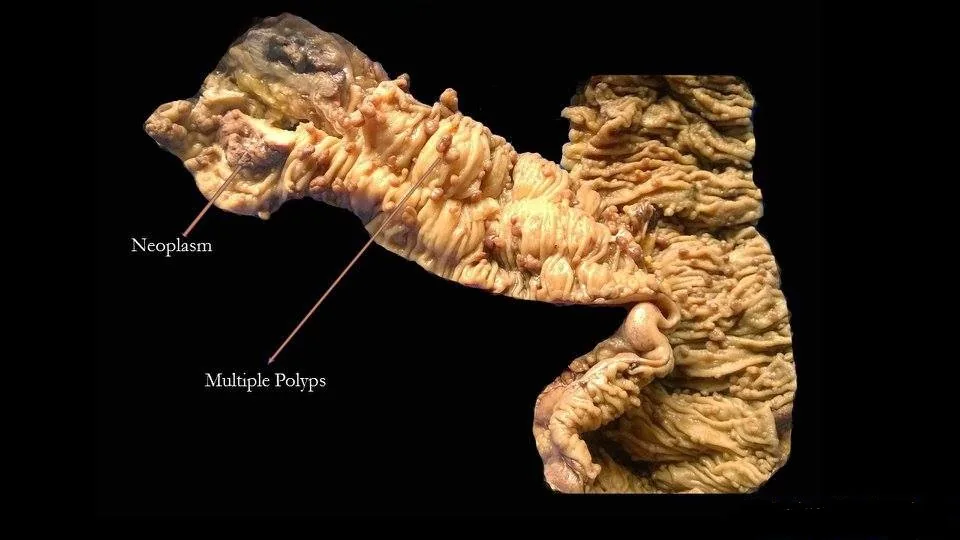 Gross specimen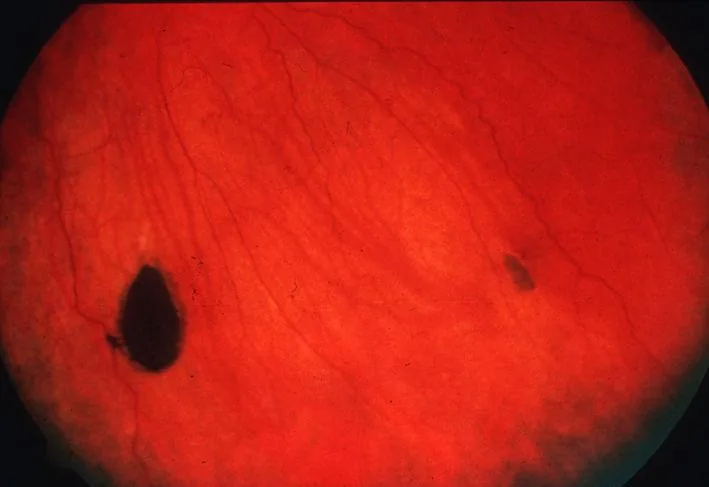
Definition
Familial adenomatous polyposis (FAP) is an autosomal dominant disease in which 100 or more adenomatous polyps carpet the colon and rectum. In the natural course, nearly every affected person develops colon cancer before the age of 40. In addition, benign and malignant manifestations occur outside the large bowel; this combination was formerly called Gardner syndrome.
Classification
- Classic FAP: more than 100 colorectal polyps at colonoscopy
- Attenuated FAP (AFAP) or oligopolyposis: 10–99 synchronous adenomas, fewer than 100 at presentation, also inherited in an autosomal dominant pattern; the polyps tend to be located in the proximal colon
Occurrence & epidemiology
FAP affects about 1 in 10,000 people. Polyps are present in 50% of affected individuals by age 15 and in 95% by age 35.
Aetiopathogenesis
Genetics and manifestations
- Genetics: APC gene autosomal dominant.
- Classic FAP: > 100 colorectal adenomas from adolescence.
- Attenuated FAP: fewer polyps, later manifestation.
- Extracolonic manifestations: desmoid tumors + duodenal adenomas + CHRPE + osteomas (Gardner).
Clinical features
Many affected individuals have no symptoms; rectal bleeding, usually occult, is common.
Extracolonic manifestations:
- benign: desmoid tumors, osteomas of the skull or mandible, sebaceous (epidermoid) cysts, adenomas in other parts of the gastrointestinal tract
- increased cancer risk: duodenum (5–11%), pancreas (2%), thyroid (2%), brain (medulloblastoma in less than 1%) and liver (hepatoblastoma in 0.7% of children under 5 years)
Diagnosis
- Colonoscopy: finding more than 100 polyps establishes the diagnosis; the characteristic lesions can already be recognized at sigmoidoscopy, while colonoscopy also detects more proximal cancers
- Genetic testing to identify the specific mutation; then targeted testing of first-degree relatives
- Offspring of affected individuals: screening for hepatoblastoma
- In attenuated FAP, complete colonoscopy is particularly important because the polyps tend to be more proximal
Keep learning in the app
Further reading (open access)
Cross-references
More topics: Gastroenterology
Note: Learning content for medical education – not a treatment recommendation and no substitute for diagnosis or treatment decisions in individual cases. Treatment and management are deliberately not covered on this page.