Chronic pancreatitis
- Synonyms
- chronic inflammation of the pancreas, pancreatic insufficiency, exocrine pancreatic insufficiency, calcific pancreatitis
- Specialty
- Internal medicine · Gastroenterology
- Images
- CT 1 · X-ray 1
- Last updated
- 10/2026 · Dr. Pascal Bafteh
Contents
Images (2)
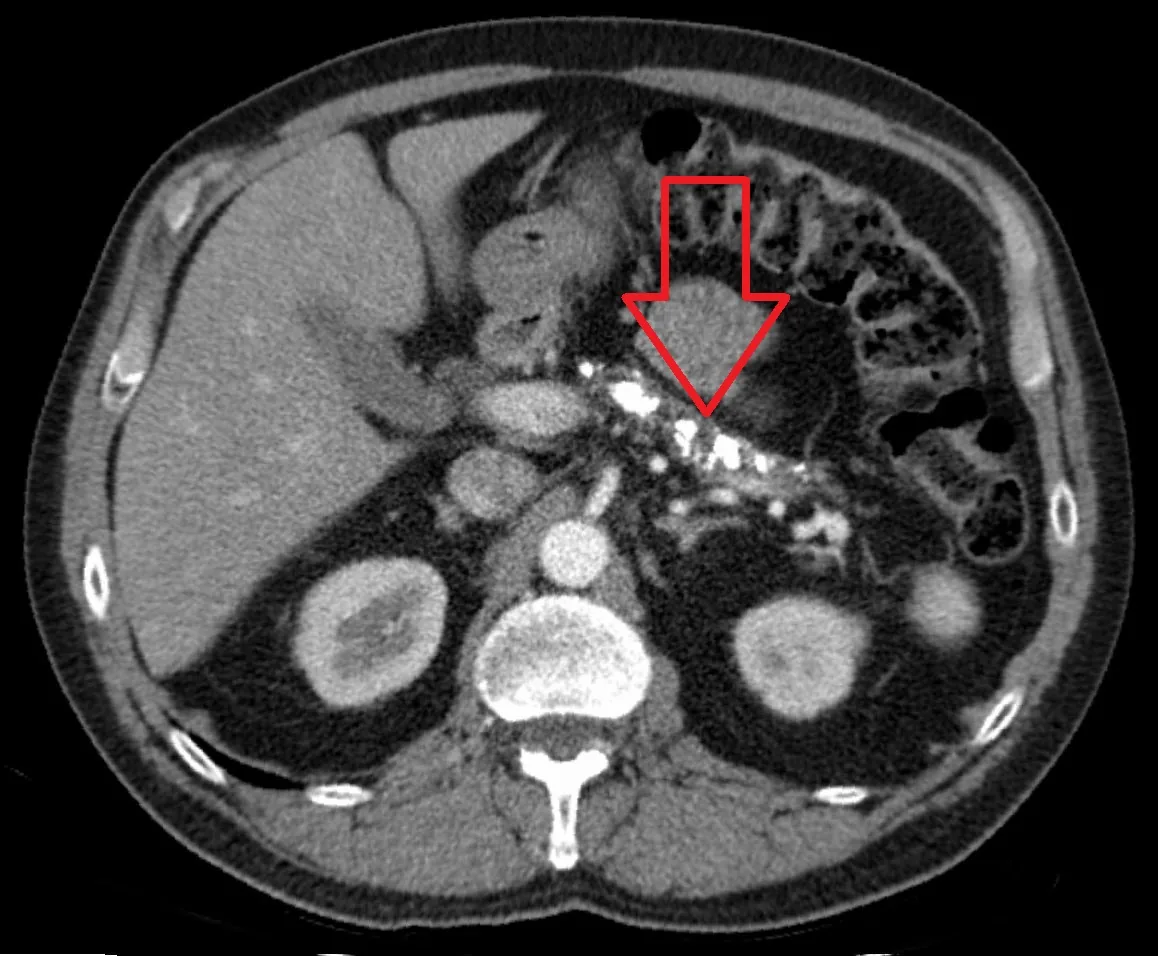 CT
CT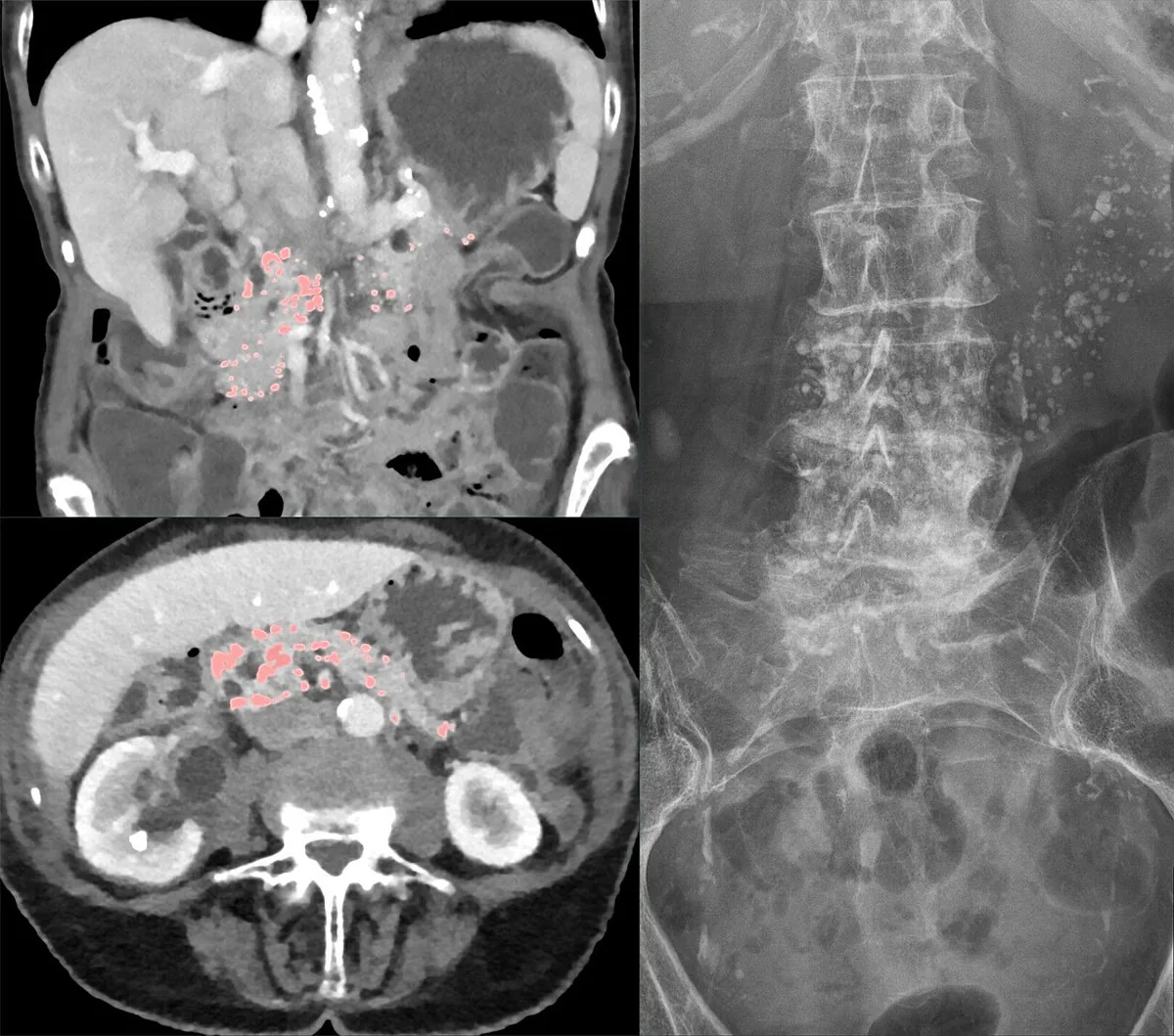 X-ray
X-rayDefinition
Chronic pancreatitis is persistent inflammation of the pancreas with permanent structural damage: fibrosis and ductal strictures, followed by a decline in exocrine and endocrine function (pancreatic insufficiency). Its hallmark is fibrosis caused by inflammation and recurrent injury; calcification of the parenchyma, intraductal stones and atrophy of the organ also occur.
Classification
By cause, the following are distinguished:
- toxic: alcohol
- genetic: mutations in the cationic trypsinogen gene (PRSS1), SPINK1, CFTR and chymotrypsin C
- obstructive: pancreatic duct strictures (traumatic, iatrogenic, malignant), tumors, possibly pancreas divisum and sphincter of Oddi dysfunction
- autoimmune: type 1 (IgG4-related) and type 2 autoimmune pancreatitis
- idiopathic: including tropical pancreatitis
- other: smoking
Occurrence & epidemiology
About 50% of cases of chronic pancreatitis result from heavy alcohol consumption; men are affected more often than women. Only a minority of people with sustained alcohol exposure develop the disease. A large proportion of cases are idiopathic. Tropical pancreatitis affects children and young adults in tropical regions such as India, Indonesia and Nigeria; it begins early and is associated with large ductal stones and an accelerated course.
Aetiopathogenesis
The pathogenesis is not fully understood. Proposed mechanisms include:
- stone and duct obstruction theory: an imbalance between protein and bicarbonate leads to protein-rich plugs that calcify and form ductal stones; chronic obstruction causes inflammation, fibrosis, ductal distortion, strictures and atrophy
- necrosis-fibrosis hypothesis: repeated attacks of acute pancreatitis with necrosis heal with fibrotic tissue taking the place of necrosis
- SAPE model (sentinel acute pancreatitis event): a first episode of acute pancreatitis sensitizes the pancreas, so that minor stressors such as alcohol or tobacco trigger further attacks
Smoking is an independent risk factor whose risk rises with the amount smoked; heavy alcohol consumption and smoking probably have additive effects on progression. In advanced disease, hypertrophy of neural sheaths and perineural inflammation contribute to chronic pain.
Clinical features
Pain is the dominant symptom in most patients and can occur before structural changes are visible: usually postprandial, epigastric, partially relieved by sitting up or leaning forward; initially episodic, later often continuous. A small subset of patients have no pain and present with malabsorption.
Exocrine insufficiency: when lipase and protease secretion falls below 10% of normal, malabsorption develops with steatorrhea (greasy stools that are difficult to flush, sometimes with oil droplets), flatulence, abdominal distension, undernutrition, loss of body weight, fatigue and, in severe cases, deficiency of fat-soluble vitamins (A, D, E, K).
Endocrine insufficiency: glucose intolerance may appear at any time, overt pancreatogenic diabetes usually late; because glucagon-producing alpha cells are lost, there is a tendency to hypoglycemia.
Other complications: pseudocysts, obstruction of the bile duct or duodenum, disruption of the pancreatic duct with ascites or pleural effusion, splenic vein thrombosis with gastric varices, pseudoaneurysms and an increased risk of pancreatic adenocarcinoma (especially in hereditary and tropical pancreatitis).
Diagnosis
Imaging
Amylase and lipase are often normal because of the loss of function; the diagnosis relies on clinical assessment, imaging and function tests.
- Abdominal X-ray: pancreatic calcifications; they occur late and are visible in only about 30%
- CT: calcifications, pseudocysts, dilated ducts; exclusion of pancreatic cancer; often normal early on
- MRI with MRCP: shows masses and ductal changes better, more accurate than CT and without X-ray exposure; after secretin more sensitive for ductal changes and with functional information
- Endoscopic ultrasound: detects subtle parenchymal and ductal changes; high sensitivity, limited specificity
- With a ductal stricture or worsening symptoms, evaluation for pancreatic cancer (brush cytology, CA 19-9, CEA)
Function tests
- Common function tests detect mild to moderate exocrine insufficiency only inaccurately; late in the course they become abnormal more reliably
- Direct tests (stimulation with cholecystokinin or secretin, collection of duodenal secretions): most useful in early stages but laborious and available in only a few centers
- Serum trypsinogen: very low levels (below 20 ng/ml) are highly specific
- 72-hour fecal fat on a high-fat intake: demonstrates steatorrhea but does not establish its cause
- Fecal elastase and chymotrypsin: decreased in exocrine insufficiency
Keep learning in the app
Further reading (open access)
Cross-references
More topics: Gastroenterology
Note: Learning content for medical education – not a treatment recommendation and no substitute for diagnosis or treatment decisions in individual cases. Treatment and management are deliberately not covered on this page.