Bowel obstruction (ileus)
Board exam relevance: in 2 of 105 exam reports · rank 142- Synonyms
- intestinal obstruction, small bowel obstruction, large bowel obstruction, paralytic ileus, volvulus, SBO, LBO
- Specialty
- Internal medicine · Gastroenterology
- Images
- X-ray 1 · CT 1 · Ultrasound 1
- Last updated
- 10/2026 · Dr. Pascal Bafteh
Contents
Images (3)
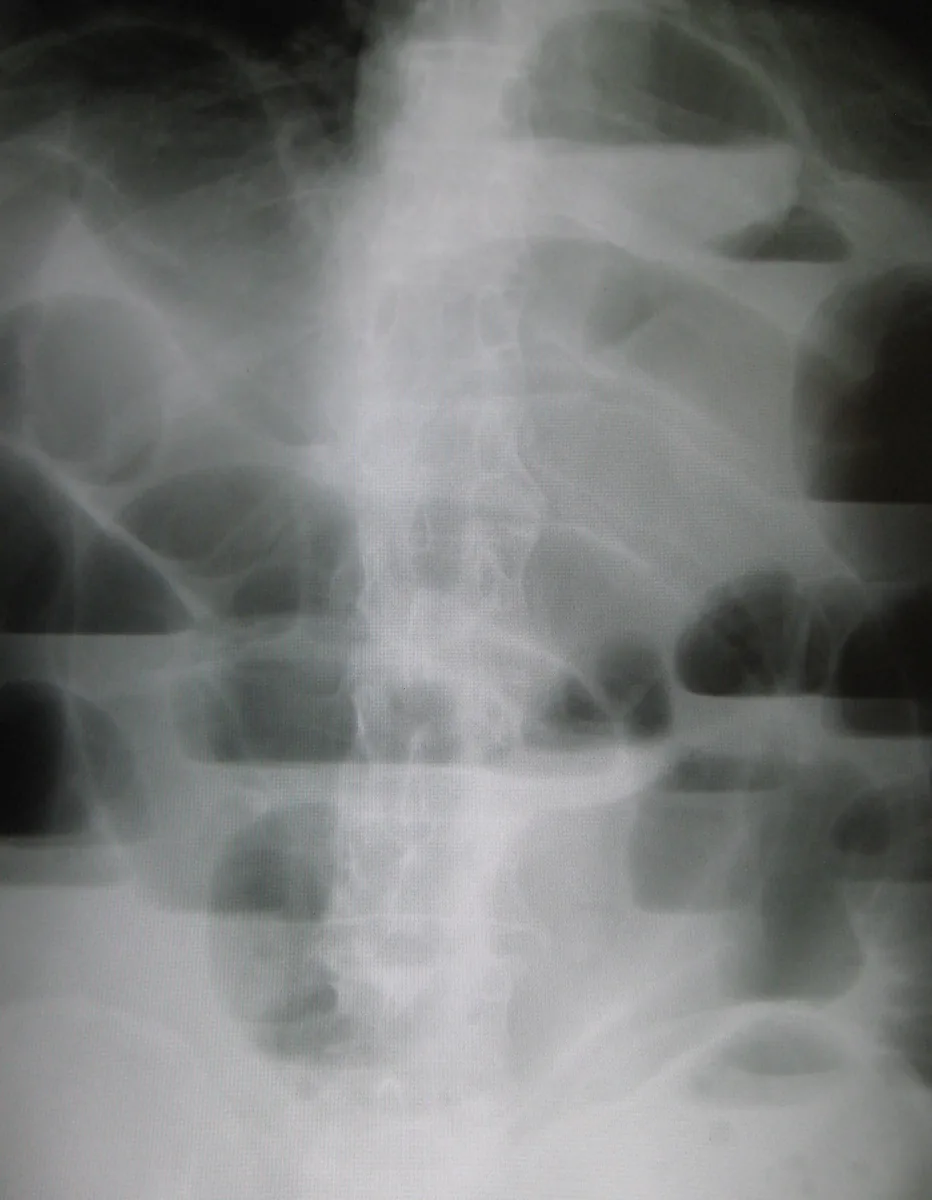 X-ray
X-ray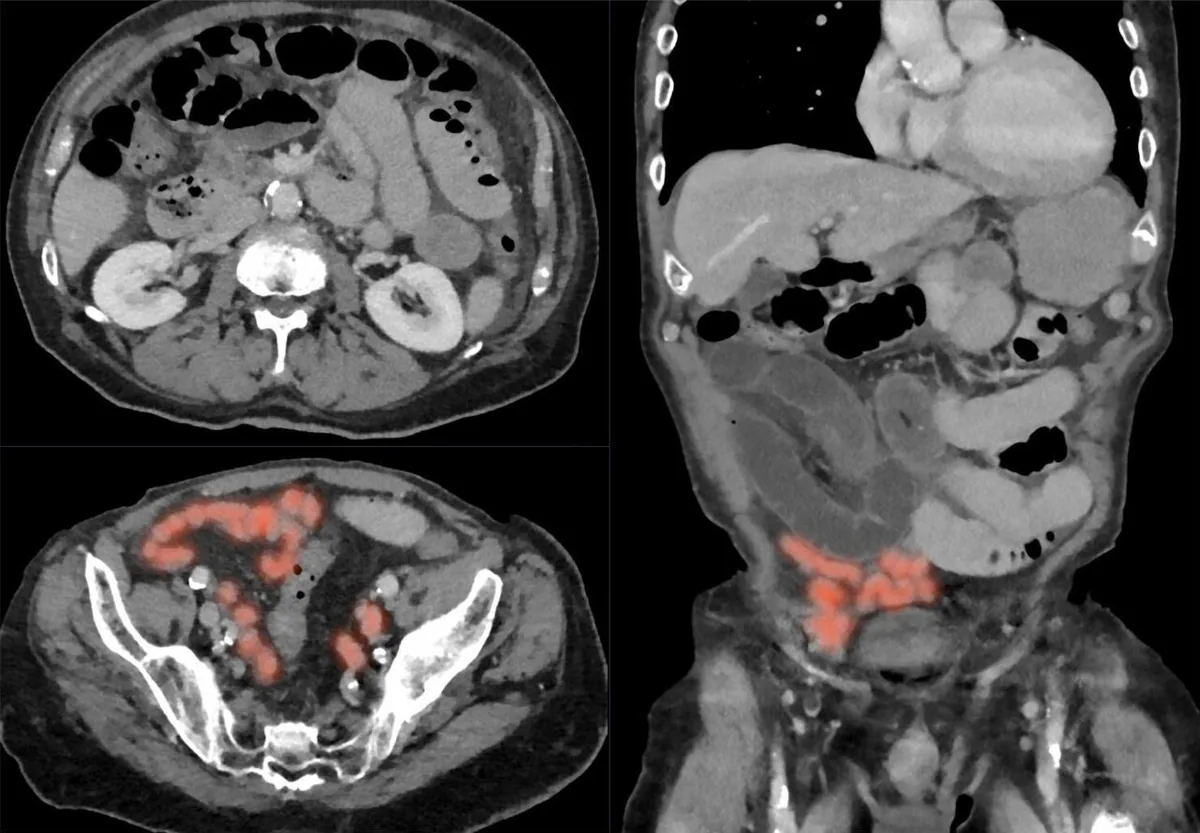 CT
CT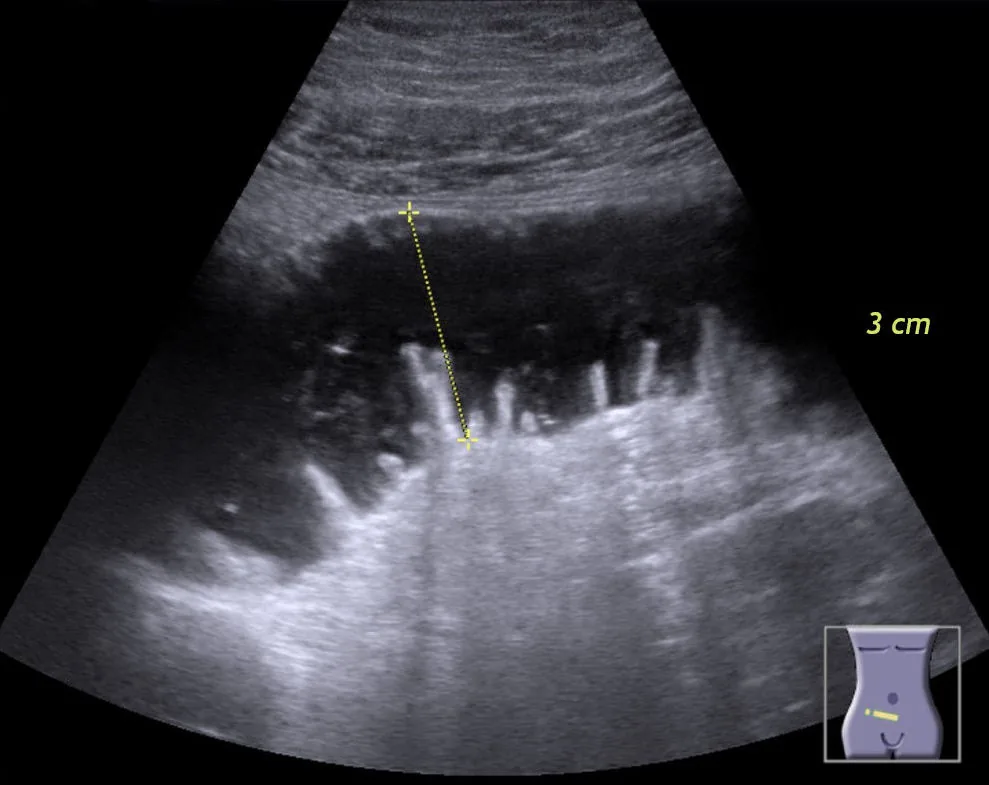 Ultrasound
Definition
Mechanical bowel obstruction is a significant impairment or complete arrest of the passage of intestinal contents due to a blockage. It is distinguished from paralytic ileus ("ileus" in the narrower sense): a temporary arrest of intestinal peristalsis without a mechanical obstruction.
Classification
- By location: small-bowel obstruction (including the duodenum) and large-bowel obstruction
- By extent: partial or complete obstruction
- Simple mechanical obstruction: blockage without vascular compromise
- Strangulating obstruction: obstruction with compromised blood flow, in nearly 25% of small-bowel obstructions; usually with hernia, volvulus or intussusception
- Paralytic ileus: arrest of peristalsis, most commonly after abdominal operations or postoperatively
Aetiopathogenesis
Mechanical obstruction: overall, the most common causes are adhesions, hernias and tumors; other causes include diverticulitis, foreign bodies (including gallstones), volvulus, intussusception and fecal impaction.
- Colon: tumors (usually in the left colon), diverticulitis (usually sigmoid), volvulus of the sigmoid or cecum, fecal impaction, Hirschsprung disease, Crohn's disease
- Duodenum (adults): cancer of the duodenum or pancreatic head, ulcer disease
- Jejunum and ileum (adults): hernias, adhesions (common), tumors, Meckel diverticulum, Crohn's disease (uncommon), Ascaris, volvulus, intussusception by tumor (rare), foreign body, gallstones (rare)
Pathophysiology: fluid, food, digestive secretions and gas accumulate above the obstruction; the proximal bowel distends and the distal segment collapses. Mucosal secretion and absorption are impaired and the bowel wall becomes edematous. Increasing distension is self-perpetuating and raises the risk of dehydration and strangulation. In strangulation, venous outflow is interrupted first, then arterial inflow; infarction and gangrene can occur in as little as 6 hours, followed by perforation. In the large bowel, strangulation is rare (except with volvulus); the risk of perforation is high if the cecum is dilated to 13 cm or more.
Paralytic ileus: most common after abdominal operations, because handling of the bowel causes inflammation and reduced contractility; also with intraperitoneal or retroperitoneal inflammation (e.g. appendicitis, diverticulitis, perforated ulcer), retroperitoneal or intra-abdominal hematomas, metabolic disturbances (e.g. hypokalemia), certain drugs (e.g. opioids, anticholinergics) and renal or thoracic disease (e.g. rib fractures, lower lobe pneumonia, myocardial infarction).
Clinical features
Small-bowel obstruction: symptoms shortly after onset – abdominal cramps around the umbilicus or in the epigastrium, vomiting and, with complete obstruction, obstipation; with partial obstruction sometimes diarrhea. Without strangulation the abdomen is not tender; hyperactive, high-pitched peristalsis with rushes coinciding with the cramps is typical, sometimes with palpable dilated loops. Severe, steady pain suggests strangulation; with infarction the abdomen becomes tender and bowel sounds disappear. Shock and oliguria are serious signs.
Large-bowel obstruction: milder symptoms developing more gradually; increasing constipation up to obstipation, abdominal distension, lower abdominal cramps without passage of stool; vomiting uncommon and only after hours. Examination shows loud borborygmi, no tenderness, an empty rectum and sometimes a palpable tumor. Volvulus often begins abruptly with continuous pain and superimposed colic.
Paralytic ileus: abdominal distension, nausea, vomiting and vague abdominal discomfort, rarely colicky; obstipation or small amounts of watery stool; "silent abdomen" with absent or minimal peristalsis; no tenderness unless the cause is inflammatory. After abdominal operations, the small bowel usually recovers within hours, the stomach after about 24 hours and the colon often only after 48–72 hours.
Diagnosis
- Supine and upright abdominal radiographs: usually adequate for diagnosis; a ladderlike series of distended small-bowel loops and fluid levels on upright views in small-bowel obstruction; in large-bowel obstruction distension of the colon proximal to the obstruction; gas in the bowel wall (pneumatosis intestinalis) indicates gangrene; distended loops may be absent with proximal jejunal obstruction or closed-loop obstruction (e.g. volvulus)
- Cecal volvulus: large gas bubble in the mid-abdomen or left upper quadrant; on contrast enema a typical "bird-beak" deformity at the site of the twist (cecum and sigmoid)
- CT of the abdomen: increasingly used in suspected small-bowel obstruction; dilated proximal and collapsed distal bowel are highly suggestive, but a transition point is not always visible
- Laboratory tests: elevated white blood cells and acidosis may indicate strangulation but can be absent; serial clinical examination provides early clues
- Paralytic ileus: clinical evaluation, sometimes radiographs; postoperatively gas tends to accumulate in the colon rather than the small bowel; distinguishing it from mechanical obstruction is often difficult, and contrast-enhanced CT helps differentiate and identify the cause
Keep learning in the app
Further reading (open access)
Cross-references
More topics: Gastroenterology
Note: Learning content for medical education – not a treatment recommendation and no substitute for diagnosis or treatment decisions in individual cases. Treatment and management are deliberately not covered on this page.