Acromegaly
Board exam relevance: in 1 of 105 exam reports · rank 181- Synonyms
- gigantism, growth hormone excess, GH-secreting pituitary adenoma, somatotroph adenoma, acromegalic
- Specialty
- Internal medicine · Endocrinology & diabetes
- Images
- Clinical 2 · Histology 1
- Last updated
- 10/2026 · Dr. Pascal Bafteh
Contents
Images (3)
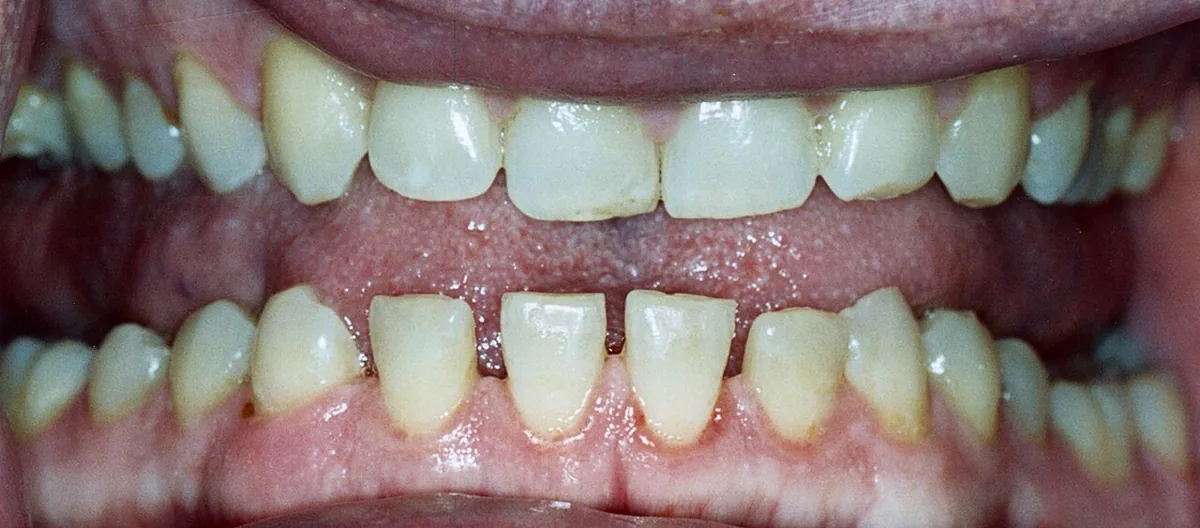
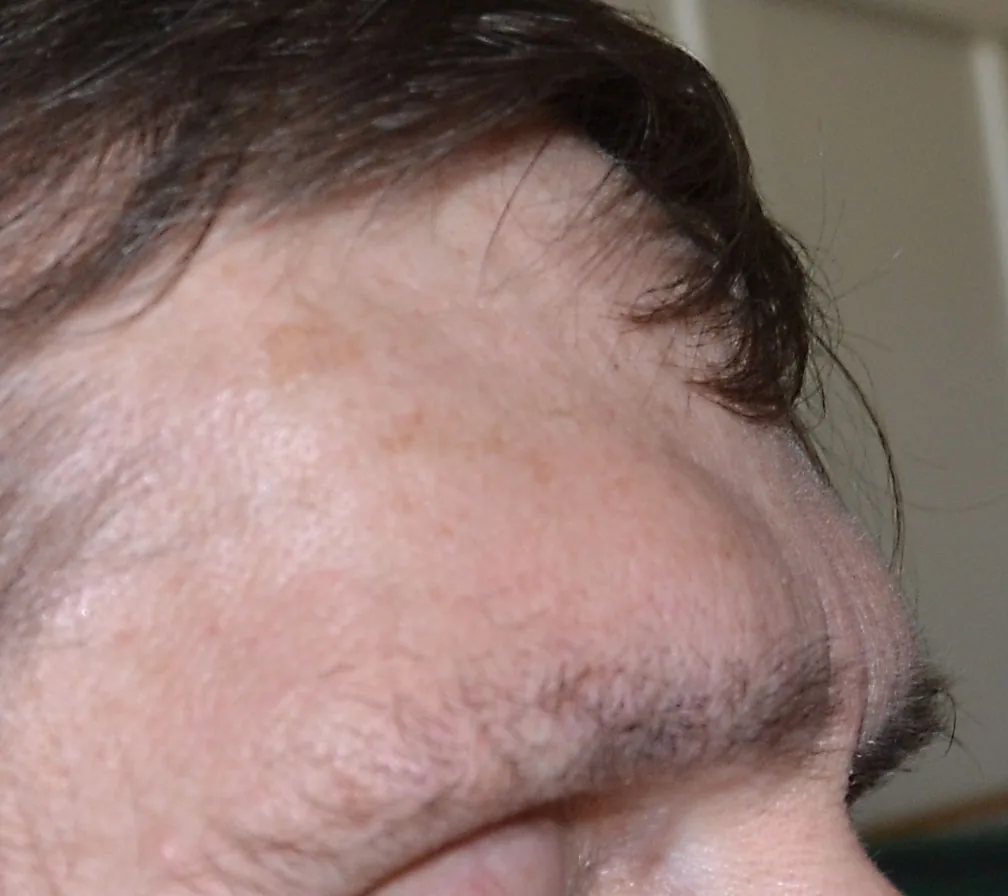
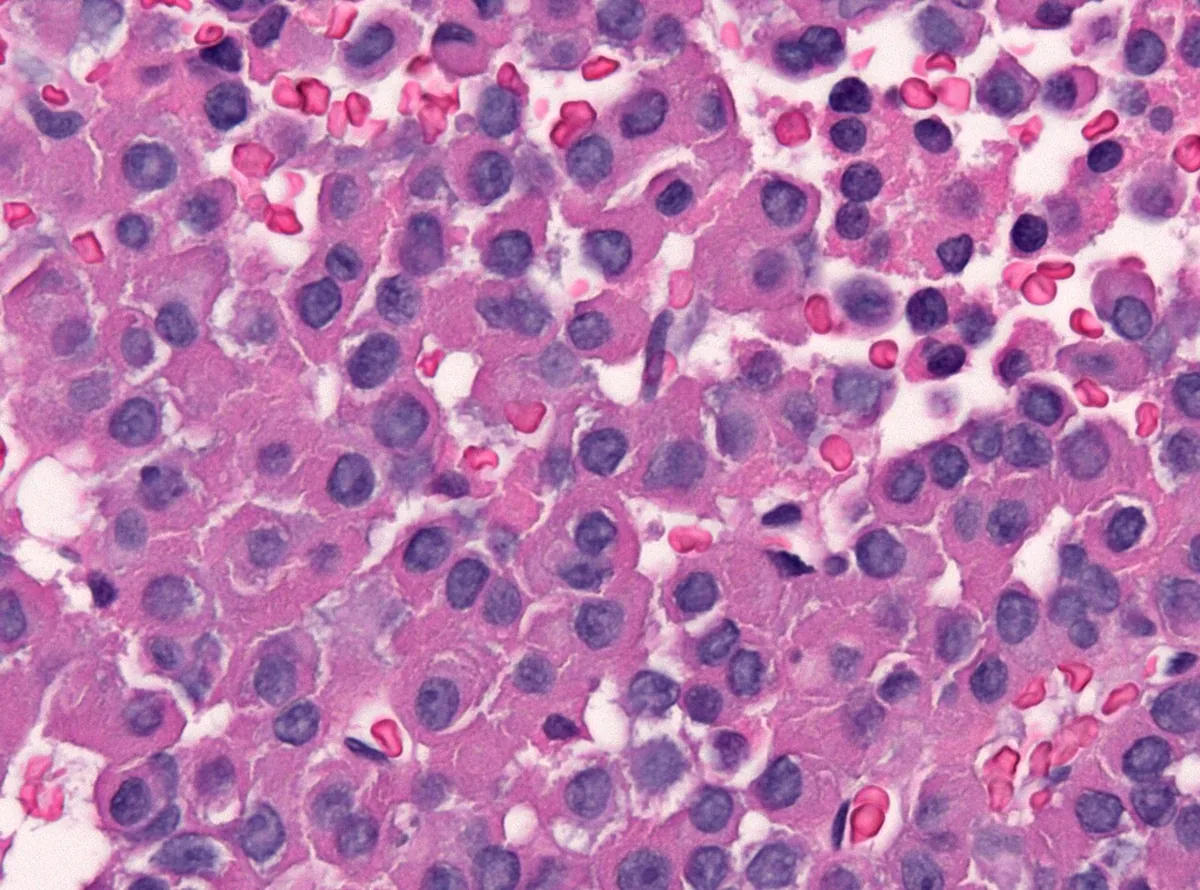 Histology
Definition
Acromegaly results from excessive secretion of growth hormone (GH, somatotropin) after closure of the epiphyses; the cause is almost always a GH-secreting pituitary adenoma. If hypersecretion begins before epiphyseal closure, pituitary gigantism results. Typical features of acromegaly are slowly progressive coarsening of the facial features and enlargement of the hands and feet.
Occurrence & epidemiology
In acromegaly GH hypersecretion usually starts between the ages of 20 and 40. Gigantism is rare. In multiple endocrine neoplasia type 1, about 25 % of pituitary tumors secrete growth hormone or growth hormone and prolactin.
Aetiopathogenesis
Growth hormone is stimulated mainly by hypothalamic GHRH and controls the production of IGF-1 (insulin-like growth factor 1, somatomedin C), which is produced mainly in the liver and mediates growth. After initial glucose-lowering effects, GH later has marked counter-regulatory effects: glucose uptake and use fall, and blood glucose and lipolysis rise.
- GH-secreting tumors are largely sporadic. An X-linked form of acrogigantism, overexpression of the pituitary tumor transforming gene (PTTG) and mutations in the AIP gene have been described.
- Some adenomas carry a mutation of the stimulatory Gs protein and secrete GH even without GHRH.
- Rarely, tumors outside the pituitary, especially in the pancreas and lung, produce ectopic GHRH.
Clinical features
Physical changes
- Early signs: coarsening of the facial features, soft-tissue swelling of the hands and feet; larger rings, gloves and shoes are needed. Old photographs show the change over time.
- Face and head: prognathism with malocclusion, an enlarged and furrowed tongue, a deep, husky voice due to laryngeal cartilage growth.
- Skin: thickened and often darker, increased body hair, excessive sweating and body odour.
- Musculoskeletal: early joint symptoms up to severe degenerative arthritis; barrel chest in long-standing disease; compression neuropathies.
- Tumor-related: headache; bitemporal hemianopia with suprasellar extension.
- Organomegaly: the heart, liver, kidneys, spleen, thyroid (diffuse or multinodular) and colon are enlarged.
Associated conditions
- Heart and circulation: cardiac disease (coronary artery disease, cardiomegaly, valvular regurgitation, sometimes cardiomyopathy) in about one third; arterial hypertension in up to one third.
- Breathing: snoring; obstructive sleep apnea in 40–50 %.
- Metabolism: impaired glucose tolerance in nearly half, overt diabetes mellitus in about 10 %; mild hyperphosphatemia.
- Bowel: more colonic polyps; cancer risk, particularly in the gastrointestinal tract, increased two- to threefold.
- Gonads: about one third of men with erectile dysfunction, nearly all women with menstrual irregularities or amenorrhoea; occasionally galactorrhoea.
- Gigantism: increased linear growth with a tall, slender build and long limbs, often delayed puberty.
Diagnosis
- Serum IGF-1: the simplest way to detect GH hypersecretion; usually raised three- to tenfold. Unlike GH, IGF-1 hardly fluctuates.
- Growth hormone: raised in the fasting state; because of pulsatile secretion, single values are difficult to interpret.
- Oral glucose tolerance test with GH measurement: the standard confirmatory test. In healthy people GH falls below 1 ng/ml (a cut-off of 0.4 ng/ml is often used) within 120 minutes of 75 g of glucose; in acromegaly it remains much higher. Cut-offs are assay-dependent.
- MRI of the sellar region: the preferred imaging method for detecting the pituitary adenoma.
- Skull radiography, CT or MRI: cortical thickening, enlarged frontal sinuses, an enlarged and eroded sella; in the hands tufting of the terminal phalanges and soft-tissue thickening.
- No tumor visible: consider ectopic GHRH production; raised plasma GHRH, search mainly in the lungs and pancreas.
- Associated conditions: fasting glucose, HbA1c or glucose tolerance test; ECG and echocardiography; colonoscopy.
Keep learning in the app
Further reading (open access)
Cross-references
Note: Learning content for medical education – not a treatment recommendation and no substitute for diagnosis or treatment decisions in individual cases. Treatment and management are deliberately not covered on this page.