Gonorrhoea
Exam relevance: in 2 of 197 board exam reports · rank 144
- Synonyms
- gonorrhea, the clap
- Specialty
- Gynaecology · Vulva & vagina
- Images
- Clinical 2 · Endoscopy & gross 1
- Exam relevance
- 2 of 197 reports · rank 144
- Last updated
- 10/2026 · Dr. Pascal Bafteh
Contents
Images (3)
 Endoscopy & gross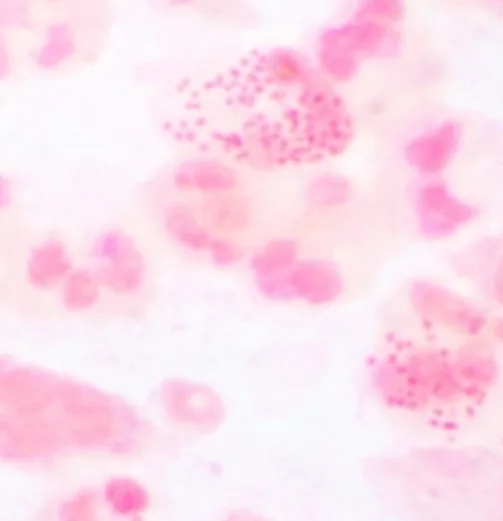
Definition
- Gonorrhoea is a sexually transmitted infection with Neisseria gonorrhoeae, a Gram-negative diplococcus that primarily targets columnar and transitional epithelium.
- Common sites of infection are the cervix, urethra, rectum, pharynx and conjunctiva; the organism occurs only in humans and is almost always sexually transmitted.
Occurrence & epidemiology
Epidemiology
- The WHO estimated 82.4 million new infections among adults aged 15 to 49 worldwide in 2020.
- Prevalence is highest in key populations such as men who have sex with men, sex workers, transgender women, and adolescents and young people in high-burden countries.
- Coinfection with Chlamydia trachomatis is present in about 10–40 %, depending on the population.
Clinical features
- About 90 % of women with urogenital gonorrhoea are asymptomatic.
- Cervicitis presents with vaginal discharge, dysuria and intermenstrual or postcoital bleeding; speculum examination often shows mucopurulent or purulent cervical discharge, and the os bleeds easily on contact.
- In 10–20 % of infected women the infection ascends to cause pelvic inflammatory disease, with a risk of infertility and ectopic pregnancy.
- Disseminated gonococcal infection is uncommon and occurs predominantly in women; it presents with fever, pustular skin lesions, tenosynovitis and arthritis.
- Newborns may acquire conjunctivitis during passage through the birth canal.
Diagnosis
- Molecular tests (nucleic acid amplification testing, NAAT) are the gold standard; swabs are preferred in women and urine samples in men.
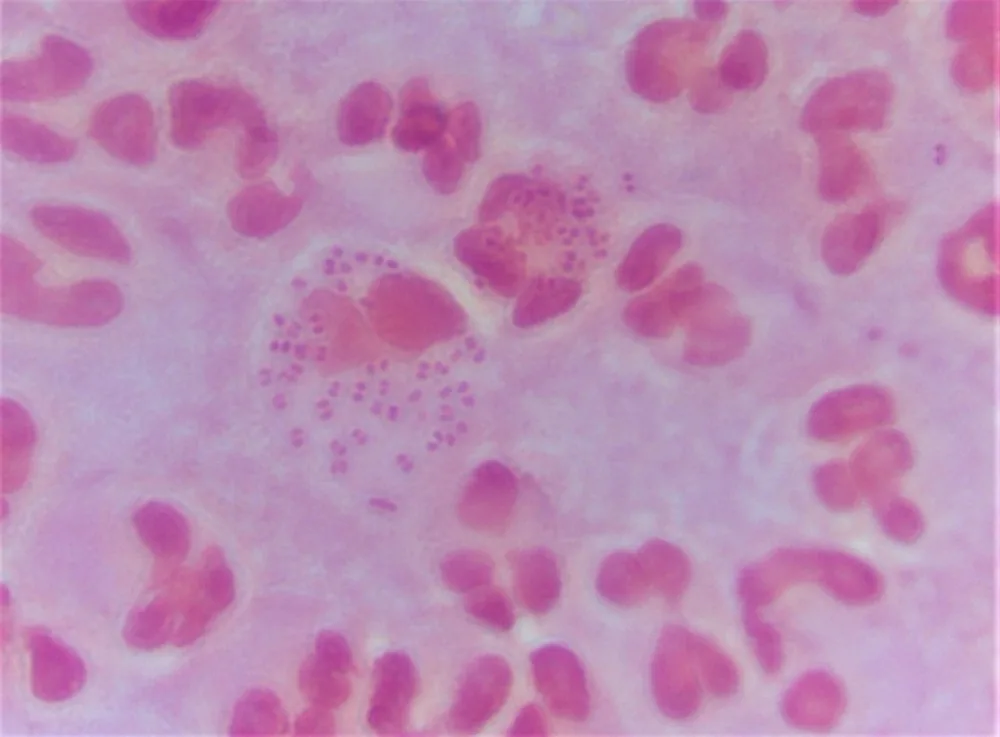
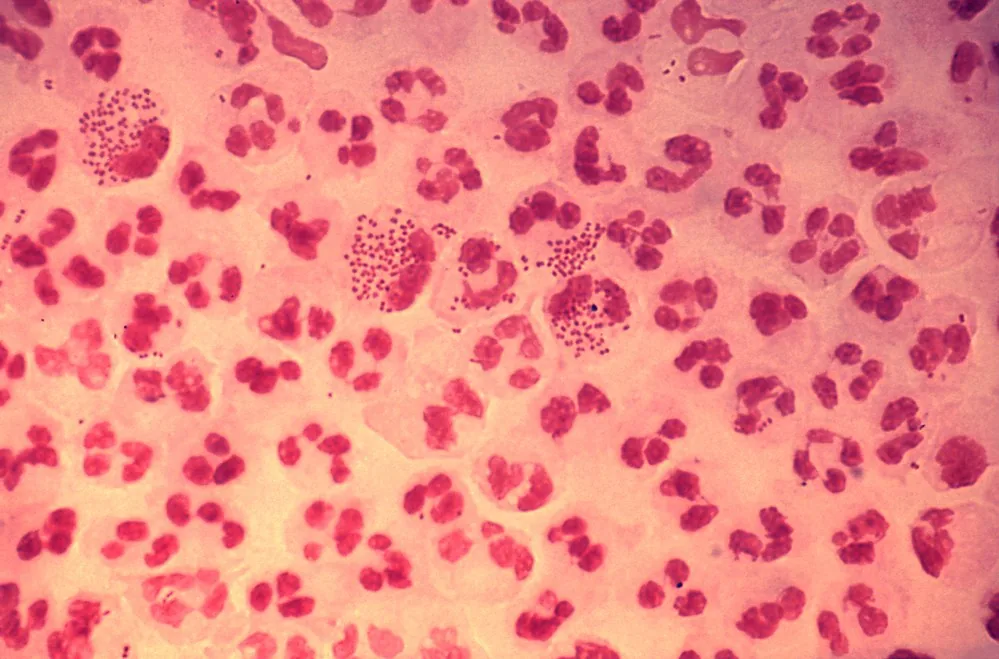
- Gram staining shows intracellular Gram-negative diplococci and is reliable in men with urethral discharge, but much less accurate for infections of the cervix, pharynx and rectum.
- Culture additionally allows susceptibility testing of the organism.
Keep learning in the app
Further reading (selection)
Cross-references
Note: Learning content from the GynFuchs app (flashcards, exam questions, image cases) for medical education – not a treatment recommendation and no substitute for diagnosis or treatment decisions in individual cases. Treatment and management are deliberately not covered on this page.