Vulvar lichen planus
Exam relevance: in 1 of 197 board exam reports · rank 171
- Specialty
- Gynaecology · Vulva & vagina
- Images
- Histology & cytology 1
- Exam relevance
- 1 of 197 reports · rank 171
- Last updated
- 10/2026 · Dr. Pascal Bafteh
Contents
Images (1)
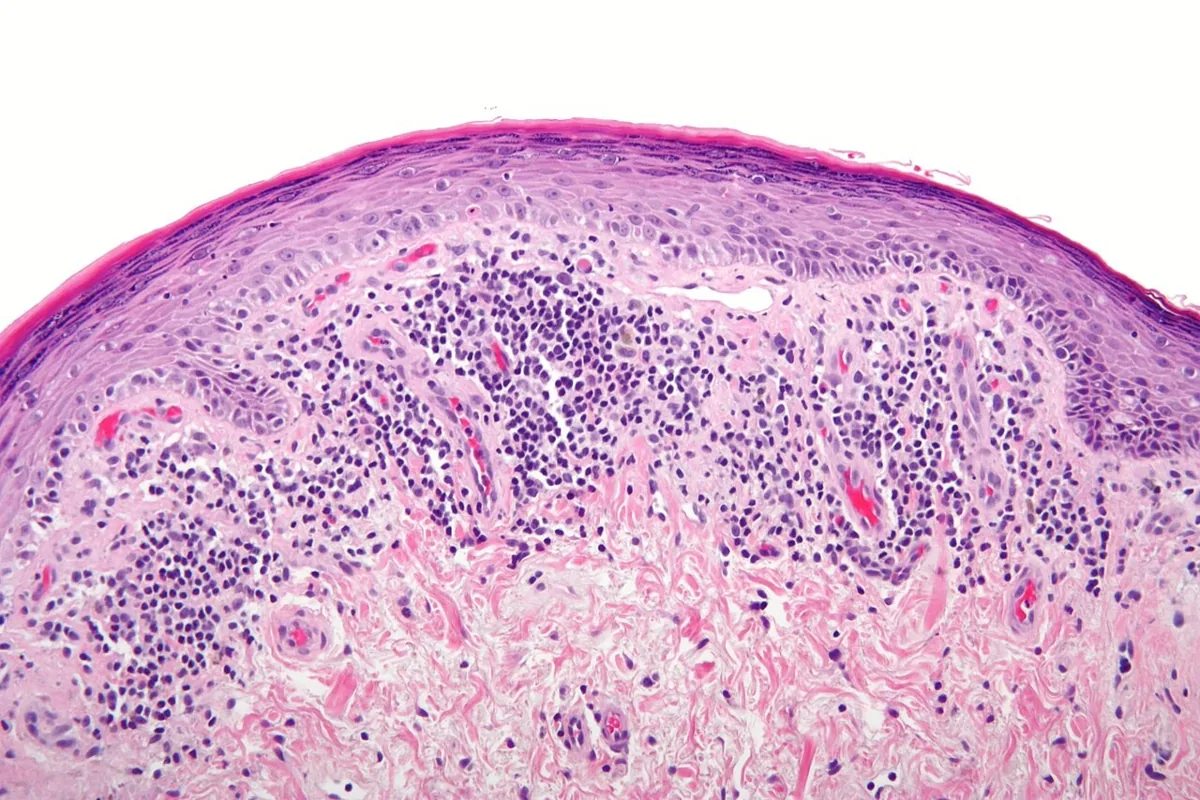 Histology & cytology
Definition
- Vulvar lichen planus is a chronic autoimmune disease affecting the skin and mucous membranes, including the vulva and vagina.
Classification
- Three vulvar variants are distinguished: classic papulosquamous, hypertrophic and erosive; the erosive form is the most common.
- The hypertrophic form shows hyperkeratotic lesions that can mimic squamous cell carcinoma.
Occurrence & epidemiology
Epidemiology
- Mostly women in their fifth or sixth decade are affected; the erosive form does not occur in children.
- Up to 68 % of women with erosive vulvar lichen planus also have oral involvement; the erosive form is associated with other autoimmune diseases, most often thyroid disease.
Aetiopathogenesis
Aetiology and risk factors
- T-cell-mediated destruction of keratinocytes in the basal layer is thought to be the basis; the exact cause is unclear.
Clinical features
- The erosive form causes pain, dyspareunia and dysuria, non-erosive forms typically pruritus; vaginal involvement may cause discharge.
- Vulvar and vaginal lichen planus can also be asymptomatic.
- The erosive form can alter the normal architecture; vaginal adhesions, stenosis and, in severe cases, complete closure of the vaginal canal may develop.
- Vulvovaginal-gingival syndrome is a form of erosive lichen planus involving the vulva, vagina and mouth and often causes scarring.
- Vulvar lichen planus is associated with squamous cell carcinoma.
Diagnosis
- The classic form shows violaceous papules or plaques with white reticulation (Wickham striae), the erosive form erosions with a white lacy edge, often on the medial labia minora and vaginal orifice.
- Histology shows a lymphocytic, lichenoid dermatitis; wedge-shaped hypergranulosis, numerous cytoid bodies and pointed rete ridges favour lichen planus over lichen sclerosus.
- In the erosive form, a biopsy may be non-diagnostic because of loss of the epidermis.
Keep learning in the app
Further reading (selection)
Cross-references
Note: Learning content from the GynFuchs app (flashcards, exam questions, image cases) for medical education – not a treatment recommendation and no substitute for diagnosis or treatment decisions in individual cases. Treatment and management are deliberately not covered on this page.