Chlamydia infection
Exam relevance: in 15 of 197 board exam reports · rank 49
- Synonyms
- chlamydia, Chlamydia trachomatis
- Specialty
- Gynaecology · Vulva & vagina
- Images
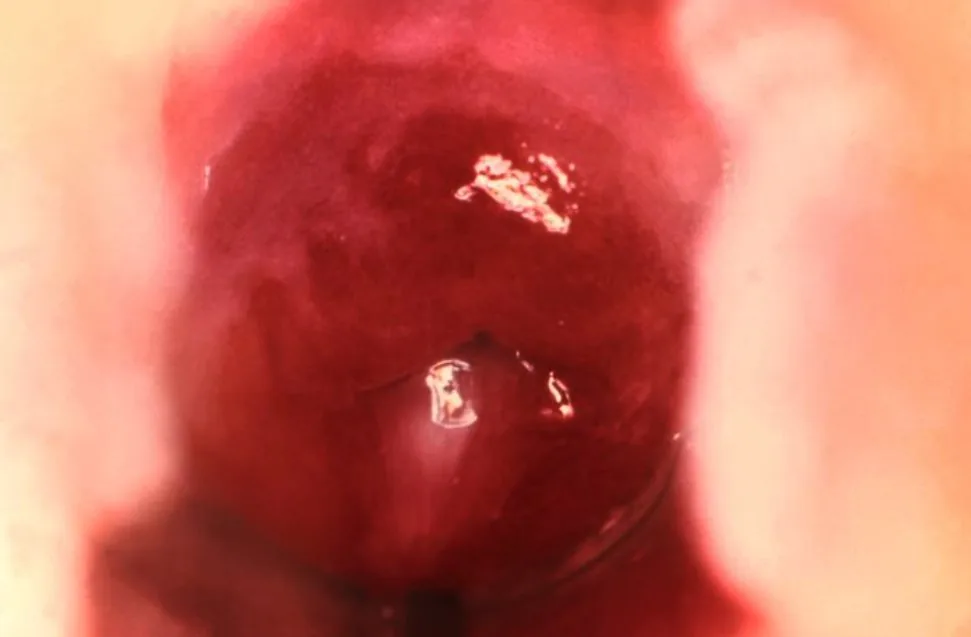
- Colposcopy 1
- Exam relevance
- 15 of 197 reports · rank 49
- In the app
- 1 flashcards · GynFuchs
- Last updated
- 10/2026 · Dr. Pascal Bafteh
Contents
Images (1)
Definition
- Genital chlamydia infection is a sexually transmitted infection with Chlamydia trachomatis, an obligate intracellular, Gram-negative bacterium.
Classification
- Serovars D–K cause urogenital, ocular and rectal infections, L1–L3 lymphogranuloma venereum, and A–C trachoma.
Occurrence & epidemiology
Epidemiology
- Chlamydia trachomatis is one of the most common bacterial causes of sexually transmitted infection worldwide; the WHO estimated about 128.5 million new infections among adults aged 15 to 49 in 2020.
- In 2020, global prevalence in this age group was 4.0 % in women and 2.5 % in men; young people are more often affected.
Aetiopathogenesis
Aetiology and risk factors
- Transmission occurs through vaginal, oral or anal sex and perinatally from mother to newborn.
Clinical features
Clinical Presentation
- The pathogen: C. trachomatis (serovars D–K).
- Preferentially affected is: columnar epithelium (endocervix, urethra).
- Possible symptoms: cervicitis, contact bleeding, dysuria.
- Ascending infection leads to: endometritis, salpingitis, tubo-ovarian abscess.
- More than 75 % of women are asymptomatic; possible symptoms are a change in discharge, intermenstrual or postcoital bleeding, lower abdominal pain and burning on urination.
- Cervicitis with a yellow, mucopurulent exudate and cervical ectopy is characteristic.
- Ascending infection causes pelvic inflammatory disease; long-term consequences are infertility and an increased risk of ectopic pregnancy.
- Further manifestations are perihepatitis (Fitz-Hugh-Curtis syndrome) with right upper quadrant pain and, in the newborn, conjunctivitis and pneumonia.
Diagnosis
- The gold standard is nucleic acid amplification testing (NAAT); urine samples are less sensitive than swabs, for example from the vagina.
- Cell culture is less sensitive and technically demanding, so NAAT is preferred over it.
Keep learning in the app
Further reading (selection)
Cross-references
Note: Learning content from the GynFuchs app (flashcards, exam questions, image cases) for medical education – not a treatment recommendation and no substitute for diagnosis or treatment decisions in individual cases. Treatment and management are deliberately not covered on this page.