Systemic sclerosis (scleroderma)
- Synonyms
- scleroderma, CREST syndrome, progressive systemic sclerosis, SSc
- Specialty
- Internal medicine · Rheumatology & immunology
- Images
- Clinical 2 · Histology 1 · CT 1
- Last updated
- 10/2026 · Dr. Pascal Bafteh
Contents
Images (4)
 Histology
 CT
CT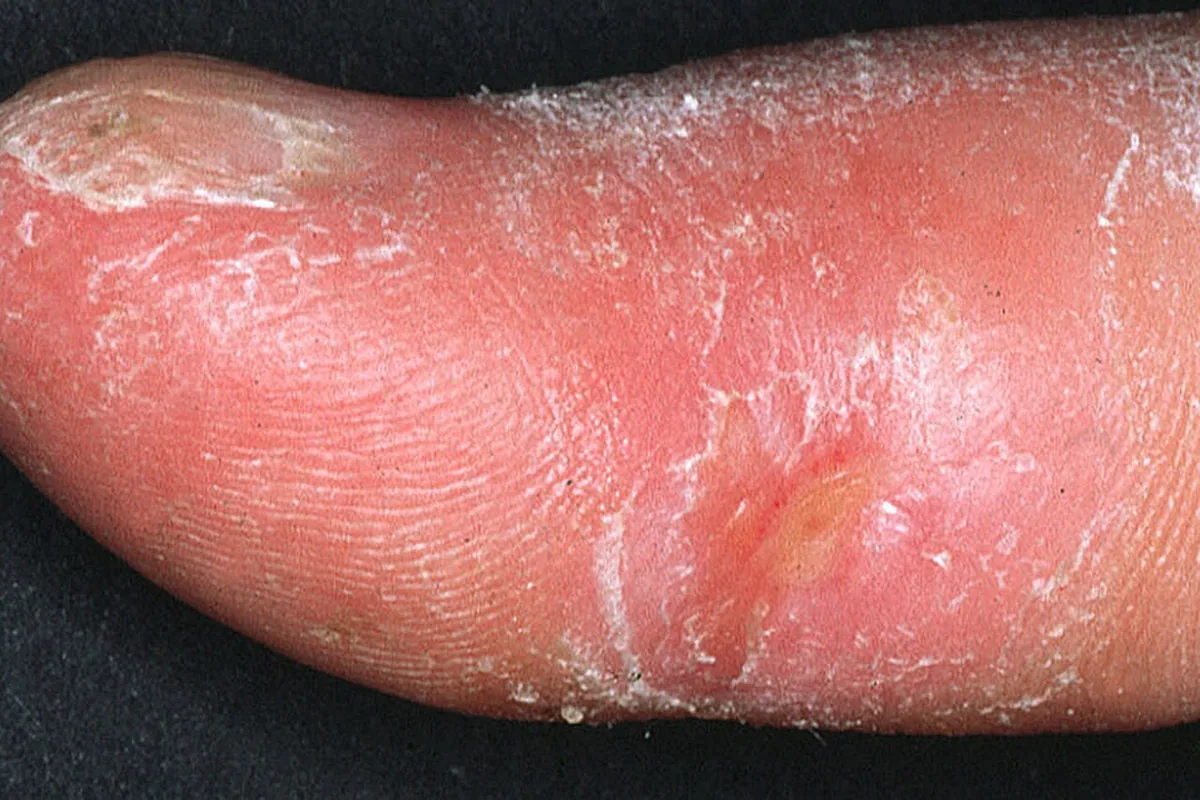
Definition
Systemic sclerosis (scleroderma) is a rare, chronic systemic rheumatic disease of unknown cause. It is characterized by diffuse fibrosis and vascular abnormalities in the skin, joints, and internal organs, especially the esophagus, lower gastrointestinal tract, lungs, heart, and kidneys.
Classification
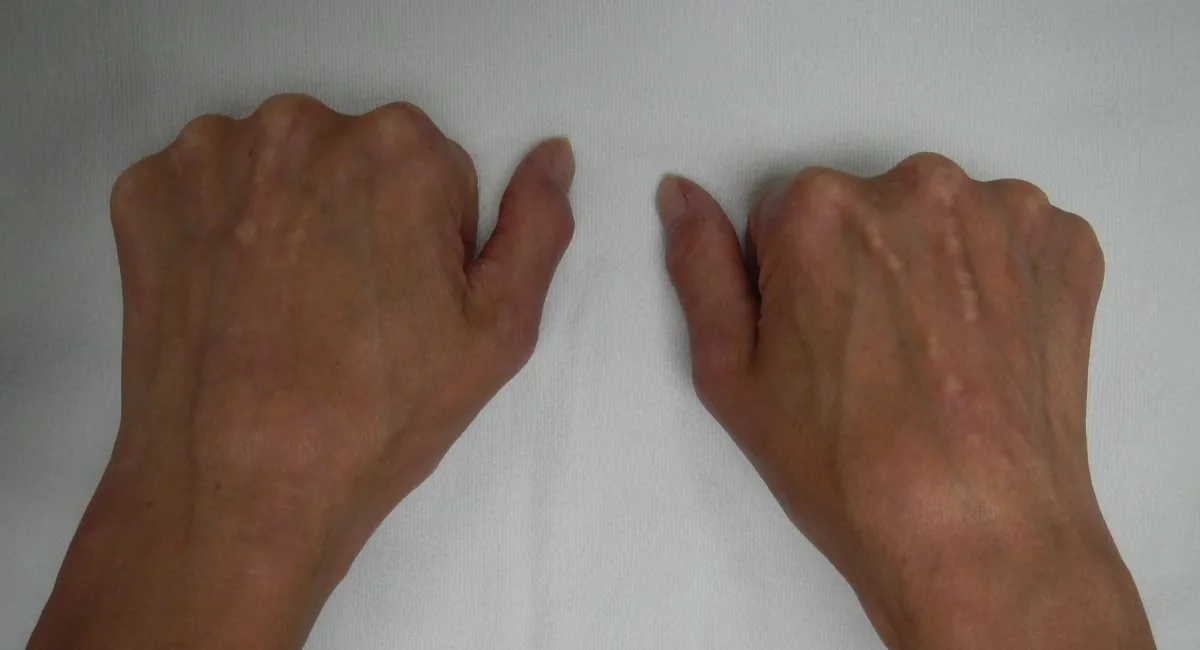
- Limited cutaneous systemic sclerosis (CREST syndrome: calcinosis cutis, Raynaud syndrome, esophageal dysmotility, sclerodactyly, telangiectasias): skin thickening of the face and distal to the elbows and knees; slow progression, often pulmonary hypertension.
- Diffuse cutaneous systemic sclerosis: skin involvement extends more proximally; may progress rapidly; major complications are interstitial lung disease and renal crisis.
- Systemic sclerosis sine scleroderma: typical antibodies and organ involvement without skin thickening.
- Overlaps with other connective tissue diseases occur, e.g., sclerodermatomyositis and mixed connective tissue disease.
Occurrence & epidemiology
Women are affected more often; one systematic review cites an approximately five-fold higher prevalence. The disease is most common between ages 20 and 50 and rare in children.
Aetiopathogenesis
Immunologic mechanisms and heredity play a role. Scleroderma-like syndromes have been described after exposure to vinyl chloride, epoxy and aromatic hydrocarbons, contaminated rapeseed oil, L-tryptophan, and certain drugs.
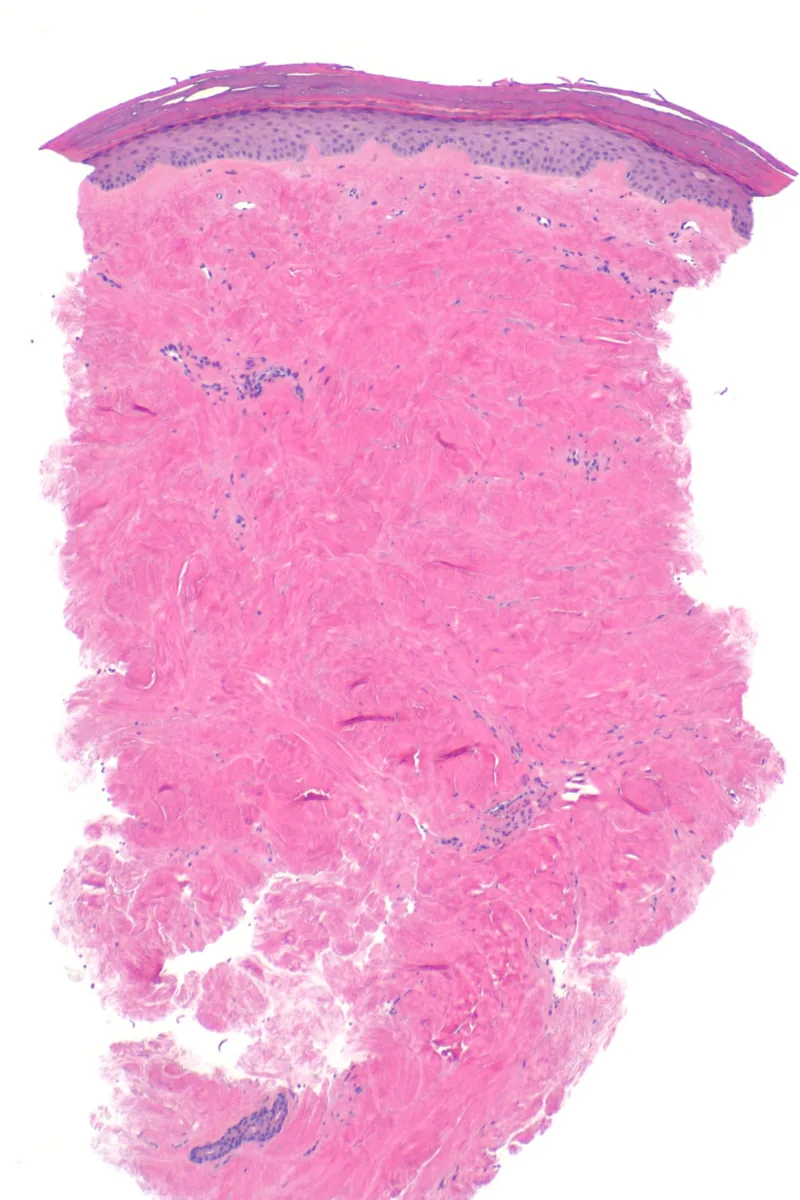
Pathogenesis: vascular damage and fibroblast activation lead to overproduction of collagen and other extracellular proteins. In the skin, collagen fibers become more compact, the epidermis thins, and dermal appendages atrophy. In the nail folds, capillary loops dilate and others are lost. Intimal hyperplasia of small pulmonary and renal arteries causes pulmonary hypertension and renal ischemia, respectively.
Clinical features
- Early symptoms: Raynaud syndrome and doughy swelling of the fingers ("puffy fingers") with increasing skin thickening; polyarthralgias.
- Skin: symmetric induration, sclerodactyly, masklike face with pinched nose and small mouth, telangiectasias, calcinosis at the fingertips, digital ulcers.
- Joints: flexion contractures of the fingers, wrists, and elbows; friction rubs over tendon sheaths.
- Gastrointestinal tract: esophageal dysfunction as the most frequent visceral manifestation with dysphagia and reflux; Barrett esophagus in about one-third; small-bowel hypomotility with pseudo-obstruction, bacterial overgrowth, and malabsorption.
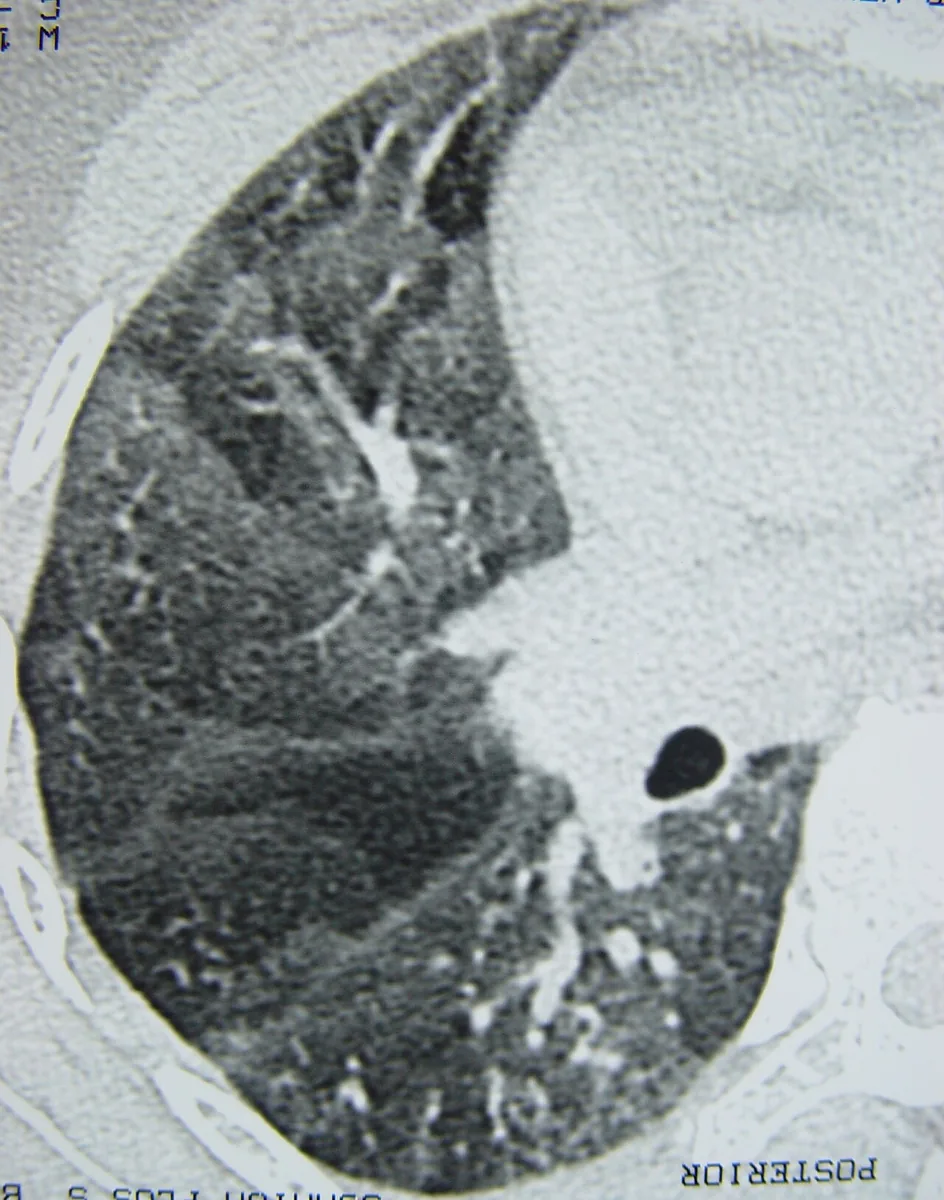
- Lungs and heart: interstitial lung disease with exertional dyspnea, pulmonary hypertension, heart failure, pericarditis, cardiac arrhythmias.
- Kidney: scleroderma renal crisis, mostly in the first 4–5 years in the diffuse form with anti-RNA polymerase III antibodies; often with sudden severe hypertension and thrombotic microangiopathy.
Diagnosis
- Antibodies: ANA in at least 90 %, often a nucleolar pattern; anticentromere antibodies predominantly in the limited form; anti-Scl-70 (topoisomerase I) more often in the diffuse form; anti-RNA polymerase III in the diffuse form, renal crisis, and cancer; anti-U3 RNP (fibrillarin) in the diffuse form; anti-Th/To in the limited form with lung involvement; anti-PM-Scl in myositis overlap.
- 2013 ACR/EULAR classification criteria (systemic sclerosis at 9 points or more): skin thickening of the fingers of both hands extending proximal to the metacarpophalangeal joints (9); puffy fingers (2) or sclerodactyly (4); fingertip ulcers (2) or fingertip pitting scars (3); telangiectasia (2); abnormal nailfold capillaries (2); pulmonary arterial hypertension and/or interstitial lung disease (2); Raynaud phenomenon (3); SSc-related autoantibodies (anticentromere, anti-Scl-70, anti-RNA polymerase III; 3).
- Capillaroscopy: dilated capillary loops and avascular areas.
- Baseline findings: pulmonary function tests, high-resolution chest CT (including prone position), and echocardiography, even without symptoms.
Keep learning in the app
Further reading (open access)
Cross-references
More topics: Rheumatology & immunology
- Rheumatoid arthritis
- Systemic lupus erythematosus (SLE)
- Granulomatosis with polyangiitis (GPA)
- Polymyalgia rheumatica
- Gout
- Reactive arthritis
- Behçet's disease
- Giant cell arteritis (temporal arteritis)
- Septic arthritis
- Mixed connective tissue disease (Sharp syndrome)
- Psoriatic arthritis
- Uveitis in rheumatic diseases
Note: Learning content for medical education – not a treatment recommendation and no substitute for diagnosis or treatment decisions in individual cases. Treatment and management are deliberately not covered on this page.