Staphylococcus aureus bacteremia
Board exam relevance: in 3 of 105 exam reports · rank 111- Synonyms
- SAB, S. aureus bloodstream infection, staphylococcal bacteremia
- Specialty
- Internal medicine · Infectious diseases
- Images
- Clinical 1 · Blood smear & cytology 1
- Last updated
- 10/2026 · Dr. Pascal Bafteh
Contents
Images (2)
 Blood smear & cytology
Definition
Staphylococcus aureus bacteremia (SAB) refers to the detection of S. aureus in blood culture. It is characterized by a tendency to form metastatic foci of infection in almost every organ system, particularly endocarditis. SAB can arise from any localized S. aureus infection or occur without an obvious primary site.
Classification
- Uncomplicated SAB: no endocarditis, no metastatic foci, no foreign material, rapidly negative repeat blood cultures and rapid defervescence.
- Complicated SAB: endocarditis, metastatic foci of infection or spread beyond the primary focus, persistently positive blood cultures or recurrence of bacteremia; persistent fever and foreign material are sometimes included as well. There is no generally accepted, uniform definition.
- By acquisition: community-acquired and health care–associated (nosocomial, catheter-related) SAB.
- By strain type: methicillin-susceptible S. aureus (MSSA) and MRSA.
Occurrence & epidemiology
- In population-based studies, the incidence of SAB in adults ranges from 9.3 to 65 cases per 100,000 population per year, with no clear trend over the past two decades.
- The median age of patients ranges from 62 to 72 years; men are affected more often than women.
- The most common sources of infection are intravascular catheters and skin and soft tissue infections.
- Colonization: S. aureus is carried, usually transiently, in the anterior nares of about 32 % and on the skin of about 20–30 % of healthy adults; infections usually arise from the person's own colonizing strain.
Aetiopathogenesis
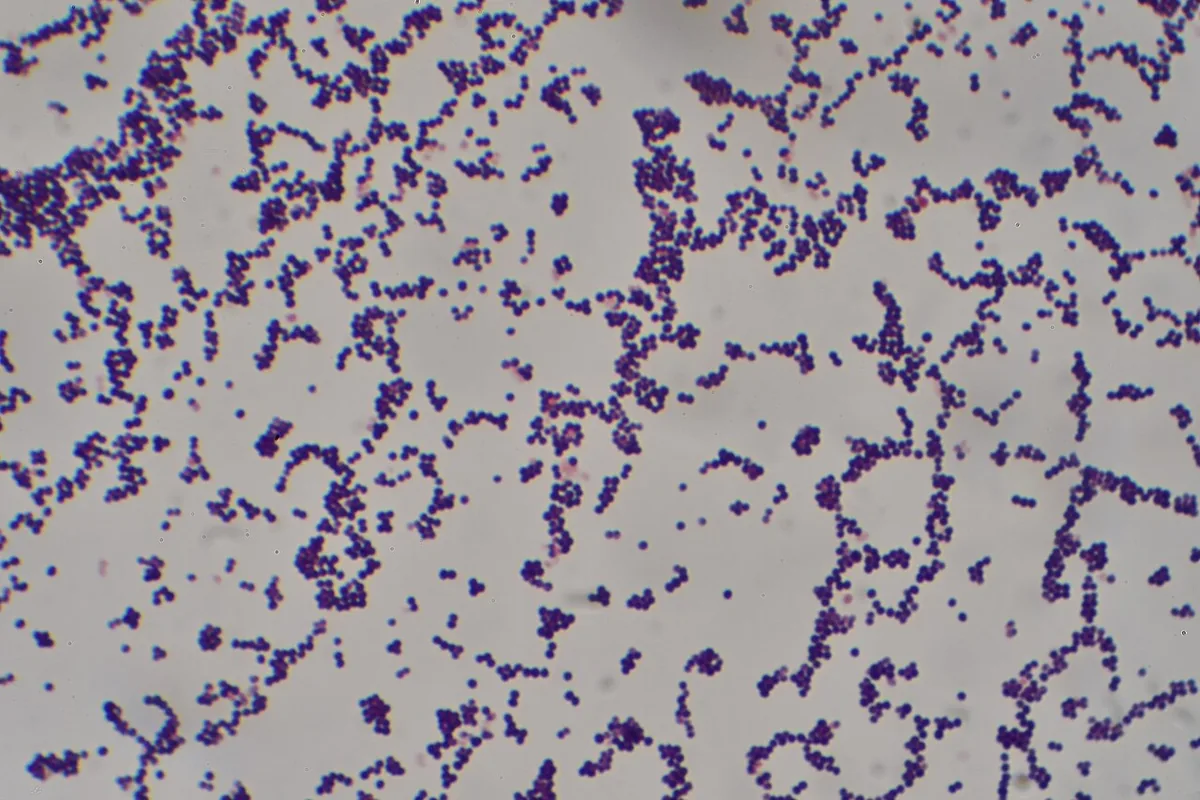
- Pathogen: Staphylococcus aureus, gram-positive cocci in clusters, coagulase-positive; tissue invasion with a tendency to form abscesses, sometimes toxin production.
- Portals of entry: intravascular catheters and other foreign bodies, skin and soft tissue infections, injection drug use (inoculation from colonized skin), pneumonia, bone and joint infections, wound infections after surgery; in some cases no identifiable primary site.
- Predisposing factors: indwelling vascular catheters, joint and vascular prostheses, prosthetic heart valves and cardiac implantable electronic devices; diabetes mellitus; chronic kidney disease with repeated vascular access; cancer and leukemia; HIV infection; immunosuppressive drugs; status after transplantation; chronic skin disorders, open wounds and burns; prior endocarditis.
- Risk factors for metastatic foci: foreign material, venous catheters, injection drug use, prior endocarditis; long duration of bacteremia, short time to blood culture positivity, community acquisition; persistent fever, unknown primary focus.
Clinical features
- General symptoms: fever, chills, tachycardia; up to sepsis and septic shock with tachypnea, altered mental status and hypotension.
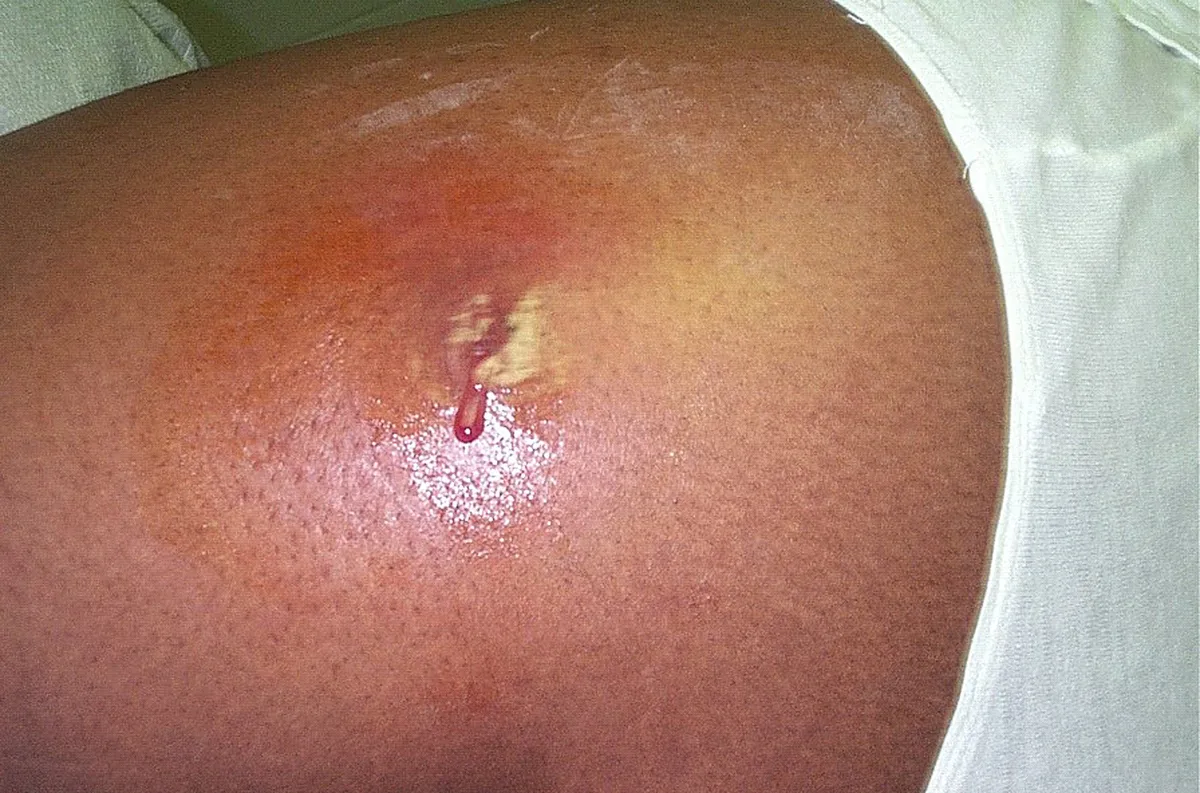
- Primary focus: e.g. red, painful catheter insertion site, soft tissue infection, pneumonia.
- Endocarditis: acute febrile illness, often with heart murmur, emboli, visceral abscesses, pericarditis, subungual petechiae, subconjunctival hemorrhages, purpuric skin lesions, perivalvular abscesses, conduction defects and eventually heart failure due to valve destruction. In injection drug use, the tricuspid valve is often involved.
- Metastatic foci: spondylodiscitis and osteomyelitis, septic arthritis (including prosthetic joints), abscesses in the kidney, spleen, muscle, lung or brain, meningitis; multiple abscesses are particularly common in SAB. Up to 70 % of extracardiac metastatic infections are initially clinically silent.
- Pneumonia: hematogenous in catheter infection, endocarditis or drug use; sometimes with abscesses, pneumatoceles and empyema.
Diagnosis
- Blood cultures: detection of S. aureus (Gram stain: gram-positive cocci in clusters, culture with susceptibility testing); cultures of all other infected material.
- Repeat blood cultures after the first positive result: persistently positive cultures are strongly associated with metastatic infection and define complicated SAB.
- Repeated physical examination: search for the primary focus (catheter, skin, wounds), heart murmur, signs of endocarditis, joint and spinal pain; on its own, however, not sensitive enough to exclude metastatic foci.
- Echocardiography in every SAB: a considerable proportion of endocarditis cases have no clinical signs. Transesophageal echocardiography (TEE) when the transthoracic study is negative but suspicion persists, and in patients with prosthetic heart valves or cardiac implantable electronic devices. Risk scores help to assess whether TEE is needed.
- Search for foci: targeted imaging guided by symptoms (e.g. MRI of the spine for back pain, ultrasonography or CT of the abdomen); [18F]FDG-PET/CT is highly sensitive for extracardiac metastatic foci, especially in high-risk patients.
- Laboratory tests: complete blood count, CRP, kidney and liver tests; inflammatory markers are also being studied for risk assessment.
Keep learning in the app
Further reading (open access)
Cross-references
Note: Learning content for medical education – not a treatment recommendation and no substitute for diagnosis or treatment decisions in individual cases. Treatment and management are deliberately not covered on this page.