HIV infection and AIDS
Board exam relevance: in 8 of 105 exam reports · rank 39- Synonyms
- HIV, AIDS, advanced HIV disease
- Specialty
- Internal medicine · Infectious diseases
- Images
- Clinical 2
- Last updated
- 10/2026 · Dr. Pascal Bafteh
Contents
Images (2)
Definition
HIV infection is a chronic infection with the human immunodeficiency virus (HIV-1 or HIV-2). The virus destroys CD4-positive T helper cells and weakens cell-mediated immunity, increasing the risk of certain infections and cancers.
AIDS (acquired immune deficiency syndrome; now also termed advanced HIV-related illness) is the late stage with severe immunodeficiency. It is present in HIV infection with at least one of the following: CD4 count below 200/µL, CD4 percentage of 14 % or less of lymphocytes, or an AIDS-defining illness.
Classification
- Stages by CD4 count (age 6 years and older): stage 1 at 500/µL or more, stage 2 200–499/µL, stage 3 below 200/µL or an AIDS-defining illness.
- Clinical phases: acute HIV infection (acute retroviral syndrome), largely asymptomatic latent phase, symptomatic phase and AIDS.
- Virus types: HIV-1 (predominant worldwide; group M with several subtypes, plus groups N, O and P) and HIV-2 (mainly West Africa; in Germany about 0.5 % of new diagnoses).
Occurrence & epidemiology
- Worldwide, according to WHO estimates for 2024, about 40.8 million people were living with HIV, including 1.4 million children up to 14 years; about 1.3 million people were newly infected. Sub-Saharan Africa is most affected.
- Germany: the RKI estimated the number of people with HIV in 2020 at about 91,400, a rather low prevalence by European standards. About 65 % of infections diagnosed at that time concerned men who have sex with men, about 24 % were acquired heterosexually and about 10 % through intravenous drug use; about 30 % are diagnosed in six large cities.
Aetiopathogenesis
- Pathogen: HIV is a lymphotropic lentivirus of the retrovirus family with two RNA strands, capsid protein p24 and envelope proteins gp120 and gp41. Humans are the only reservoir; the infection originally arose as a zoonosis from simian viruses (SIV).
- Transmission: via blood and other infectious body fluids (semen, vaginal secretions, fluid film of the rectal mucosa). The most common route is unprotected sexual contact; other routes are shared needles in injection drug use, cuts and needlestick injuries with contaminated instruments, blood products, and mother-to-child transmission, mainly during delivery and through breastfeeding. Other sexually transmitted infections, especially ulcerative ones, markedly increase the risk. There is no transmission through everyday social contact, saliva, tears, droplets, insects or food.
- Infectiousness: lifelong, correlates with viral load and is particularly high in the first weeks after infection; with a persistently undetectable viral load, HIV is not transmitted sexually (undetectable = untransmittable).
Pathogenesis
The envelope protein gp120 binds to CD4 and to a coreceptor (CCR5 or CXCR4); gp41 mediates fusion with the cell membrane. Reverse transcriptase converts the viral RNA into DNA, which a viral integrase inserts into the host genome. Infected CD4 cells have a markedly shortened lifespan; latent reservoirs form early in resting memory T cells, macrophages and dendritic cells. Early loss of CD4-positive cells in the gut mucosa promotes microbial translocation and chronic immune activation, which further drives CD4 loss. About 6 months after infection, the viral load settles at an individual level (set point); the higher it is, the faster the CD4 count falls.
Clinical features
- Acute HIV infection: 6 days to 6 weeks, usually 2–3 weeks after exposure, some of those infected develop a mononucleosis-like illness with fever, lymphadenopathy, transient truncal rash, sore throat or painful swallowing, fatigue, arthralgias, sometimes diarrhea; rarely a transient meningoencephalitis. Symptoms usually last 1–2 weeks and are often mistaken for a common viral infection.
- Latent phase: asymptomatic or with few symptoms for months to many years; persistent generalized lymphadenopathy and mild cytopenias may occur.
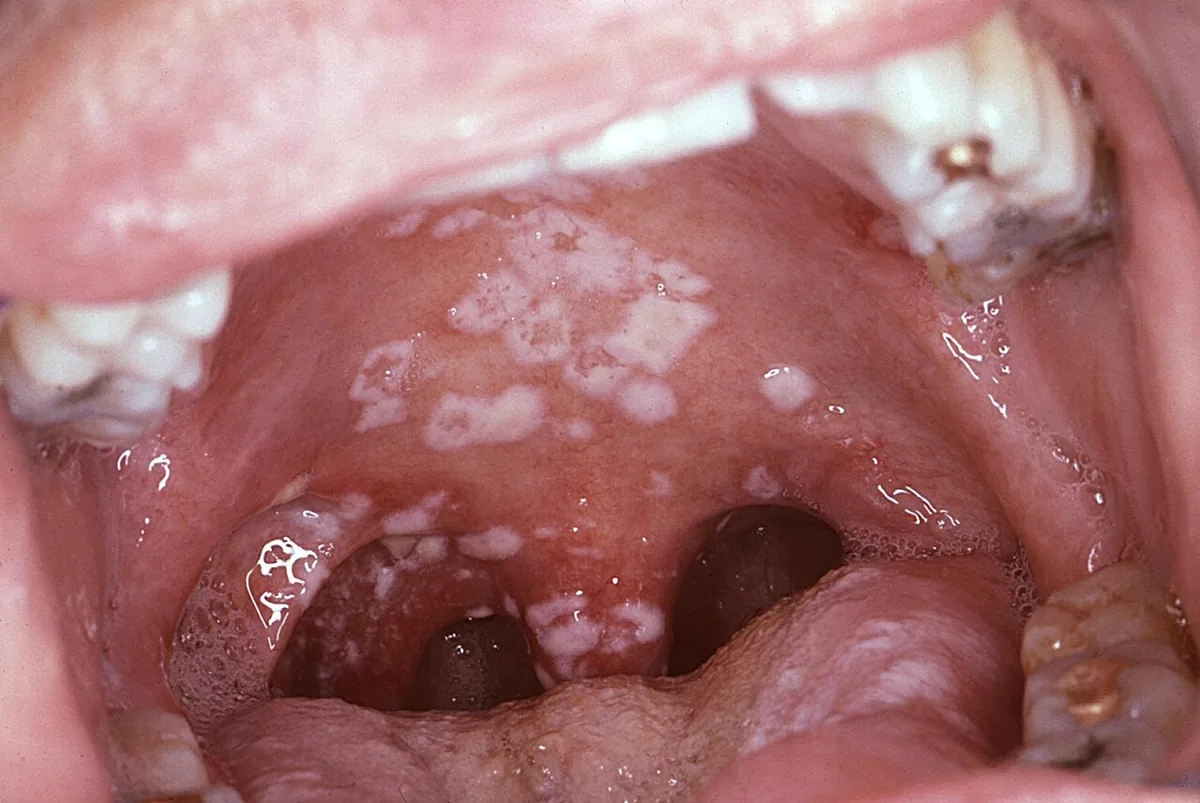
- Symptomatic phase: oral thrush, herpes zoster, oral hairy leukoplakia, diarrhea, fever with night sweats, fatigue, weight loss.
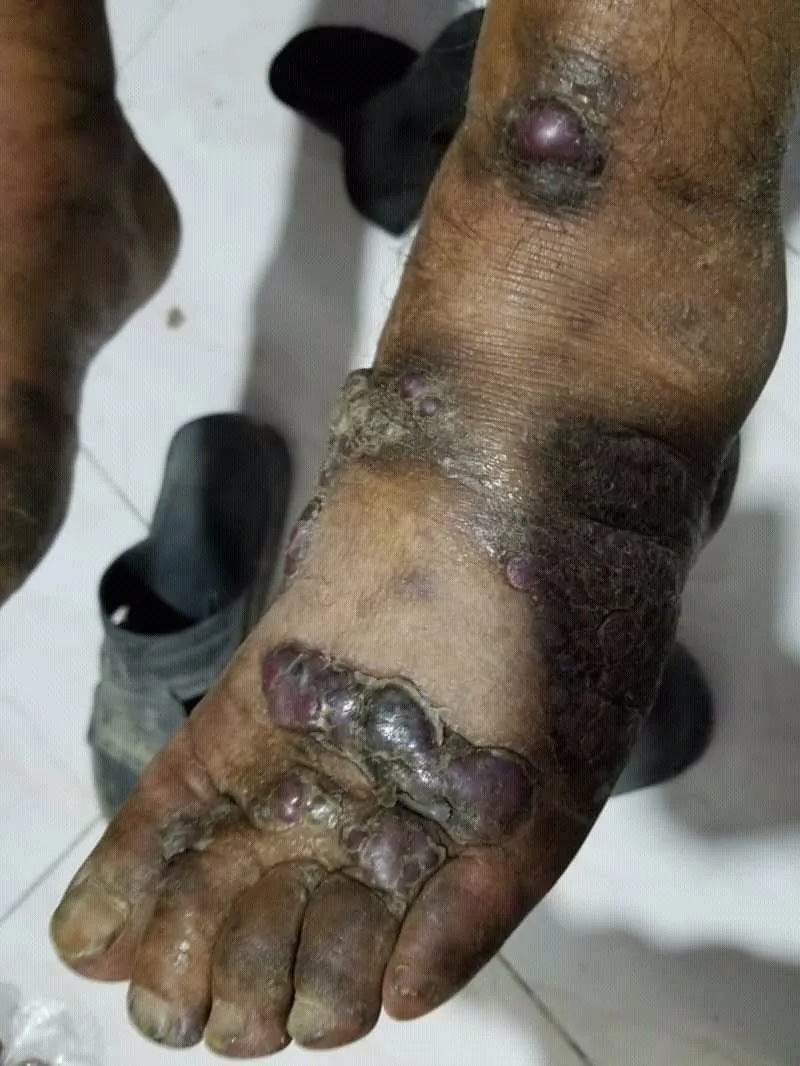
- AIDS: in about 70 % of previously undiagnosed cases, opportunistic infections appear first, especially Pneumocystis pneumonia, Candida esophagitis, cerebral toxoplasmosis and CMV reactivation (eye, lung, brain, gut), plus tuberculosis. In just under 15 %, a tumor leads to the diagnosis (Kaposi sarcoma, B-cell lymphomas). Other manifestations include HIV encephalopathy, progressive multifocal leukoencephalopathy (PML) and wasting syndrome.
- Dependence on CD4 count: below about 200/µL increased risk of Pneumocystis pneumonia, cerebral toxoplasmosis and cryptococcal meningitis; below about 50/µL of CMV disease and disseminated Mycobacterium avium complex infection.
Diagnosis
- Diagnostic window: HIV RNA becomes detectable after about 11 days on average, p24 antigen after 16–18 days and antibodies after about 22 days. With a fourth-generation screening test (antibodies and p24 antigen), a negative result 6 weeks after possible exposure excludes infection with high certainty.
- Two-step testing: screening test (combined antigen/antibody test) and, if reactive, confirmation by immunoblot or HIV-1/HIV-2 differentiation assay or by nucleic acid testing (NAT, e.g. PCR; with a viral load of 1,000 copies/mL or more). A positive result is confirmed on a second blood sample.
- Acute infection: before seroconversion, HIV RNA testing is the most sensitive method; the screening test may still be negative or indeterminate.
- Newborns: antibody tests are not informative because of maternal antibodies; diagnosis is made by nucleic acid testing.
- Immune status and viral load: CD4 count (normal value in adolescents and adults about 500–1,500/µL) and plasma HIV RNA (copies/mL) for staging and assessing the risk of opportunistic infections.
- Clinical suspicion arises with unexplained persistent generalized lymphadenopathy, AIDS-defining illnesses or an acute febrile illness after a risk exposure.
Keep learning in the app
Further reading (open access)
Cross-references
Note: Learning content for medical education – not a treatment recommendation and no substitute for diagnosis or treatment decisions in individual cases. Treatment and management are deliberately not covered on this page.