Myelodysplastic syndromes (MDS)
Board exam relevance: in 3 of 105 exam reports · rank 111- Synonyms
- myelodysplasia, myelodysplastic neoplasm, preleukemia, 5q syndrome
- Specialty
- Internal medicine · Haematology & oncology
- Images
- Blood smear & cytology 3
- Last updated
- 10/2026 · Dr. Pascal Bafteh
Contents
Images (3)
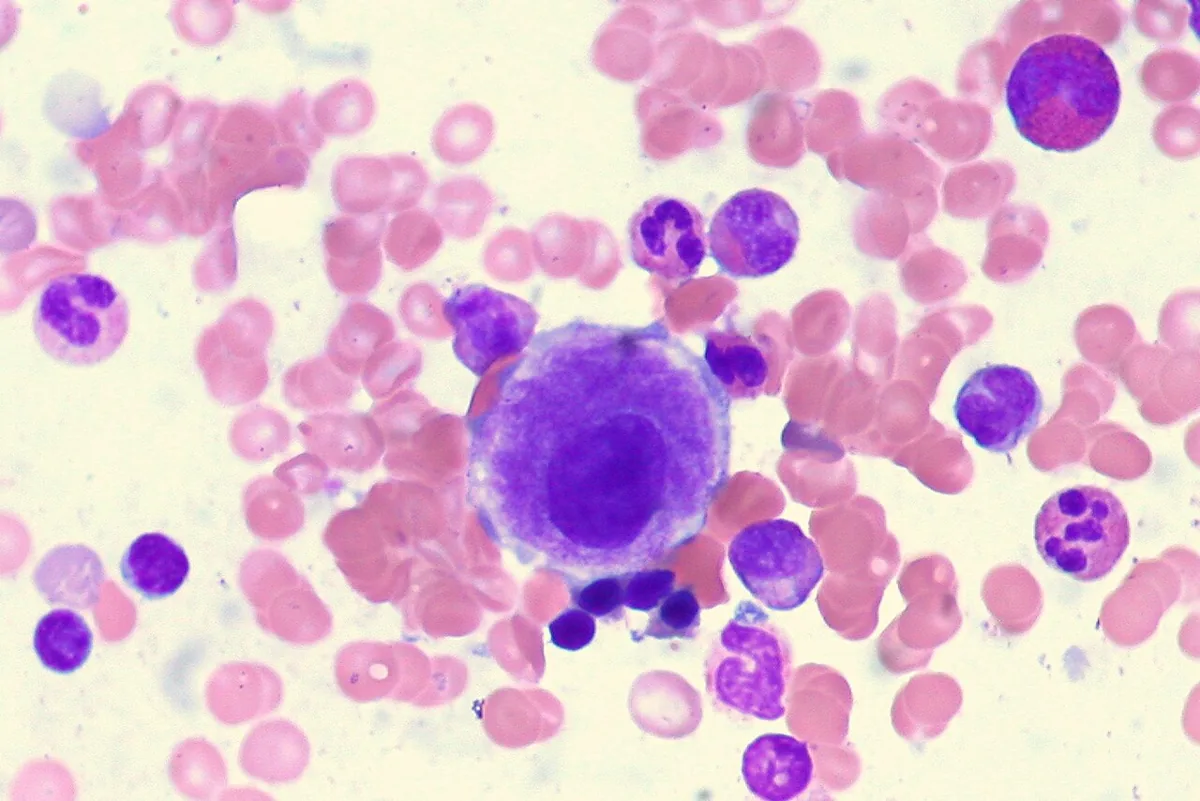 Blood smear & cytology
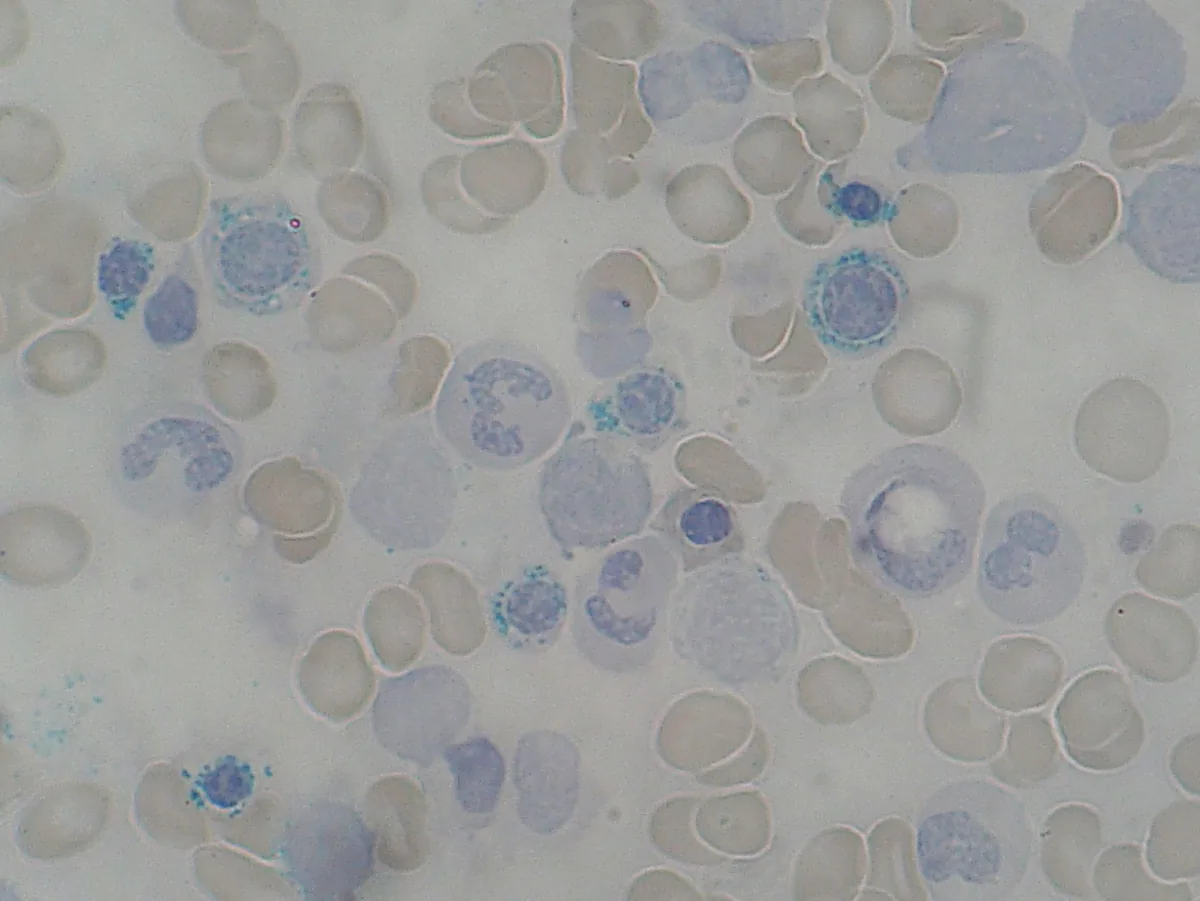 Blood smear & cytology
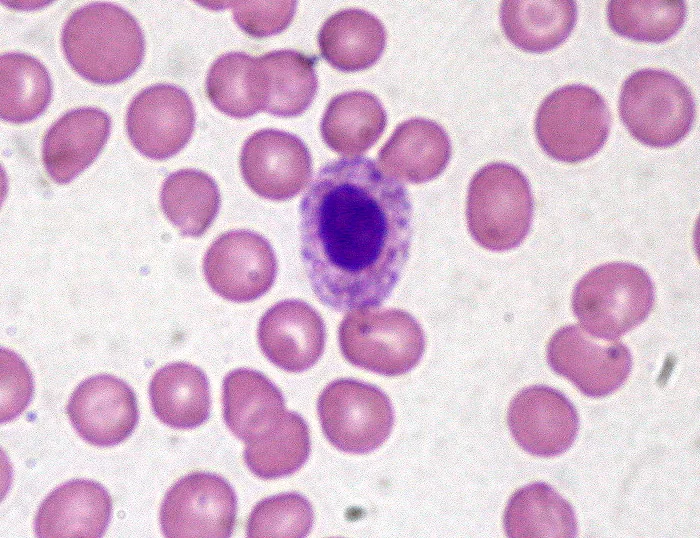 Blood smear & cytology
Definition
Myelodysplastic syndromes (MDS) are clonal disorders of the hematopoietic stem cell with ineffective and dysplastic hematopoiesis. They are characterized by peripheral cytopenias, morphologic dysplasia of precursor cells, and a hypercellular or hypocellular bone marrow. The current WHO classification (5th edition, 2022) uses the term myelodysplastic neoplasms, emphasizing their neoplastic nature. According to the 2022 WHO classification, the blast count is below 20 %; at 20 % blasts or more, acute myeloid leukemia (AML) is present. The 2022 International Consensus Classification (ICC), in contrast, assigns cases with 10–19 % blasts to a separate category, MDS/AML. A proportion of MDS progresses to AML.
Classification
The 2022 WHO classification distinguishes MDS with defining genetic abnormalities from morphologically defined forms:
- MDS with low blasts and isolated 5q deletion (MDS-5q): blasts < 5 % in the bone marrow and < 2 % in the blood
- MDS with low blasts and SF3B1 mutation: alternatively ≥ 15 % ring sideroblasts
- MDS with biallelic TP53 inactivation
- MDS with low blasts (MDS-LB)
- Hypoplastic MDS (MDS-h): bone marrow cellularity ≤ 25 % (age-adjusted)
- MDS with increased blasts: MDS-IB1 with 5–9 % blasts in the bone marrow or 2–4 % in the blood; MDS-IB2 with 10–19 % in the bone marrow or 5–19 % in the blood, or Auer rods
Aetiopathogenesis
The cause is usually unknown. With age, somatic mutations accumulate that give a stem cell clone a growth advantage; genes involved in RNA splicing are most often affected. Recognized risk factors are benzene, ionizing radiation, and prior cytotoxic drugs, especially alkylating agents and topoisomerase poisons. Chromosomal abnormalities are common, often involving chromosomes 5 or 7. Ineffective hematopoiesis causes anemia, neutropenia, and thrombocytopenia; chronic anemia frequently leads to iron overload.
Clinical features
Symptoms depend on the most affected cell line:
- Anemia: pallor, weakness, fatigue
- Neutropenia: fever and recurrent infections
- Thrombocytopenia: bruising, petechiae, epistaxis, and mucosal bleeding
- Hepatomegaly and splenomegaly due to extramedullary hematopoiesis are not uncommon.
- Over time, myelofibrosis may develop or AML may arise.
The 5q syndrome occurs mainly in women and typically shows macrocytic anemia with thrombocytosis.
Diagnosis
- Complete blood count: anemia as the most common finding, usually macrocytic with increased MCV and red cell distribution width (RDW); white cell count normal, increased, or decreased; usually thrombocytopenia.
- Peripheral smear: hypogranular neutrophils, pseudo-Pelger-Huët cells (hyposegmented neutrophils), platelets of variable size.
- Bone marrow aspiration and biopsy: signs of dysplasia; the WHO threshold for dysplasia is 10 % of the cells of a lineage. Ring sideroblasts on iron staining.
- Cytogenetics and mutation analysis: confirm the diagnosis and classify the MDS (e.g., 5q deletion, SF3B1, TP53).
- Exclusion of other causes of cytopenia: vitamin B12 and folate deficiency, copper deficiency, aplastic anemia, paroxysmal nocturnal hemoglobinuria, autoimmune disorders, and drug-related causes.
Keep learning in the app
Further reading (open access)
- MSD Manual Professional: Myelodysplastic Syndromes (MDS)
- Khoury et al., Leukemia 2022: WHO-Klassifikation (5. Aufl.), myeloische Neoplasien (PMC-Volltext)
- MSD Manual Professional: Overview of Leukemia
- Arber et al., Blood 2022: International Consensus Classification (ICC) myeloischer Neoplasien und akuter Leukämien (PMC-Volltext)
Cross-references
More topics: Haematology & oncology
- Anemia (classification and work-up)
- Hemolytic anemias
- Acute myeloid leukemia (AML)
- Iron deficiency anemia
- Non-Hodgkin lymphomas
- Vitamin B12 deficiency and pernicious anemia
- Multiple myeloma
- Paraneoplastic syndromes
- Autoimmune hemolytic anemia (AIHA)
- Febrile neutropenia
- Immune thrombocytopenia (ITP)
- Renal anemia
Note: Learning content for medical education – not a treatment recommendation and no substitute for diagnosis or treatment decisions in individual cases. Treatment and management are deliberately not covered on this page.