Ascites
Board exam relevance: in 4 of 105 exam reports · rank 90- Synonyms
- fluid in the abdomen, abdominal fluid, peritoneal effusion, abdominal dropsy
- Specialty
- Internal medicine · Liver & biliary tract
- Images
- Clinical 1 · Ultrasound 2
- Last updated
- 10/2026 · Dr. Pascal Bafteh
Contents
Images (3)
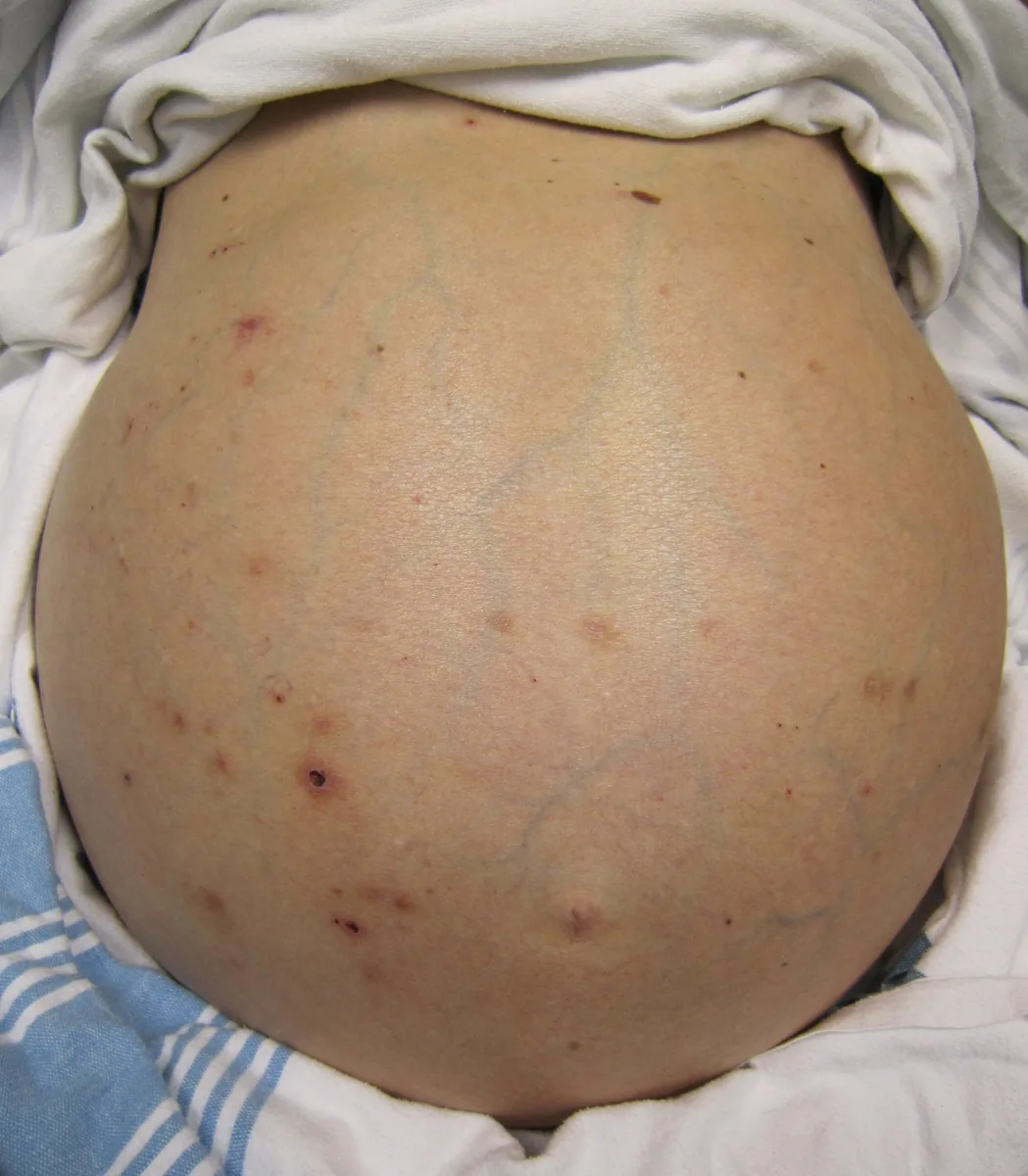
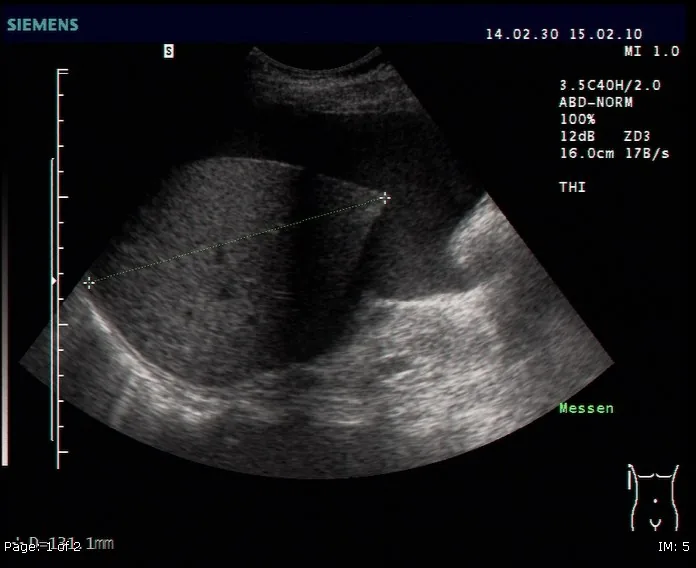 Ultrasound
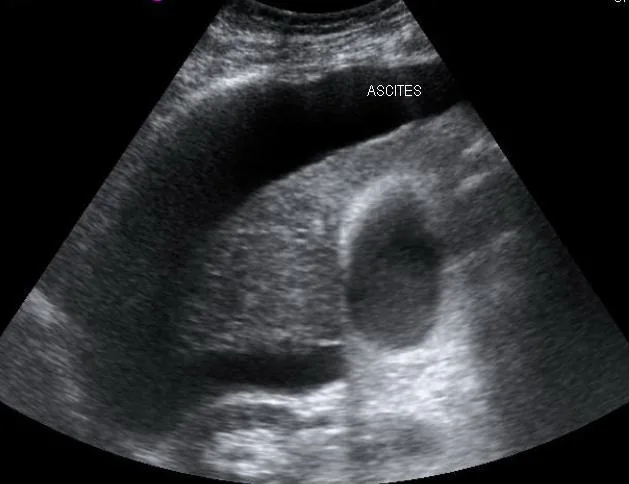 Ultrasound
Definition
Ascites is a pathological accumulation of free fluid in the peritoneal cavity. The most common cause is portal hypertension in liver cirrhosis, but ascites may also have cardiac, malignant, inflammatory or renal causes.
Classification
Grades of severity
According to the amount of fluid, cirrhotic ascites is divided into three grades:
- Grade 1 (mild): detectable only by ultrasound
- Grade 2 (moderate): symmetrical distension of the abdomen
- Grade 3 (large, tense): marked abdominal distension
According to the serum-ascites albumin gradient (SAAG), portal hypertensive ascites (SAAG of 1.1 g/dL or more) is distinguished from non-portal hypertensive ascites (SAAG below 1.1 g/dL).
Occurrence & epidemiology
About 80% of all cases of ascites are due to portal hypertension, usually as a result of liver cirrhosis. In cirrhosis, the onset of ascites is regarded as a sign of decompensation.
Aetiopathogenesis
- Hepatic: portal hypertension in cirrhosis, chronic hepatitis, severe alcoholic hepatitis, hepatic venous outflow obstruction (Budd-Chiari syndrome), sinusoidal obstruction syndrome
- Systemic fluid retention: heart failure, constrictive pericarditis, nephrotic syndrome, marked hypoalbuminemia
- Peritoneal: peritoneal carcinomatosis, tuberculous or other infectious peritonitis
- Less common: pancreatitis, myxedema, systemic lupus erythematosus, injury or obstruction of lymphatic vessels
Portal vein thrombosis alone usually does not cause ascites as long as liver function is preserved.
In cirrhotic ascites, several mechanisms interact: nitric oxide-mediated splanchnic vasodilatation, raised portal pressure with low oncotic pressure (altered Starling forces) and marked renal sodium retention due to activation of the renin-angiotensin-aldosterone system and the sympathetic nervous system. Urinary sodium concentration is typically below 5 mmol/L.
Clinical features
Small amounts cause no symptoms; below about 1,500 mL, ascites often cannot be reliably detected on examination. Larger amounts lead to increasing abdominal girth and weight, a feeling of tension and pressure, and dyspnea when the diaphragm is elevated. In portal hypertension, volumes are usually larger than in systemic causes.
Findings include flank dullness with shifting dullness and a fluid wave; in massive ascites the abdominal wall is tense and the umbilicus flattened. Leg edema may accompany it.
True abdominal pain is unusual and, especially with fever, suggests spontaneous bacterial peritonitis or another acute cause. Ascites can pass through diaphragmatic defects into the pleural space (hepatic hydrothorax), in the majority of cases on the right side.
Diagnosis
Examination and paracentesis
Ultrasound and CT detect as little as 100–200 mL of free fluid, i.e. much smaller amounts than physical examination. Baseline tests include liver tests, renal function and serum and urine electrolytes.
A diagnostic paracentesis is performed for new-onset ascites, an unclear cause and suspected infection. Appearance, cell count with differential, total protein and albumin (for the SAAG) are determined; in addition, ascitic fluid is placed in blood culture bottles. Depending on the question, cytology, amylase, cholesterol or CEA are added.
Interpretation of ascitic fluid
- SAAG of 1.1 g/dL or more: portal hypertension (cirrhosis, cardiac congestion, Budd-Chiari syndrome)
- SAAG below 1.1 g/dL: among others peritoneal carcinomatosis, pancreatitis, tuberculosis, myxedema
- Cardiac ascites: high SAAG with total protein usually above 2.5 g/dL; cirrhotic ascites usually below 2.5 g/dL
- Neutrophils above 250/µL: spontaneous bacterial peritonitis
- Total protein below 1.5 g/dL: low opsonic activity and increased risk of infection
- Hemorrhagic ascites: suggests malignancy, trauma, pancreatitis or, rarely, tuberculosis
- Chylous (milky) ascites: usually lymphoma or obstruction of lymphatic vessels
Keep learning in the app
Further reading (open access)
Cross-references
More topics: Liver & biliary tract
Note: Learning content for medical education – not a treatment recommendation and no substitute for diagnosis or treatment decisions in individual cases. Treatment and management are deliberately not covered on this page.