Alcoholic hepatitis
Board exam relevance: in 1 of 105 exam reports · rank 181- Synonyms
- alcohol-associated hepatitis, alcoholic steatohepatitis, ASH, alcohol-related liver disease
- Specialty
- Internal medicine · Liver & biliary tract
- Images
- Histology 2
- Last updated
- 10/2026 · Dr. Pascal Bafteh
Contents
Images (2)
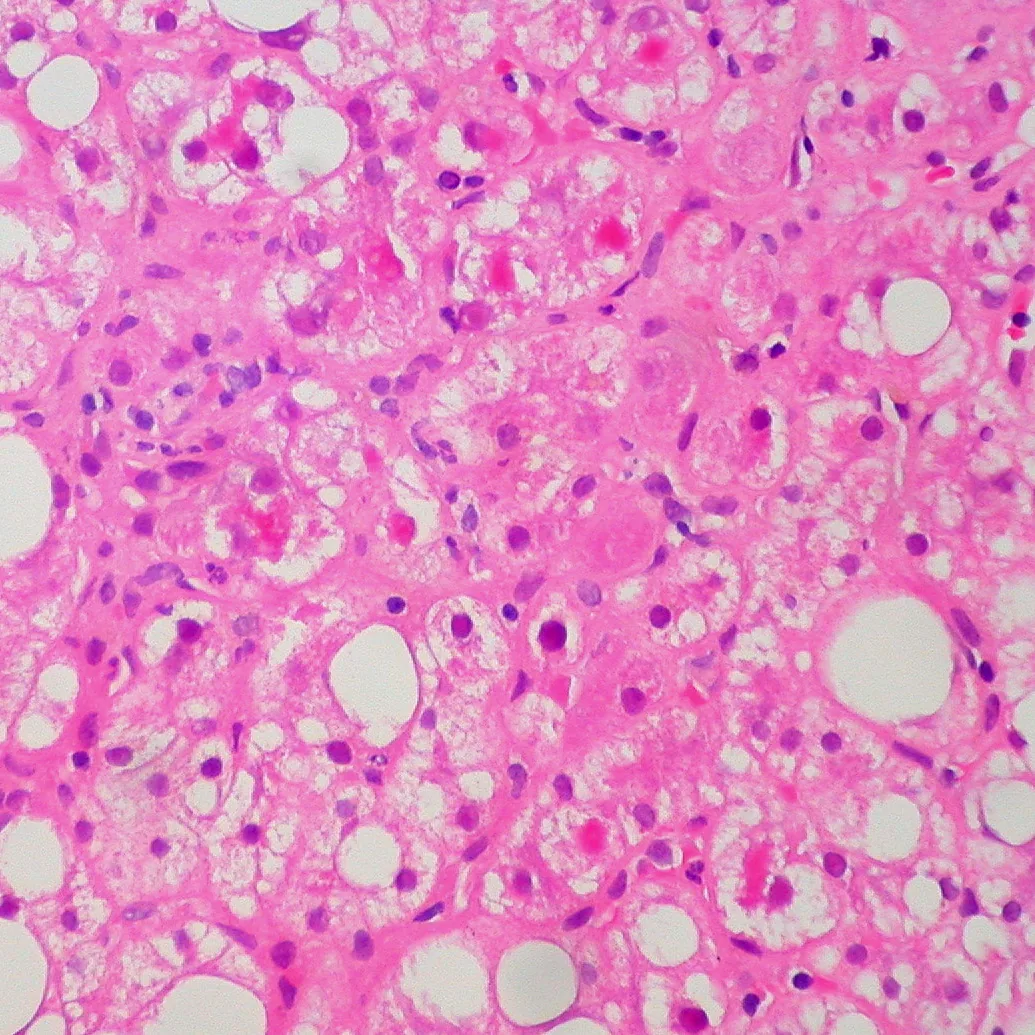 Histology
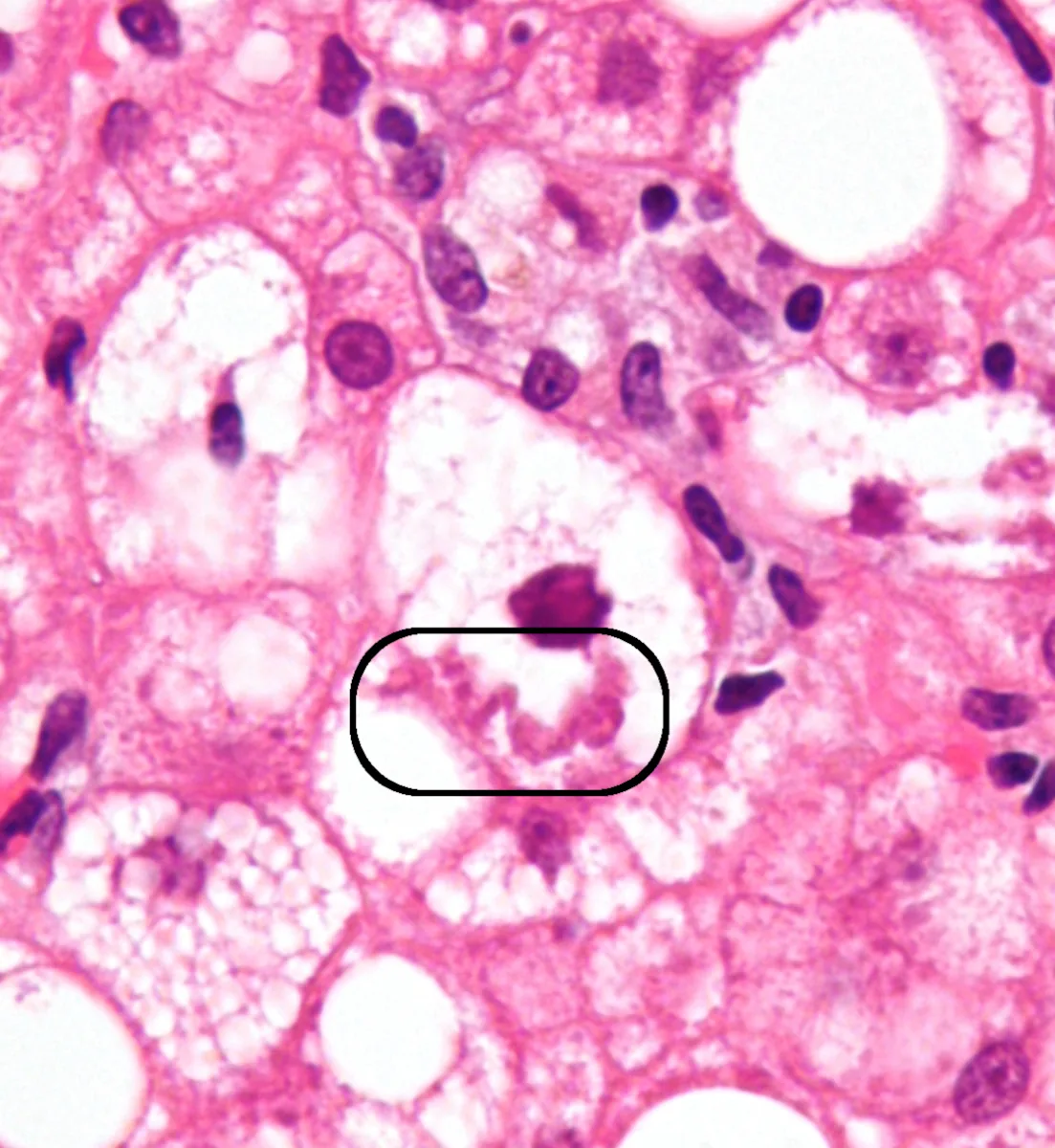 Histology
Definition
Alcoholic hepatitis (alcoholic steatohepatitis) is inflammatory liver injury due to long-standing excessive alcohol consumption. It combines fatty change, diffuse inflammation and hepatocyte necrosis to varying degrees and ranges from mild, reversible forms to life-threatening courses with liver failure. Cirrhosis is often already present at the same time.
Classification
Alcohol-related liver disease comprises three forms, which often follow one another and overlap:
- Alcoholic steatosis (fatty liver): in more than 90% of people with alcohol use disorder; reversible
- Alcoholic hepatitis: in 10–35%
- Alcoholic cirrhosis: in 10–20%
Severity of alcoholic hepatitis is estimated with scores such as the Maddrey discriminant function (from prothrombin time and bilirubin), the MELD score and the Glasgow Alcoholic Hepatitis Score.
Aetiopathogenesis
The quantity and duration of alcohol consumption are decisive; a safe threshold is not known. Women are more susceptible and may be at risk with as little as 20–30 g of alcohol per day, partly because of lower alcohol dehydrogenase activity in the gastric mucosa. Further risk factors are genetic factors, obesity, iron accumulation in the liver and concomitant viral hepatitis.
In the liver, alcohol is degraded mainly via alcohol dehydrogenase to acetaldehyde and further to acetate; with chronic intake, the microsomal system with CYP2E1 is also activated. This produces reactive oxygen species. The altered redox potential promotes fat accumulation. Acetaldehyde binds to proteins and forms neoantigens; endotoxins increasingly absorbed from the gut activate Kupffer cells. Inflammation, cell death and activated stellate cells finally lead to fibrosis and cirrhosis.
Clinical features
Symptoms usually appear in the fourth or fifth decade of life. Typical features of moderate to severe alcoholic hepatitis are:
- jaundice, often of rapid onset
- fever, fatigue and malnutrition
- right upper quadrant pain, a tender enlarged liver, occasionally a bruit over the liver
- signs of decompensation such as ascites, hepatic encephalopathy, variceal bleeding, coagulopathy and hypoglycemia
Consequences of alcohol consumption itself are often present: spider naevi, Dupuytren's contracture, parotid enlargement, peripheral neuropathy, myopathy, signs of hypogonadism in men and vitamin deficiencies (folate, thiamine). Rarely, Zieve syndrome with hyperlipidemia, hemolytic anemia and jaundice occurs.
Histology
Characteristic findings are large-droplet steatosis, ballooned (swollen) hepatocytes with granular cytoplasm, Mallory-Denk bodies (alcoholic hyaline), hepatocyte necrosis and inflammation with neutrophils. Sinusoids and central veins are narrowed; fibrosis or cirrhosis is often already present, initially usually micronodular.
Diagnosis
The diagnosis rests on the combination of excessive alcohol consumption, the clinical picture and laboratory findings.
- History: amount consumed, complemented by relatives and questionnaires (CAGE, AUDIT); suspicion especially with more than 80 g of alcohol per day
- Alcohol markers: phosphatidylethanol (PEth) with a half-life of about 10–14 days, ethyl glucuronide and ethyl sulphate
- Aminotransferases: only moderately raised (usually below 300 U/L), AST/ALT ratio of at least 2; GGT raised
- Severity: bilirubin and prothrombin time or INR; albumin often low
- Blood count: macrocytosis (MCV above 100 fL), thrombocytopenia, leukocytosis with neutrophilia; concomitant infections such as pneumonia or spontaneous bacterial peritonitis are specifically sought
- Imaging: ultrasound or CT for steatosis, splenomegaly, ascites and portal hypertension; elastography for fibrosis assessment
- Exclusion of other causes, especially viral hepatitis; liver biopsy only if the diagnosis is unclear or several causes are suspected
Keep learning in the app
Further reading (open access)
Cross-references
More topics: Liver & biliary tract
Note: Learning content for medical education – not a treatment recommendation and no substitute for diagnosis or treatment decisions in individual cases. Treatment and management are deliberately not covered on this page.