Vulvovaginal candidiasis
Exam relevance: in 8 of 197 board exam reports · rank 82
- Synonyms
- thrush, vaginal yeast infection, vaginal candidiasis
- Specialty
- Gynaecology · Vulva & vagina
- Images
- Colposcopy 1 · Histology & cytology 2 · Endoscopy & gross 1
- Exam relevance
- 8 of 197 reports · rank 82
- In the app
- 1 flashcards · GynFuchs
- Last updated
- 10/2026 · Dr. Pascal Bafteh
Contents
Images (4)
 Colposcopy
 Histology & cytology
 Endoscopy & gross
 Histology & cytology
Definition
- Vulvovaginal candidiasis is inflammation of the vulva and vagina due to infection with Candida species, most commonly Candida albicans.
- Because Candida also colonises many healthy women (about 15–20 % of non-pregnant and 20–40 % of pregnant women), the diagnosis requires both corresponding symptoms and laboratory detection of the organism.
Classification
Special Cases
- Before the due date: reduces oral thrush/nappy rash rate in the newborn.
- With four or more episodes per year: recurrent candidiasis.
- Recurrent disease is defined as at least 3–4 documented episodes within 12 months.
Occurrence & epidemiology
Epidemiology
- Up to 75 % of women have at least one lifetime episode and 5–10 % develop recurrent disease; it causes around one third of all cases of vulvovaginitis.
- Candida albicans is the most common pathogen; among non-albicans species, Candida glabrata is the most relevant and is becoming more frequent.
Aetiopathogenesis
Factors Favouring Infection
- Other factors: diabetes, immunosuppression, pregnancy.
- In severe obesity, what is characteristic is: intertriginous spread into inguinal folds.
Aetiology and risk factors
- Risk factors include pregnancy with raised oestrogen levels, diabetes mellitus, immunosuppression, systemic broad-spectrum antibacterial agents and synthetic underwear; after the menopause the condition is uncommon without systemic oestrogen.
Clinical features
Clinical Presentation and Findings
- Main symptoms: itching, burning, reddened vulva.
- Discharge: whitish, crumbly, odourless.
- The pH is: characteristically normal, i.e., below 4.5.
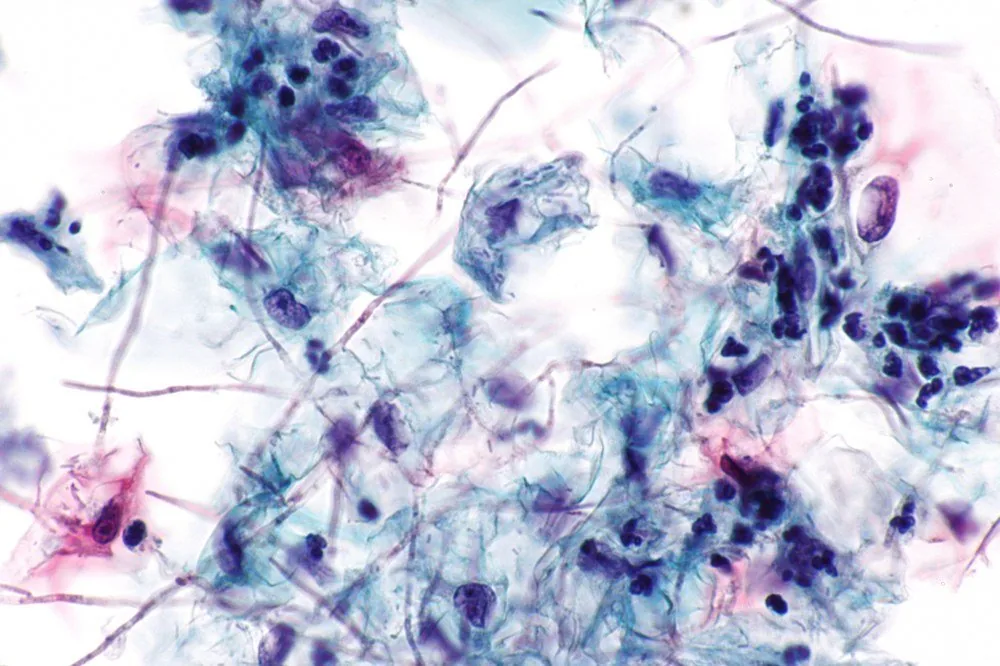
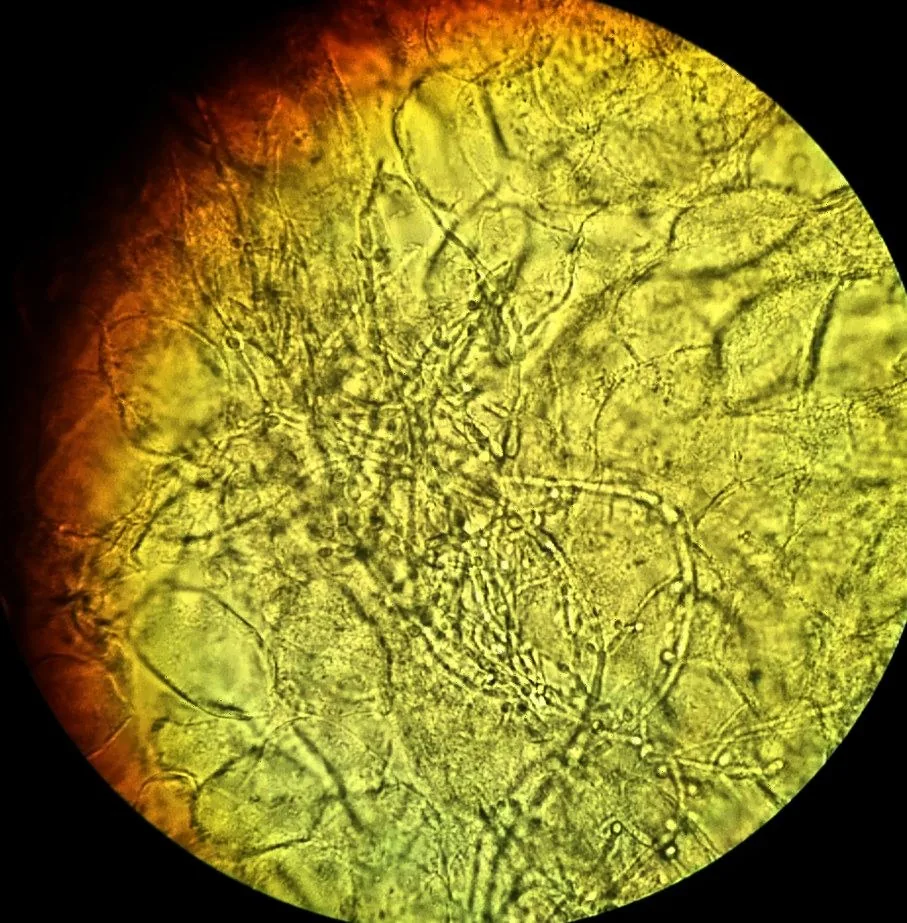
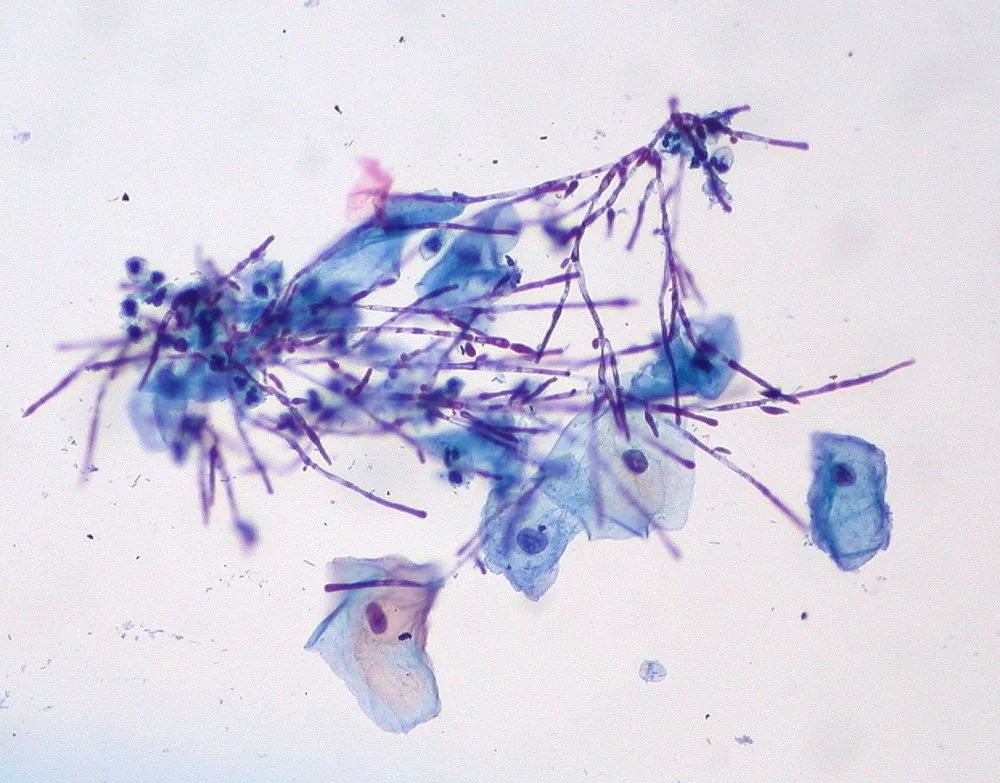
- On a wet mount, one sees: pseudohyphae, budding yeasts.
- Most common pathogen: Candida albicans.
- Typical symptoms are vulvovaginal itching, burning and irritation, as well as dysuria and dyspareunia; symptoms often increase in the week before menstruation.
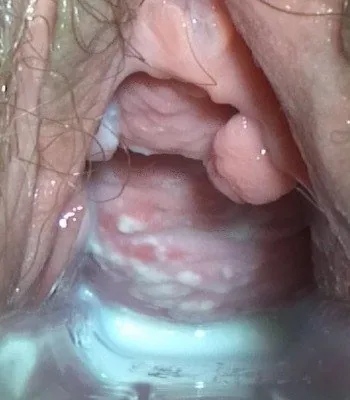
- Findings include redness, swelling and excoriation of the vulva and vagina, sometimes fissures, with thick, white, curd-like, adherent discharge, which may however be scant or absent.
Diagnosis
Typical imaging findings
- Clinical finding: On speculum examination thick, white, curd-like plaques lie on the reddened vaginal wall. They can be wiped off, leaving a slightly bleeding surface; the discharge itself is odourless and the pH remains acidic.
- Vaginal pH is typically below 4.5.
- On wet mount, especially with 10 % potassium hydroxide, budding yeast, pseudohyphae or mycelia are seen; potassium hydroxide raises sensitivity from 30–40 % to 60–80 %.
- Fungal culture is used mainly in persistent or recurrent symptoms to confirm the diagnosis and detect non-albicans species; molecular tests are an option when microscopy is inconclusive.
Keep learning in the app
Further reading (selection)
Cross-references
Note: Learning content from the GynFuchs app (flashcards, exam questions, image cases) for medical education – not a treatment recommendation and no substitute for diagnosis or treatment decisions in individual cases. Treatment and management are deliberately not covered on this page.