Bacterial vaginosis
Exam relevance: in 5 of 197 board exam reports · rank 101
- Synonyms
- BV, Gardnerella
- Specialty
- Gynaecology · Vulva & vagina
- Images
- Histology & cytology 4 · Diagram 1 · Endoscopy & gross 2
- Exam relevance
- 5 of 197 reports · rank 101
- In the app
- 2 flashcards · GynFuchs
- Last updated
- 10/2026 · Dr. Pascal Bafteh
Contents
Images (7)
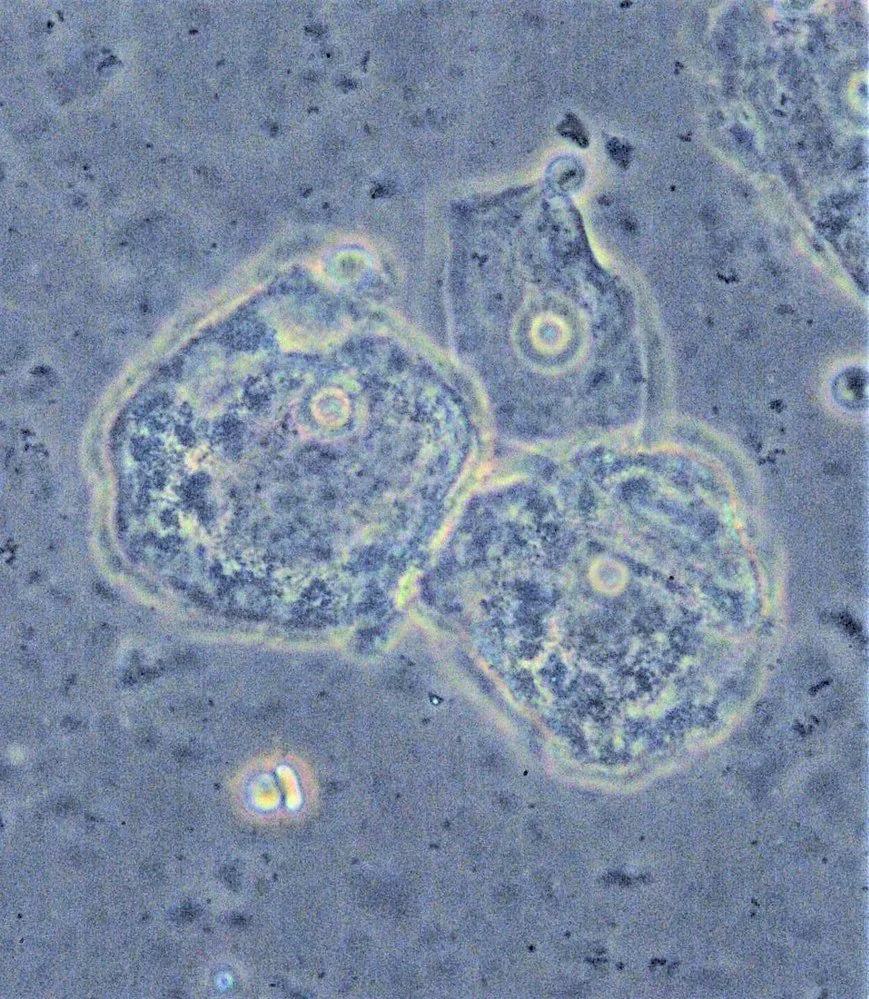 Histology & cytology
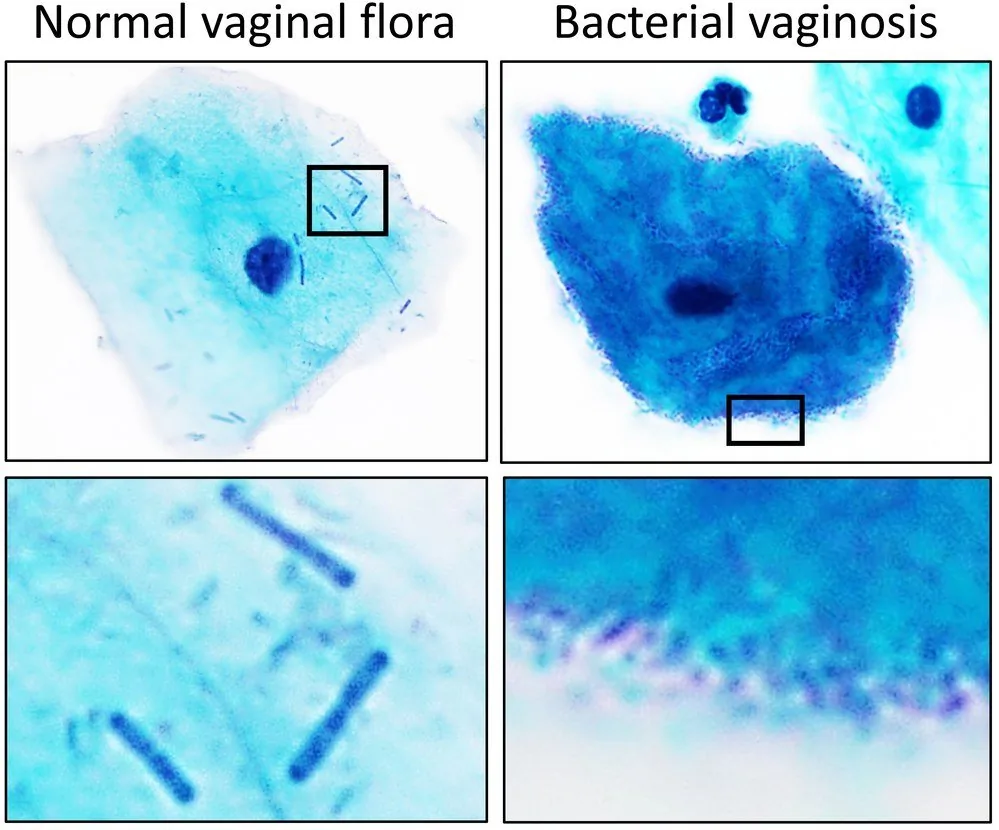 Diagram
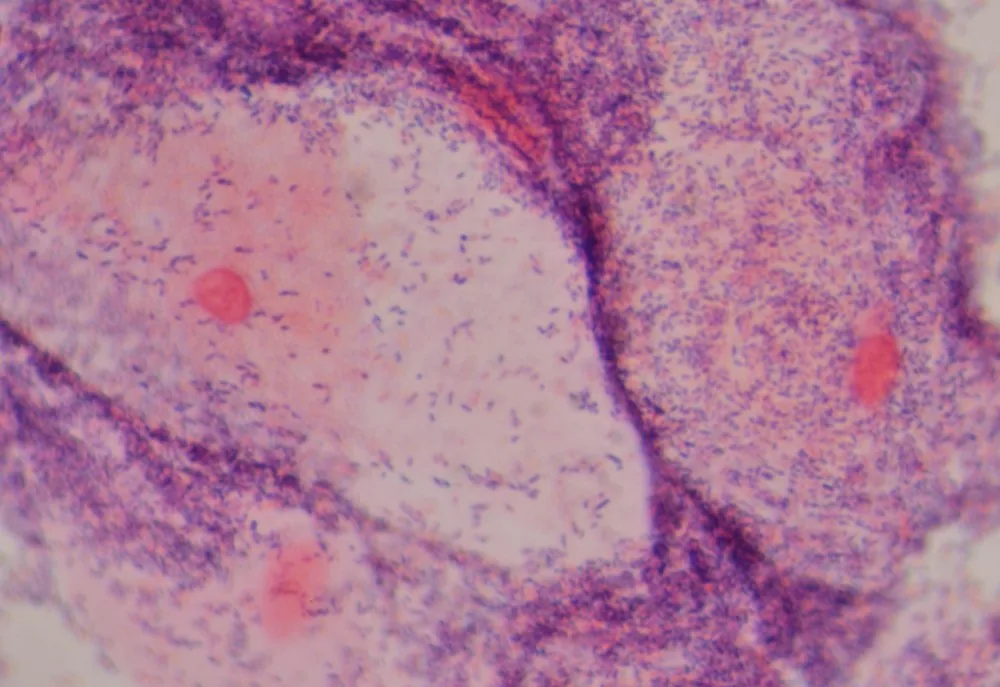 Endoscopy & gross
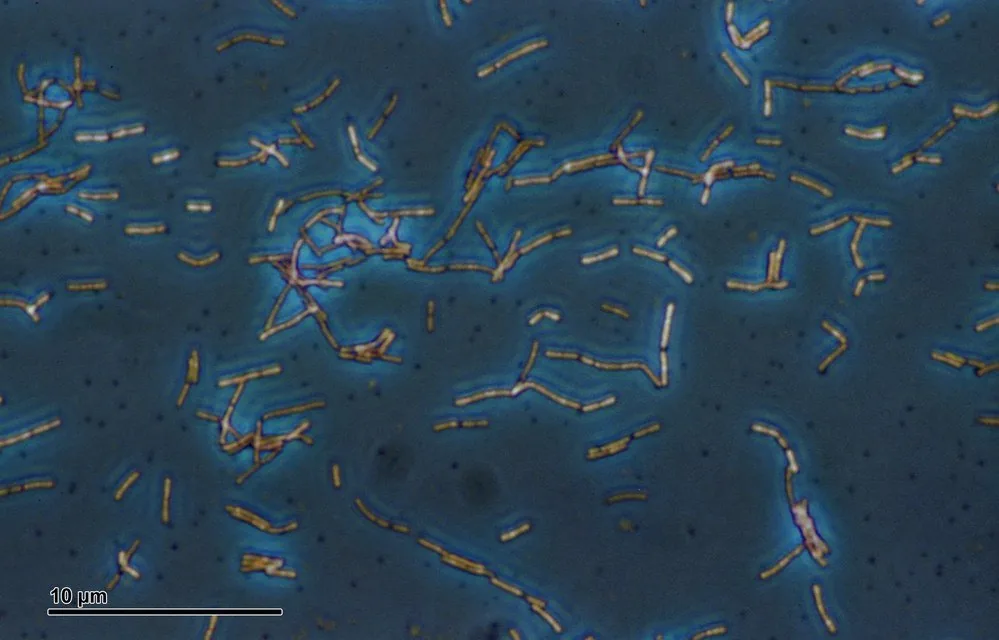 Histology & cytology
 Endoscopy & gross
 Histology & cytology
 Histology & cytology
Definition
What Vaginosis Is
- Basic process: displacement of lactobacilli by anaerobes.
- Key organism: Gardnerella vaginalis, Atopobium, Prevotella.
- Why it is not a true colpitis: few signs of inflammation, few leukocytes.
- Typical complaint: thin, greyish-white discharge with fishy odour.
Clinical features
Why This Matters in Pregnancy
- The risk: preterm birth, premature membrane rupture.
- A history of preterm birth requires: vaginal environment assessment.
Diagnosis
Amsel's Criteria
- For diagnosis, you need: three of four Amsel criteria.
- First criterion: homogeneous, thin, greyish-white discharge.
- Second criterion: a vaginal pH above 4.5.
- Third criterion: positive amine test (whiff test) with KOH.
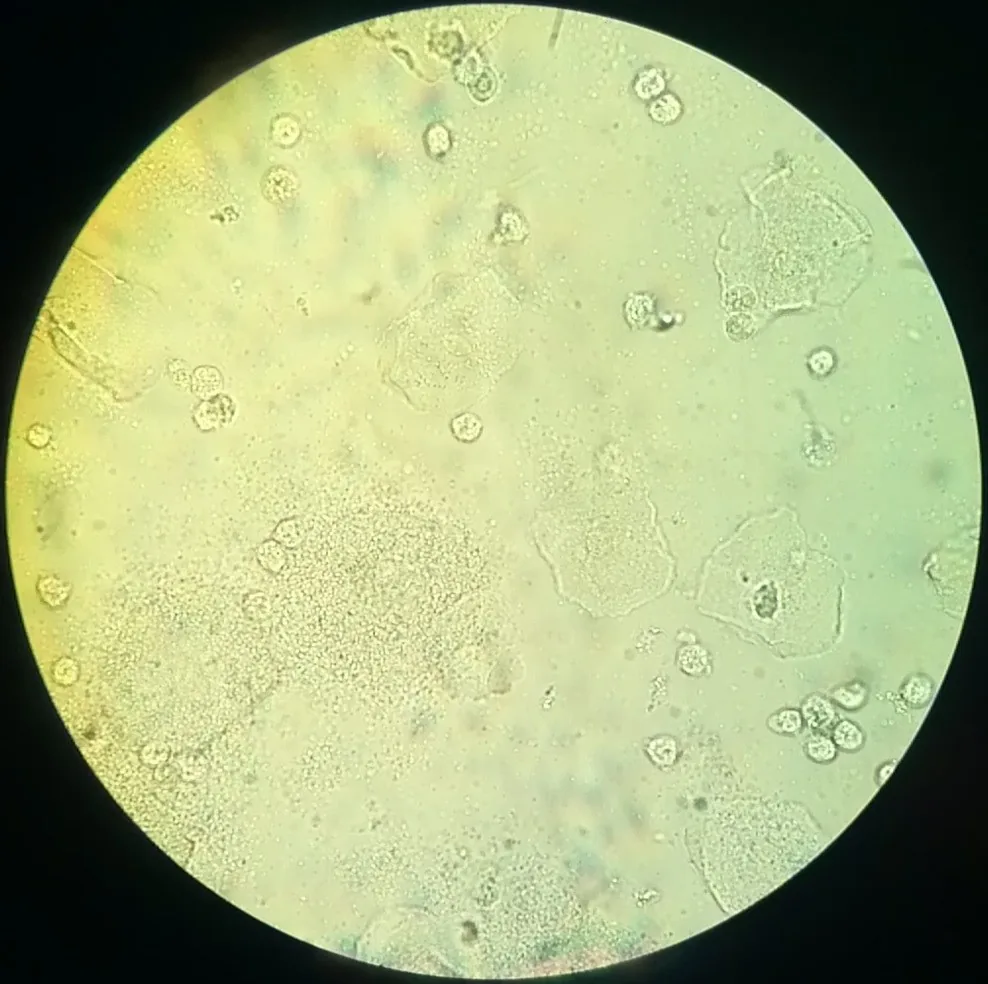
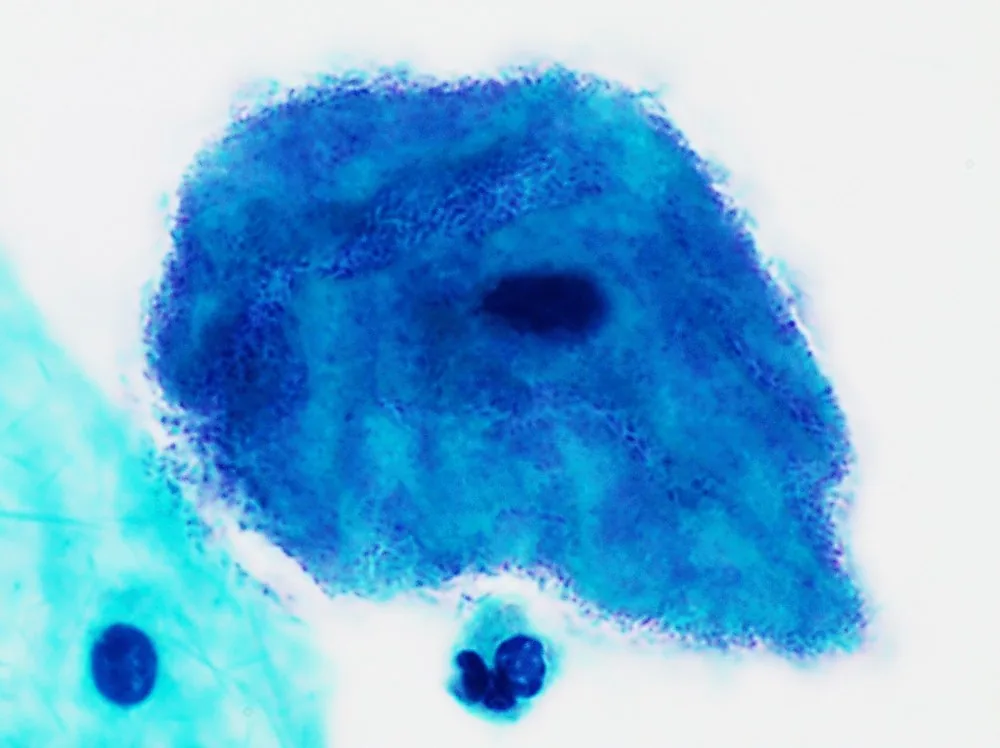
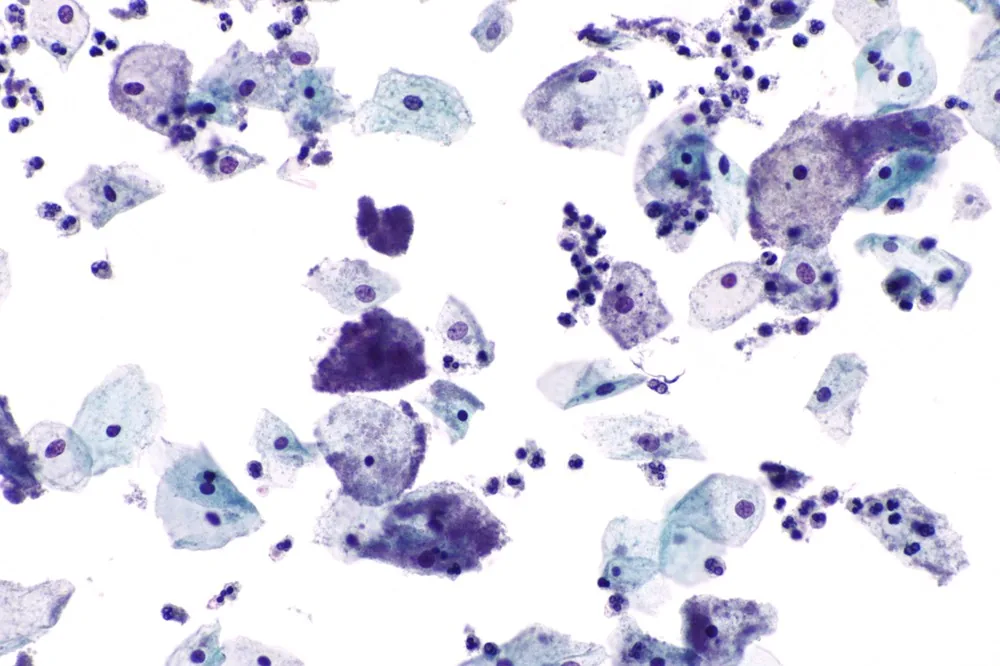
- Fourth criterion: detection of clue cells in the wet mount.
- The alternative microscopic system: Nugent score (Gram stain, 0–10 points).
PH and Amine Test
- Physiological vaginal pH in women of reproductive age: pH 3.8–4.5 (acidic).
- What produces the acidic pH: lactobacilli (glycogen → lactic acid).
- A pH above 4.5 is found in: vaginosis, trichomoniasis, atrophy.
- In candidiasis: pH value in normal range (3.8–4.5).
- Amine test: 10% potassium hydroxide causes fishy odour.
- Source of error in pH measurement: blood, semen, lubricants raise pH value.
Keep learning in the app
Further reading (selection)
Cross-references
Note: Learning content from the GynFuchs app (flashcards, exam questions, image cases) for medical education – not a treatment recommendation and no substitute for diagnosis or treatment decisions in individual cases. Treatment and management are deliberately not covered on this page.