Tubo-ovarian abscess
Exam relevance: in 1 of 197 board exam reports · rank 171
- Specialty
- Gynaecology · Ovary & adnexa
- Images
- Ultrasound 3
- Exam relevance
- 1 of 197 reports · rank 171
- In the app
- 1 flashcards · GynFuchs
- Last updated
- 10/2026 · Dr. Pascal Bafteh
Contents
Images (3)
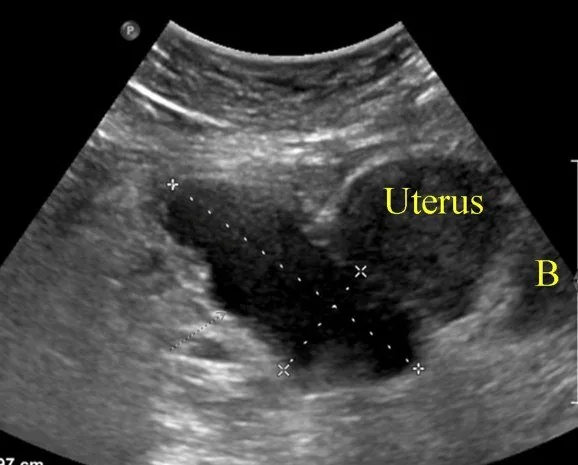 Ultrasound
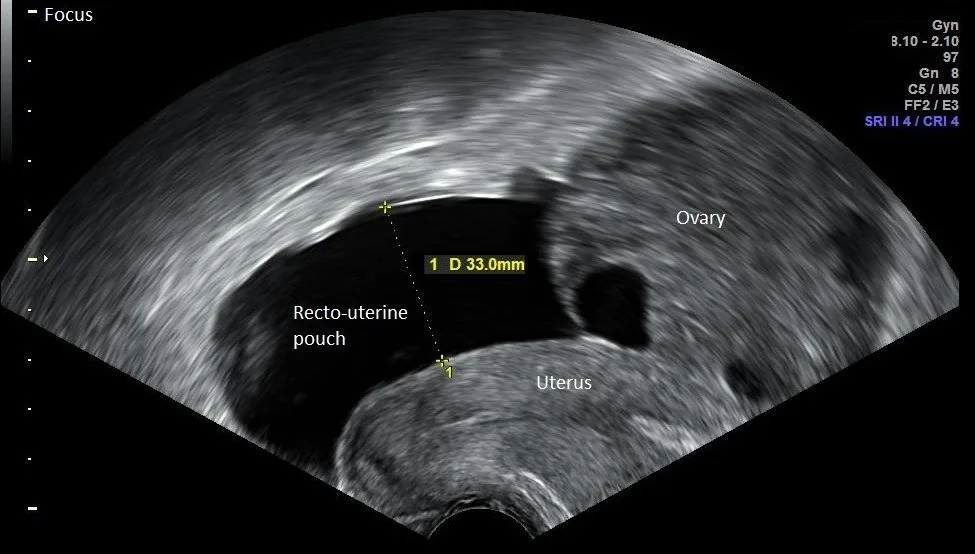 Ultrasound
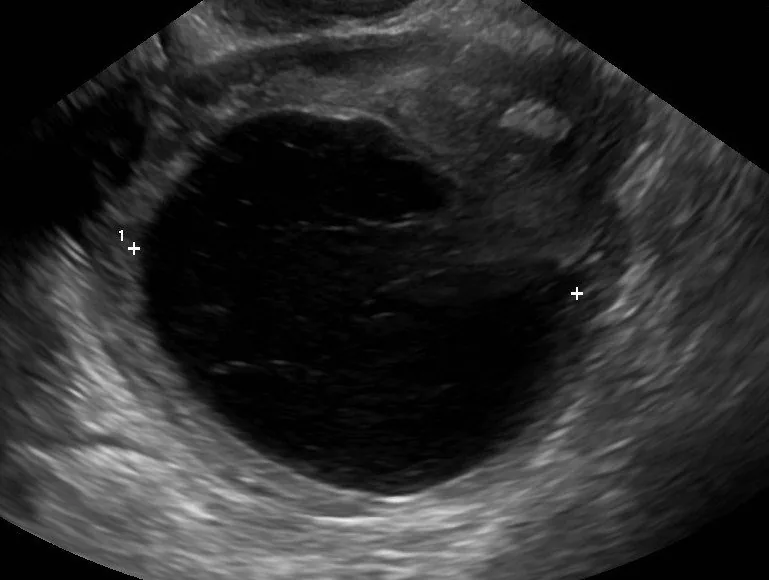 Ultrasound
Definition
- Tubo-ovarian abscess is a severe complication of pelvic inflammatory disease with adnexal inflammation, typically involving a pus-filled tube and ovary, caused by an ascending infection.
- As the full-blown manifestation of PID, progression of infection destroys the normal adnexal structure and an inflammatory mass encompassing tube and ovary forms.
Occurrence & epidemiology
Epidemiology
- Tubo-ovarian abscess develops in up to about 15% of patients with PID or salpingitis and mainly affects sexually active women of reproductive age; it may also occur without other PID sequelae.
- It can accompany acute or chronic infection and is sometimes bilateral.
Clinical features
Clinical features and imaging
- Clinical signs: Indicative of adnexitis are bilateral pain, fever, vaginal discharge, cervical motion tenderness and elevated inflammatory markers.
- Tubo-ovarian abscess: A tubo-ovarian abscess appears as a complex cystic-solid adnexal mass.
Clinical features and complications
- Common symptoms are fever, abdominal pain and foul-smelling discharge, although the presentation varies widely.
- Pain, fever and peritoneal signs are usually present and may be severe; a palpable adnexal mass suggests tubo-ovarian abscess.
- The abscess can cause systemic infection and involve neighbouring organs such as bowel or bladder; rupture can lead to life-threatening sepsis and septic shock.
- Sequelae are infertility, chronic pelvic pain and an increased risk of ectopic pregnancy.
Diagnosis
- Ultrasound and CT are used to detect the abscess.
- CT shows a mixed solid-cystic adnexal mass with complex fluid and thickened, irregularly enhancing walls and septa; the mesosalpinx is often thickened.
- On MRI the septa and the thickened wall enhance, and the wall, septa and purulent content show restricted diffusion.
- Identification of a dilated, pus-filled tube allows differentiation from a complex adnexal tumour.
Keep learning in the app
Further reading (selection)
Cross-references
More topics: Ovary & adnexa
- Ovarian cysts (adnexal cysts)
- Corpus luteum cyst and haemorrhagic ovarian cyst
- Mature cystic teratoma (dermoid cyst)
- Adnexal torsion (ovarian torsion)
- Ovarian cancer
- Borderline ovarian tumour
- Ovarian germ cell tumours
- Granulosa cell tumour and sex cord-stromal tumours
- Krukenberg tumour
- Pelvic inflammatory disease (PID)
Note: Learning content from the GynFuchs app (flashcards, exam questions, image cases) for medical education – not a treatment recommendation and no substitute for diagnosis or treatment decisions in individual cases. Treatment and management are deliberately not covered on this page.