Granulosa cell tumour and sex cord-stromal tumours
Exam relevance: in 3 of 197 board exam reports · rank 125
- Specialty
- Gynaecology · Ovary & adnexa
- Images
- Histology & cytology 2 · Mammography/MRI 1
- Exam relevance
- 3 of 197 reports · rank 125
- Last updated
- 10/2026 · Dr. Pascal Bafteh
Contents
Images (3)
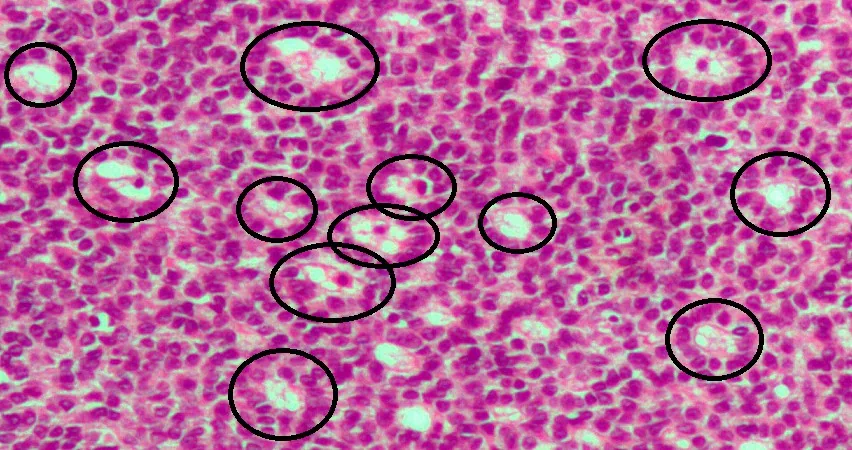 Histology & cytology
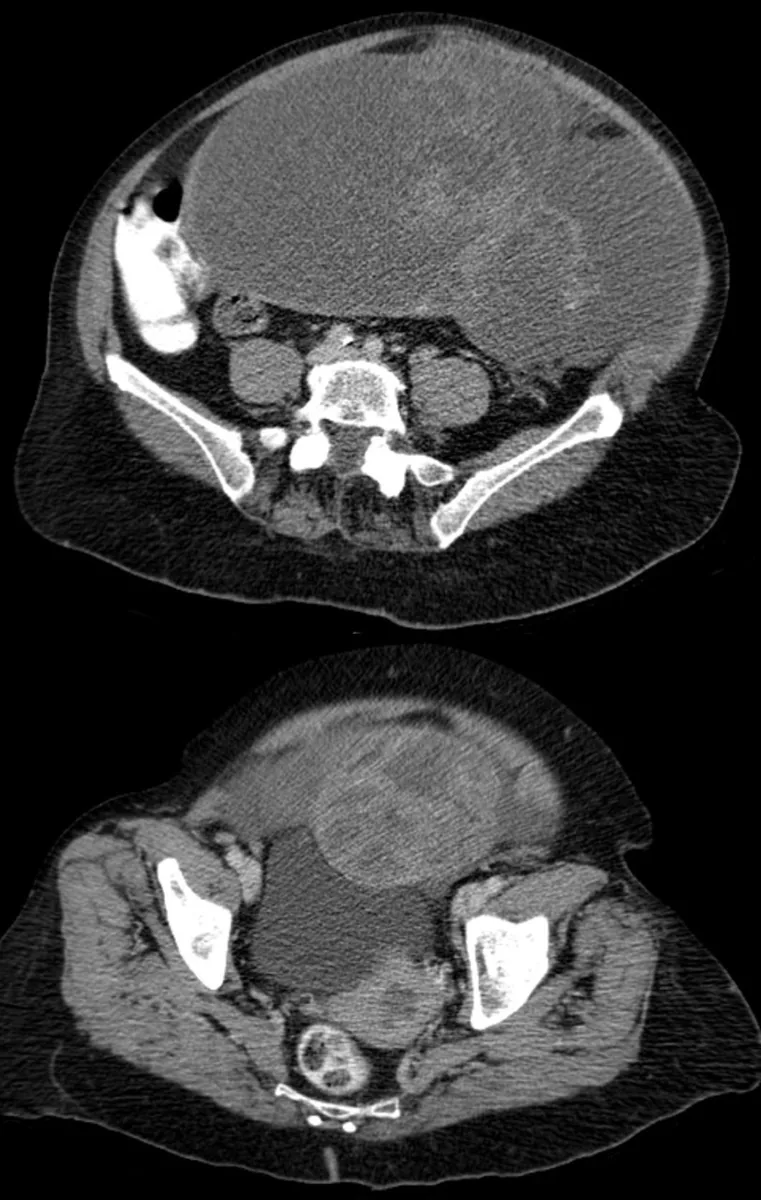 Mammography/MRI
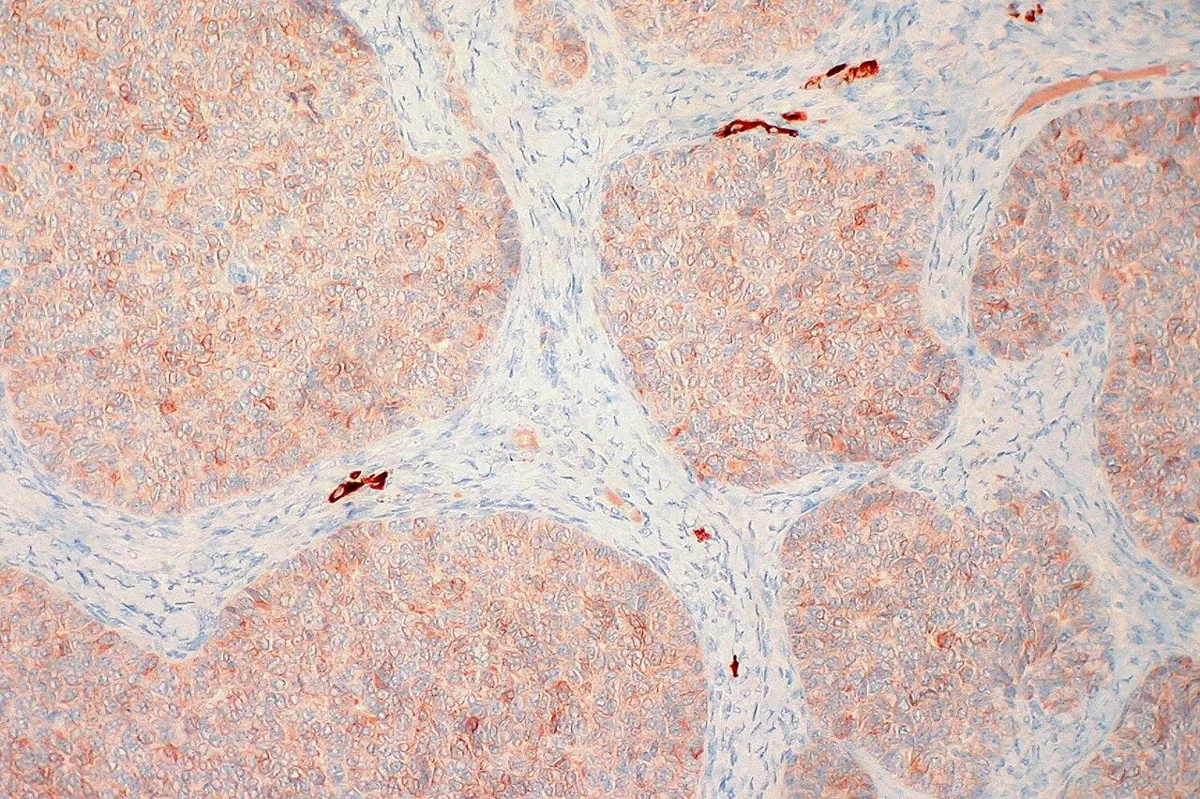 Histology & cytology
Definition
- Granulosa cell tumours belong to the sex cord-stromal tumours and consist of granulosa cells, theca cells and fibroblasts in varying combinations.
- Sex cord-stromal tumours account for about 8% of all ovarian tumours.
Classification
- Adult and juvenile types are distinguished: the adult type accounts for about 95% of granulosa cell tumours and mostly occurs peri- or postmenopausally, the juvenile type affects prepubertal girls and young women.
- Thecomas are uncommon and usually benign.
Aetiopathogenesis
Pathogenesis
- The somatic FOXL2 variant c.402C>G (p.C134W) is characteristic of adult granulosa cell tumour and was shown experimentally to be sufficient to trigger it.
- Sertoli-Leydig cell tumours are associated with DICER1 syndrome, sex cord tumours with annular tubules with Peutz-Jeghers syndrome.
Clinical features
- Typical are abdominal pain and swelling as well as oestrogen-related uterine bleeding; androgenic signs are less common (about 10%), and the tumours are usually detected at FIGO stage I.
- Endometrial hyperplasia or endometrioid carcinoma may coexist, especially after the age of 40.
- Granulosa cell tumours tend to recur late, sometimes decades after the initial diagnosis; depending on the series, up to a quarter to a third recur.
- Thecomas often present with oestrogenic, less commonly androgenic, effects, sometimes with endometrial neoplasms.
Histology
Histology and diagnosis
- Pale, longitudinally grooved nuclei with a coffee-bean appearance are typical; Call-Exner bodies are a hallmark but are present in only about 10% of tumours.
- Sex cord-stromal tumours express markers such as inhibin, calretinin, SF1, WT1 and FOXL2; molecular pathology helps with classification.
- Serum inhibin A and inhibin B may be raised.
Keep learning in the app
Further reading (selection)
Cross-references
More topics: Ovary & adnexa
Note: Learning content from the GynFuchs app (flashcards, exam questions, image cases) for medical education – not a treatment recommendation and no substitute for diagnosis or treatment decisions in individual cases. Treatment and management are deliberately not covered on this page.