Pelvic inflammatory disease (PID)
Exam relevance: in 7 of 197 board exam reports · rank 88
- Synonyms
- PID, pelvic inflammatory disease, salpingitis
- Specialty
- Gynaecology · Ovary & adnexa
- Images
- Endoscopy & gross 1 · Colposcopy 1 · Ultrasound 1
- Exam relevance
- 7 of 197 reports · rank 88
- In the app
- 2 flashcards · GynFuchs
- Last updated
- 10/2026 · Dr. Pascal Bafteh
Contents
Images (3)
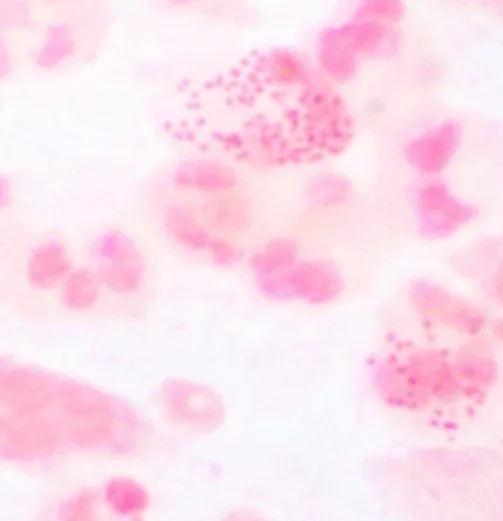 Endoscopy & gross
 Colposcopy
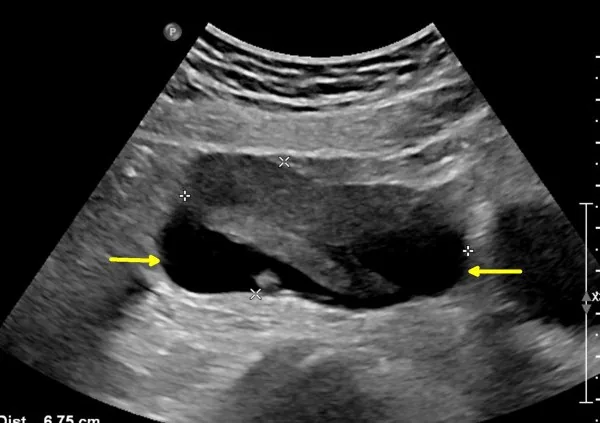
 Ultrasound
Definition
What PID means
- The term covers: ascending infection of uterus, tubes, ovaries.
- Most common cause: chlamydia, gonococci, and mixed flora.
- Predisposing factors include: young age, partner change, IUD insertion.
- Key symptoms: lower abdominal pain, discharge, fever.
- In lab tests: elevated CRP and leukocytes, pregnancy test.
- Pelvic inflammatory disease (PID) is an infectious inflammation of the female upper genital tract that can affect the uterus, fallopian tubes and ovaries and usually ascends from the lower genital tract.
- The spectrum comprises cervicitis, endometritis, salpingitis, pyosalpinx and tubo-ovarian abscess.
Occurrence & epidemiology
Epidemiology
- Acute PID affects many women of reproductive age and is one of the commonest causes of gynaecological emergency presentations.
- Young women of reproductive age are most commonly affected; PID is rare before menarche, after menopause and during pregnancy.
Aetiopathogenesis
Pathogens and risk factors
- Common pathogens are the sexually transmitted organisms Chlamydia trachomatis and Neisseria gonorrhoeae as well as Mycoplasma genitalium; approximately 50% of patients with acute PID test positive for gonorrhoea or chlamydia.
- Other aerobic and anaerobic bacteria are often also involved, such as organisms associated with bacterial vaginosis, Haemophilus influenzae, Streptococcus agalactiae and enteric gram-negative bacilli.
- The organisms ascend from the vagina via the cervix and uterine cavity to the tubes, ovaries and even the peritoneal cavity.
- Risk factors include young age, a new sexual partner within the past 12 months or at least two previous partners, and vaginal discharge or pelvic pain within the past 6 months.
Clinical features
Chlamydia as the most common cause
- The pathogen: C. trachomatis (serovars D–K).
- Preferentially affected is: columnar epithelium (endocervix, urethra).
- Possible symptoms: cervicitis, contact bleeding, dysuria.
- Ascending infection leads to: endometritis, salpingitis, tubo-ovarian abscess.
Clinical features and complications
- Typical are fever, pelvic or lower abdominal pain, mucopurulent cervical discharge and cervical motion tenderness; however, many patients have only mild symptoms or none.
- Examination also shows uterine and bilateral adnexal tenderness; a palpable adnexal mass suggests a tubo-ovarian abscess.
- Short-term complications are tubo-ovarian or pelvic abscess, long-term ones ectopic pregnancy, infertility and chronic pelvic pain.
- A tubo-ovarian abscess develops in approximately 15% of women with salpingitis.
Diagnosis
- The diagnosis is primarily clinical; in pelvic pain without another identifiable cause, at least one of cervical motion tenderness, uterine tenderness or adnexal tenderness is the minimum criterion.
- Leucocytosis and raised CRP may support the diagnosis; a raised ESR increases specificity as an additional criterion.
- Cervical specimens are tested by nucleic acid amplification for N. gonorrhoeae and C. trachomatis; upper tract infection is possible even if cervical tests are negative.
- Ultrasound and CT can detect an abscess; CT also helps to distinguish other causes such as appendicitis.
- On CT, acute salpingitis shows swollen tubes with thickened, enhancing walls, pyosalpinx serpiginous structures with purulent content and fluid-debris levels, and tubo-ovarian abscess a multilocular solid-cystic mass.
Keep learning in the app
Further reading (selection)
Cross-references
More topics: Ovary & adnexa
Note: Learning content from the GynFuchs app (flashcards, exam questions, image cases) for medical education – not a treatment recommendation and no substitute for diagnosis or treatment decisions in individual cases. Treatment and management are deliberately not covered on this page.