Fitz-Hugh-Curtis syndrome
Exam relevance: in 3 of 197 board exam reports · rank 125
- Specialty
- Gynaecology · Ovary & adnexa
- Images
- Endoscopy & gross 1
- Exam relevance
- 3 of 197 reports · rank 125
- In the app
- 1 flashcards · GynFuchs
- Last updated
- 10/2026 · Dr. Pascal Bafteh
Contents
Images (1)
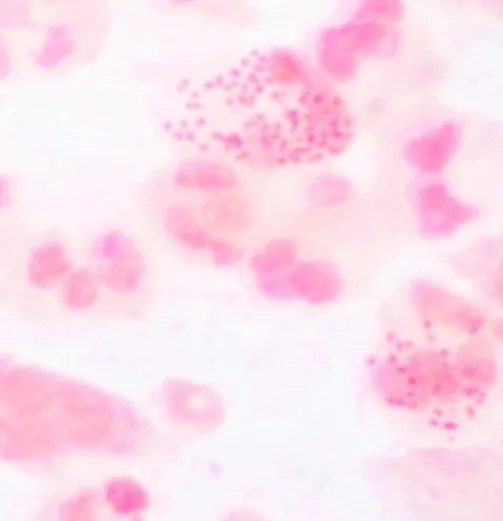 Endoscopy & gross
Definition
- Fitz-Hugh-Curtis syndrome is a perihepatitis in the setting of pelvic inflammatory disease: inflammation of the liver capsule without involvement of the liver parenchyma, with adhesion formation and right upper quadrant pain.
- The syndrome is not exclusive to gonococcal infection and has been reported in both sexes.
Aetiopathogenesis
Aetiology
- It may result from acute gonococcal or chlamydial salpingitis; Chlamydia trachomatis is now considered the more common pathogen.
- In an emergency department study of 82 patients, Chlamydia trachomatis was detected by PCR in 89%, gonococci in only three patients.
- The pathogenesis is uncertain: proposed mechanisms are spread of exudate along the paracolic gutters from the pelvis to the diaphragm and haematogenous or lymphatic spread.
Clinical features
Late sequelae and perihepatitis
- Most important long-term sequelae: tubal sterility, ectopic pregnancy, chronic pain.
- Fitz-Hugh-Curtis syndrome: perihepatitis in chlamydial infection.
- Laparoscopically, this shows: violin string-like adhesions.
- The leading symptom is right upper quadrant pain that worsens with deep breathing and is attributed to capsular congestion and exudate.
- The upper abdominal pain may follow lower abdominal pain by a few days or occur simultaneously; it rarely occurs without lower abdominal pain.
- Fever and discharge may be absent: in that study only 15% had fever and 41% vaginal discharge.
Diagnosis
- The syndrome may mimic acute cholecystitis; it can usually be distinguished by evidence of salpingitis on pelvic examination or ultrasound.
- Dynamic CT including an arterial phase improves depiction of perihepatic capsular enhancement.
- The diagnosis is confirmed at laparoscopy or laparotomy by string-like adhesions (violin strings) between the liver surface and the anterior abdominal wall or by detecting the pathogen in hepatic capsular specimens.
Keep learning in the app
Further reading (selection)
Cross-references
More topics: Ovary & adnexa
- Ovarian cysts (adnexal cysts)
- Corpus luteum cyst and haemorrhagic ovarian cyst
- Mature cystic teratoma (dermoid cyst)
- Adnexal torsion (ovarian torsion)
- Ovarian cancer
- Borderline ovarian tumour
- Ovarian germ cell tumours
- Granulosa cell tumour and sex cord-stromal tumours
- Krukenberg tumour
- Pelvic inflammatory disease (PID)
Note: Learning content from the GynFuchs app (flashcards, exam questions, image cases) for medical education – not a treatment recommendation and no substitute for diagnosis or treatment decisions in individual cases. Treatment and management are deliberately not covered on this page.