Cystic hygroma and increased nuchal translucency
Exam relevance: in 15 of 197 board exam reports · rank 49
- Specialty
- Obstetrics · Fetus & prenatal medicine
- Images
- Ultrasound 6
- Exam relevance
- 15 of 197 reports · rank 49
- In the app
- 1 flashcards · GynFuchs
- Last updated
- 10/2026 · Dr. Pascal Bafteh
Contents
Images (6)
 Ultrasound
 Ultrasound
 Ultrasound
 Ultrasound
 Ultrasound
 Ultrasound
Definition
Nuchal translucency basics
- Nuchal translucency (NT) is a subcutaneous collection of fluid in the nuchal region that can be visualised in every fetus in the first trimester and is therefore not a sign of pathology per se.
- The proposed causes include immature lymphatic drainage, possible cardiac insufficiency, and specific connective tissue properties.
- The measurement is time-sensitive because the nuchal translucency resolves after 14 weeks, meaning the screening cannot be performed later.
- Nuchal translucency is a transient collection of fluid under the skin of the fetal neck, measured at a crown-rump length of 45 to 84 mm, and is not a structural anomaly.
- Cystic hygroma is a developmental anomaly of the lymphatic system with fluid in the nuchal region that can extend along the length of the fetus and show septations.
Classification
- A nuchal translucency of 3 mm or more is a high risk factor for aneuploidy; values at or above the 99th centile (3.5 mm or more) are found in about 1% of pregnancies.
- Septation does not reliably distinguish cystic hygroma from increased nuchal translucency.
Aetiopathogenesis
Aetiology
- Fluid collections arise when interstitial fluid production exceeds return via the lymphatic vessels; cystic hygroma results from jugular-lymphatic obstruction.
- A nuchal translucency at or above the 99th centile is associated with chromosomal anomalies, monogenic conditions such as RASopathies and, in euploid fetuses, with cardiac and other malformations.
Diagnosis
Typical imaging findings
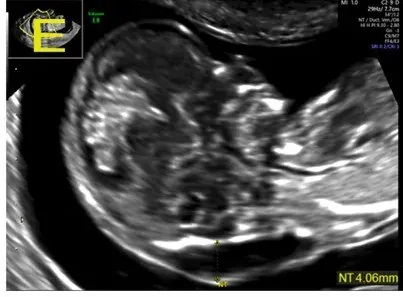
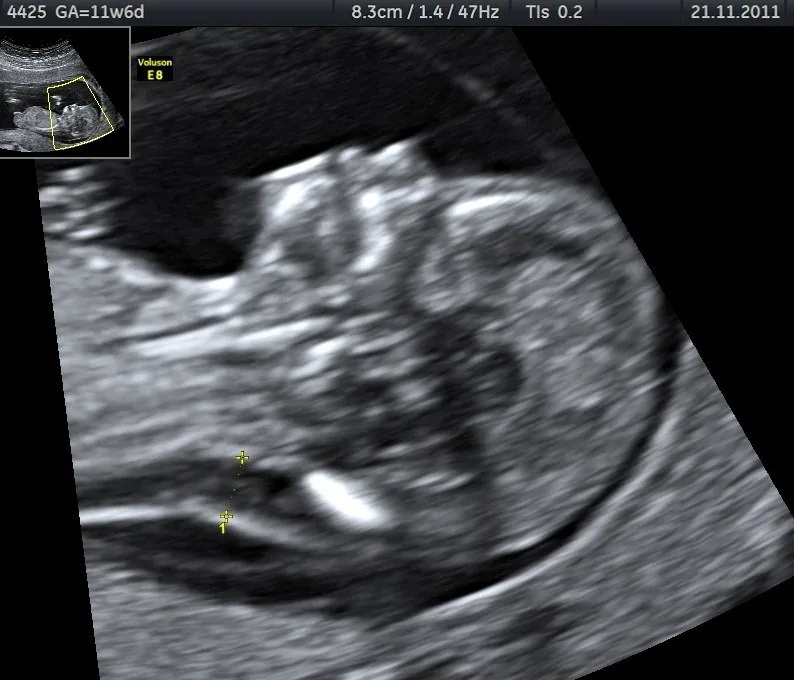
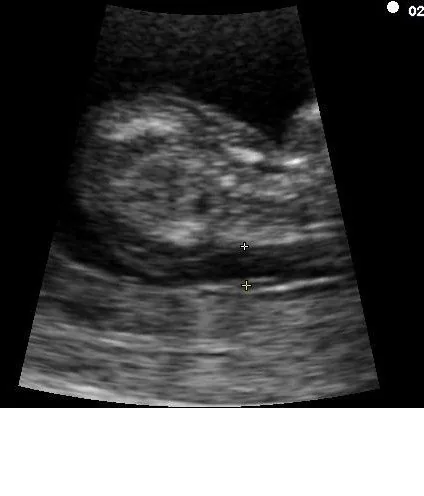
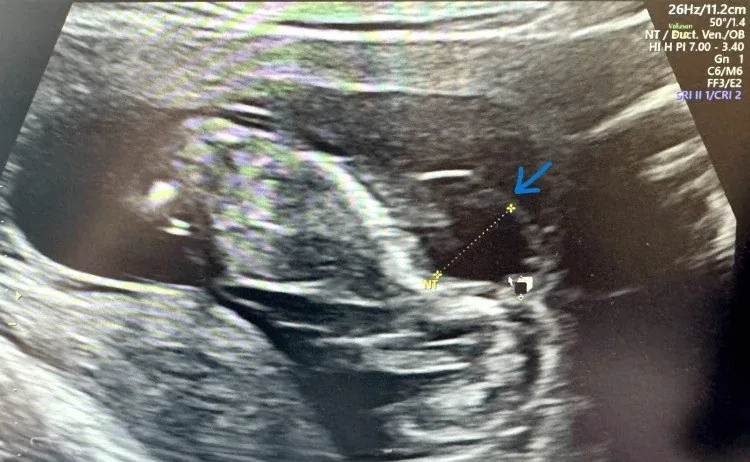
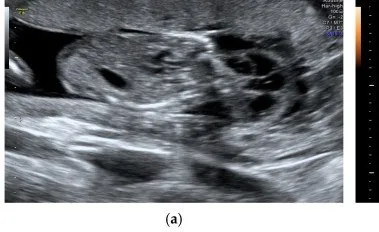
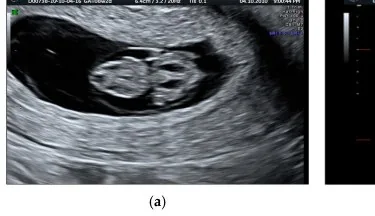
- Ultrasound: Behind the fetal head and neck there is an extensive anechoic fluid collection far beyond the extent of a normal nuchal translucency. It extends far dorsally; the measuring line is marked.
- Ultrasound: Large anechoic sacs lie on both sides of the neck, divided into chambers by thin walls. The fluid extends far around the neck and is clearly more than a narrow nuchal fold.
- Nuchal translucency is measured in a midsagittal view of the fetal face.
- Investigations include karyotyping, chromosomal microarray analysis and a multigene RASopathy panel, together with careful anatomical assessment and early and repeated fetal echocardiography.
Keep learning in the app
Further reading (selection)
Cross-references
Note: Learning content from the GynFuchs app (flashcards, exam questions, image cases) for medical education – not a treatment recommendation and no substitute for diagnosis or treatment decisions in individual cases. Treatment and management are deliberately not covered on this page.