Spina bifida (neural tube defect)
Exam relevance: in 15 of 197 board exam reports · rank 49
- Synonyms
- open spine, neural tube defect
- Specialty
- Obstetrics · Fetus & prenatal medicine
- Images
- Ultrasound 4
- Exam relevance
- 15 of 197 reports · rank 49
- In the app
- 1 flashcards · GynFuchs
- Last updated
- 10/2026 · Dr. Pascal Bafteh
Contents
Images (4)
 Ultrasound
 Ultrasound
 Ultrasound
 Ultrasound
Definition
Pathophysiology and typical signs
- The pathomechanism of open spina bifida is a loss of cerebrospinal fluid through the defect, which leads to a drop in intracranial pressure.
- As a result, the cerebellum is pulled caudally, which is referred to as Arnold-Chiari malformation type II.
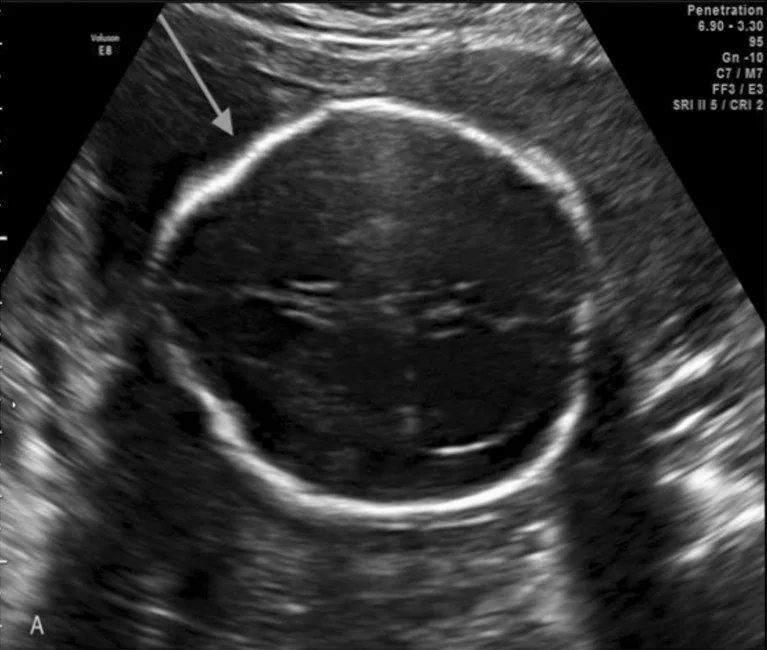
- The lemon sign, a lemon-shaped skull contour, is typically best seen between 16 and 24 weeks and often disappears again in the third trimester.
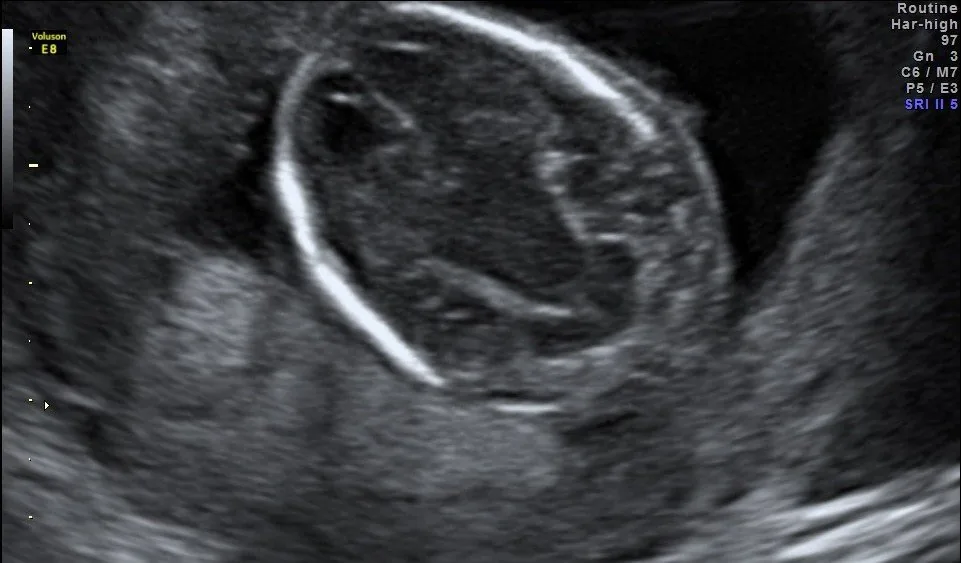
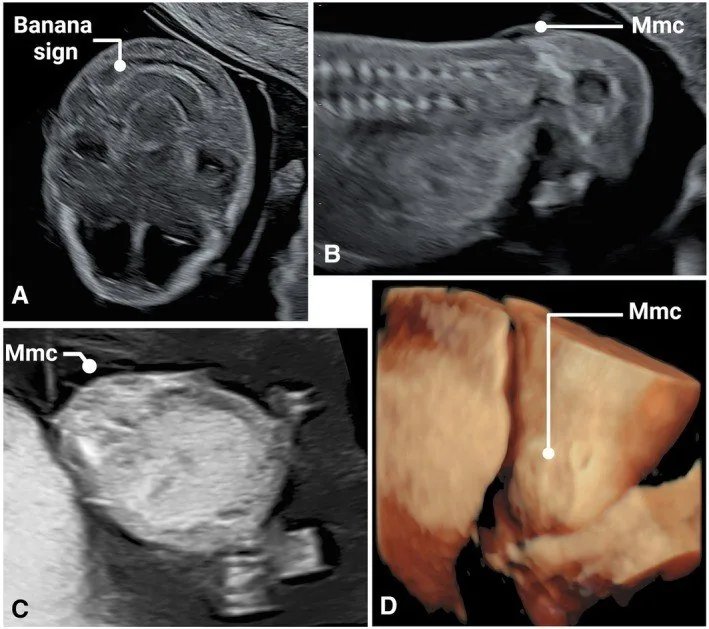
- In the banana sign, the cerebellum is deformed into a banana shape and the cisterna magna is obliterated.
Diagnosis
Further diagnostics and early markers
- Further sonographic indicators of open spina bifida include ventriculomegaly and a small biparietal diameter.
- The most important early marker in the first trimester is the absent or narrowed intracranial translucency.
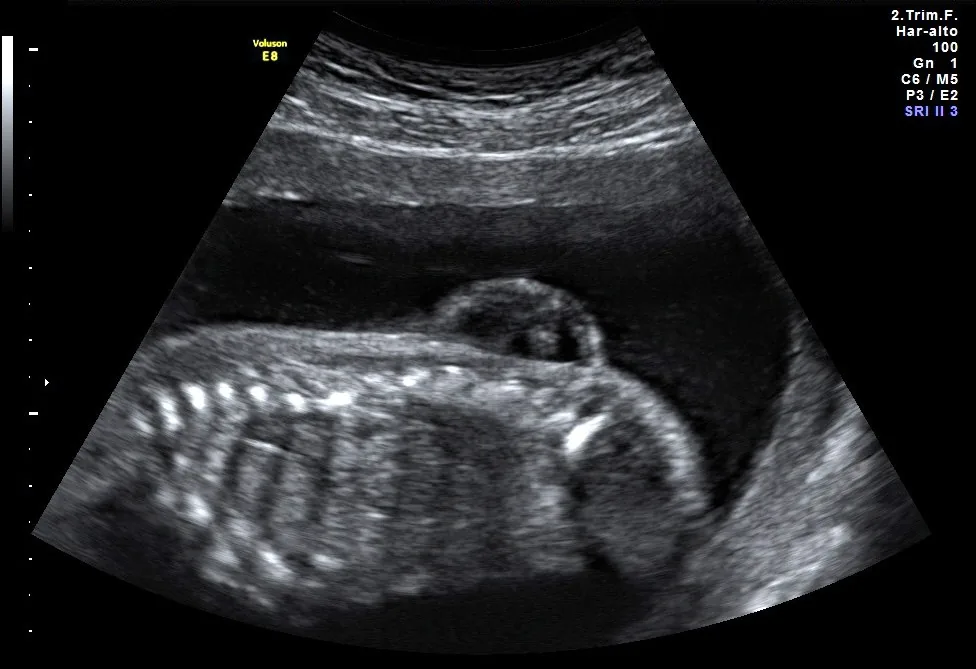
- Direct detection is achieved by visualising the defect in the longitudinal and transverse sections of the back.
Typical imaging findings
- Ultrasound: The cerebellum is not dumbbell-shaped but curved forwards and banana-like in shape, wrapping around the brainstem. The cisterna magna is obliterated and no longer definable.
- Ultrasound: The skull contour is not oval but indented bilaterally at the frontal bones, so that in cross-section the head takes on the shape of a lemon. The arrow marks the indentation; the remaining head circumference is appropriate for gestational age.
Keep learning in the app
Further reading (selection)
Cross-references
Note: Learning content from the GynFuchs app (flashcards, exam questions, image cases) for medical education – not a treatment recommendation and no substitute for diagnosis or treatment decisions in individual cases. Treatment and management are deliberately not covered on this page.