Erythromelalgia
- Synonyms
- burning feet
- Specialty
- Dermatology · Vascular skin disorders
- Images
- Clinical 4
- In the app
- 1 flashcard
- Last updated
- 10/2026 · Dr. Pascal Bafteh
Contents
Images (4)
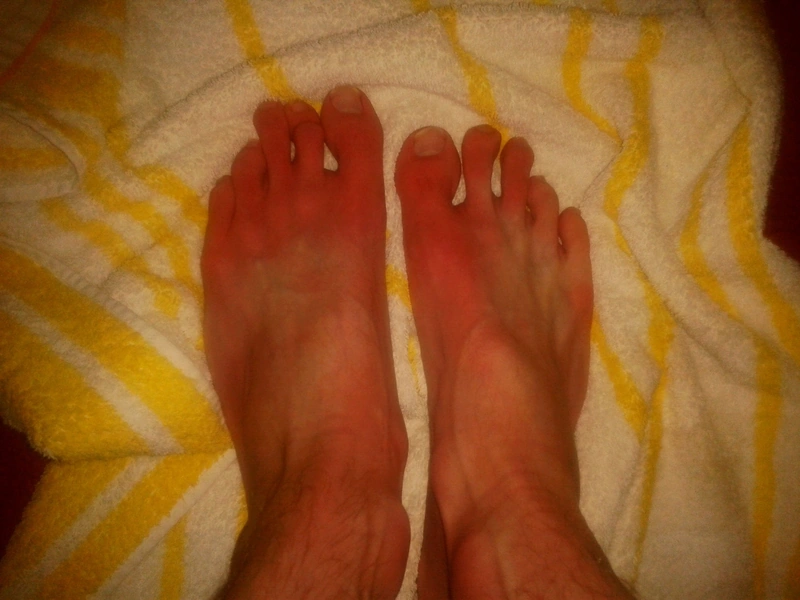
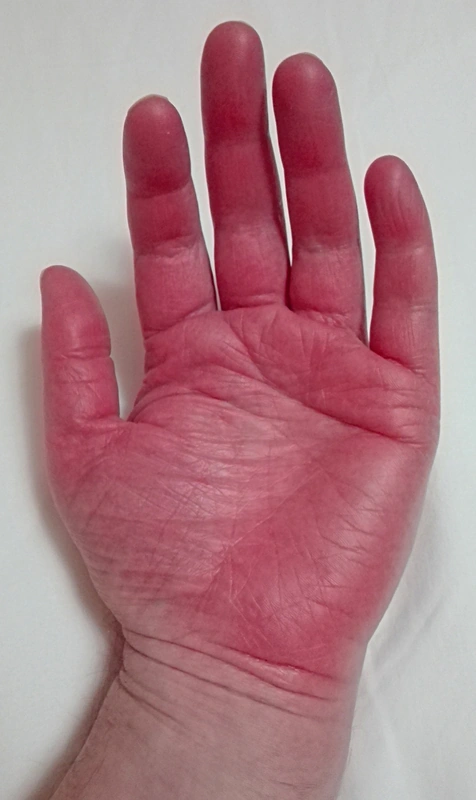
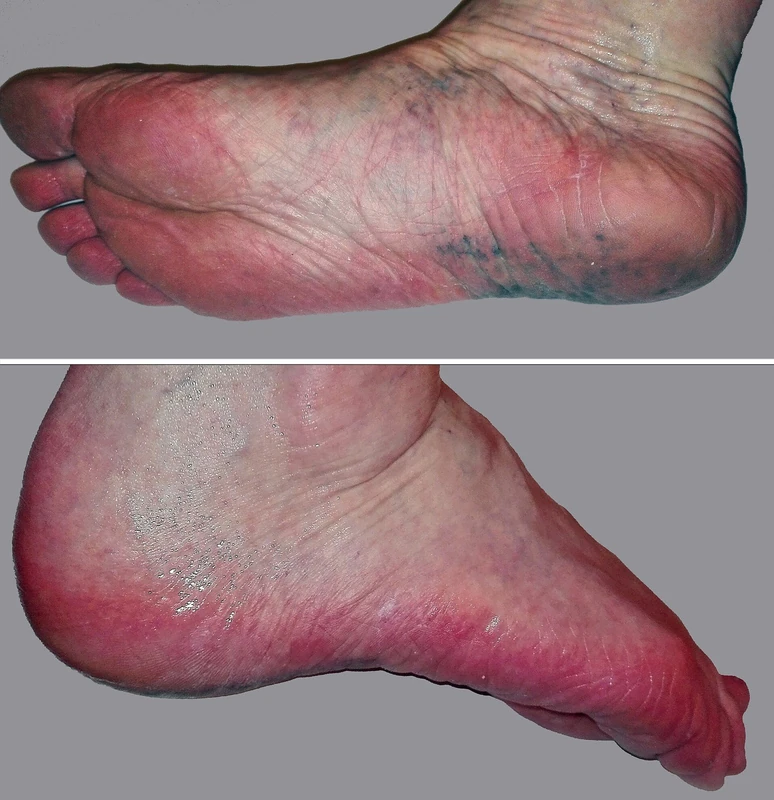
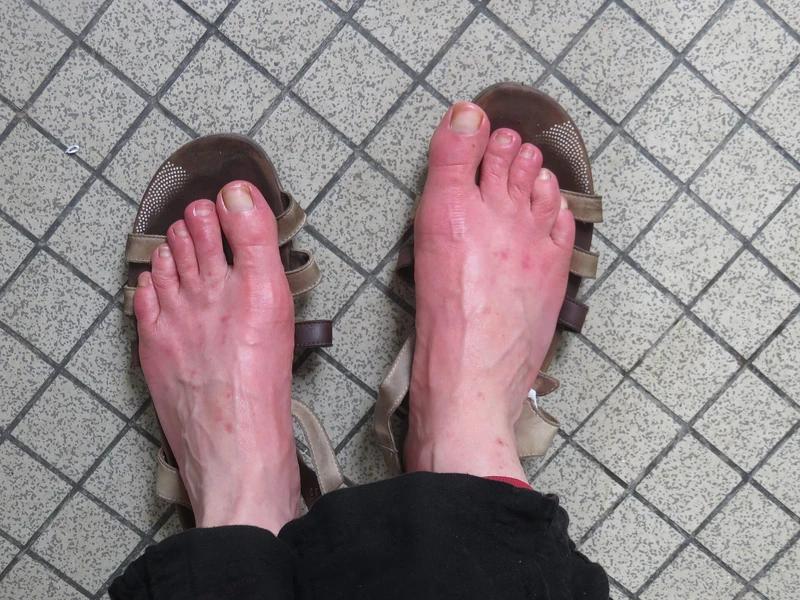
Definition
Definition & triad
- Definition: Paroxysmal functional vasodilation of the acra with the classic triad redness + burning pain + heat sensation, relieved by cooling.
- Synonym: Mitchell's disease (first described 1878).
- Clinical triad: 1) deep red, warm, swollen acra (feet > hands > ears/nose) — 2) burning, often unbearable pain — 3) immediate relief by cooling / cold-water immersion.
- Caution self-injury from ice/cold-water immersion: maceration, frostbite, secondary infection after prolonged immersion.
Primary (idiopathic, hereditary)
- Genetics: SCN9A mutation (gain-of-function in voltage-gated sodium channel Nav1.7 of nociceptive neurons) → hyperexcitability of small pain fibres, autosomal dominant. Onset typically 1st–2nd decade.
- Pathomechanism: Inadequate vasodilation combined with small-fibre neuropathy / nociceptive hyperexcitability.
Secondary (acquired, more common)
- Classic associations:
| Group | Triggers | |||
|---|---|---|---|---|
| Myeloproliferative neoplasms (MPN, most common!) | Polycythaemia vera, essential thrombocythaemia, primary myelofibrosis — JAK2-V617F often positive | |||
| Metabolic | diabetes mellitus, hypercholesterolaemia | |||
| Autoimmune / connective tissue | SLE, Sjögren, RA, scleroderma | |||
| Infections | HIV, hepatitis B/C, mononucleosis | |||
| Neurological | multiple sclerosis, peripheral neuropathy | |||
| Paraneoplastic | rare — adenocarcinomas |
Clinical features
Clinical features & diagnostics
- Attack duration: minutes to hours, often evening/night; triggers: heat, exertion, alcohol, dependent legs.
- Examination during attack: symmetric, sharply demarcated deep red discoloration of the acra with marked warmth, occasional oedema; Raynaud's is the key DD (pallor → cyanosis → redness, opposite!).
- Diagnosis: Clinical + provocative warming (30–45 min) reproduces attack; mandatory: FBC + diff + JAK2-V617F (MPN screen!), CRP, glucose/HbA1c, ANA, HIV/HCV serology, ± bone-marrow aspirate if thrombocytosis, small-fibre testing (intra-epidermal nerve fibre density), QST, thermoregulatory sweat test.
Differential diagnoses
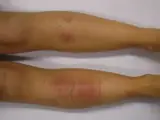
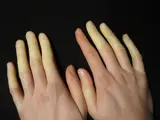
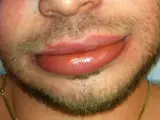
Image credits for the thumbnails
- Erythema nodosum: James Heilman, MD, “ENlegs”, CC BY-SA 3.0, via Wikimedia Commons · CC BY-SA 3.0 · Source
- Raynaud syndrome: Niklas D, “Raynaud-Syndrom”, CC BY-SA 3.0, via Wikimedia Commons · CC BY-SA 3.0 · Source
- Angioedema: James Heilman, MD, “AngioedemaFra”, CC BY-SA 3.0, via Wikimedia Commons · CC BY-SA 3.0 · Source
Treatment principles
- General measures include avoiding heat and other triggers, elevation and gentle cooling; immersion in ice water should be avoided because of maceration and cold injury.
- In erythromelalgia associated with a myeloproliferative neoplasm, antiplatelet agents typically relieve symptoms rapidly, and the underlying disease is treated as well.
- In primary and neuropathic forms, drugs used for neuropathic pain and topical local anaesthetics are employed; topical glucocorticoids are ineffective.
Specific treatment regimens with drugs and doses are covered in the DermaFuchs app.
Keep learning in the app
Cross-references
Mentioned in
Keep learning: test yourself
One question from the DermaFuchs app on Erythromelalgia – tap an answer.
Question 1 of 1
How is an erythromelalgia attack typically reproduced during diagnosis?
Answer
Correct: Clinical + provocative warming (30–45 min) reproduces attack. Provocative warming for 30–45 minutes can reproduce an erythromelalgia attack for diagnostic purposes.
More questions like these – with explanations and spaced repetition – in the app.
Note: This page is intended for medical education and does not replace diagnosis or treatment decisions in individual cases.