Microscopic polyangiitis
- Synonyms
- microscopic polyarteritis, MPA, p-ANCA vasculitis, MPO-ANCA, pulmonary-renal syndrome
- Specialty
- Internal medicine · Rheumatology & immunology
- Images
- Histology 1 · Blood smear & cytology 1
- Last updated
- 10/2026 · Dr. Pascal Bafteh
Contents
Images (2)
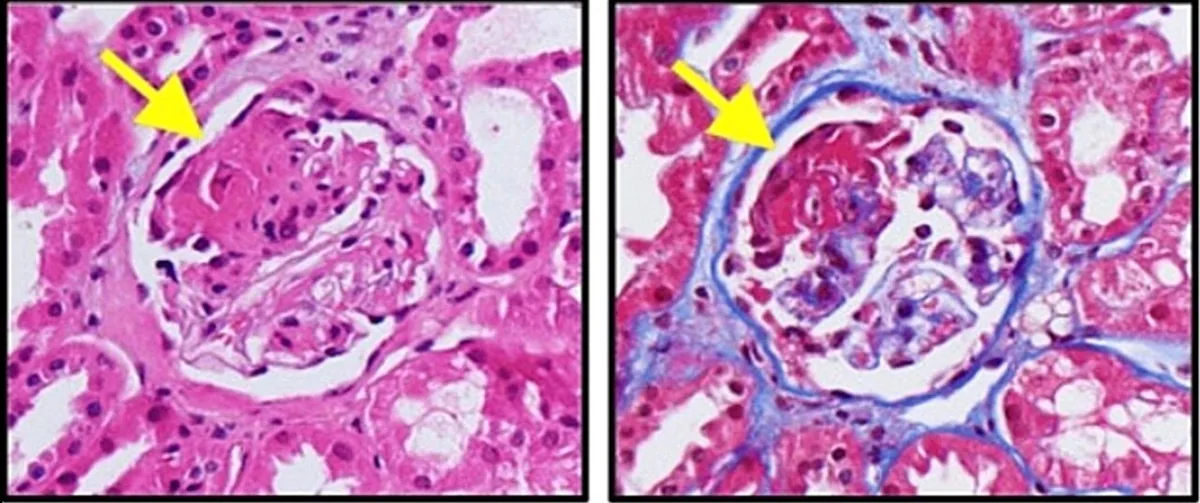 Histology
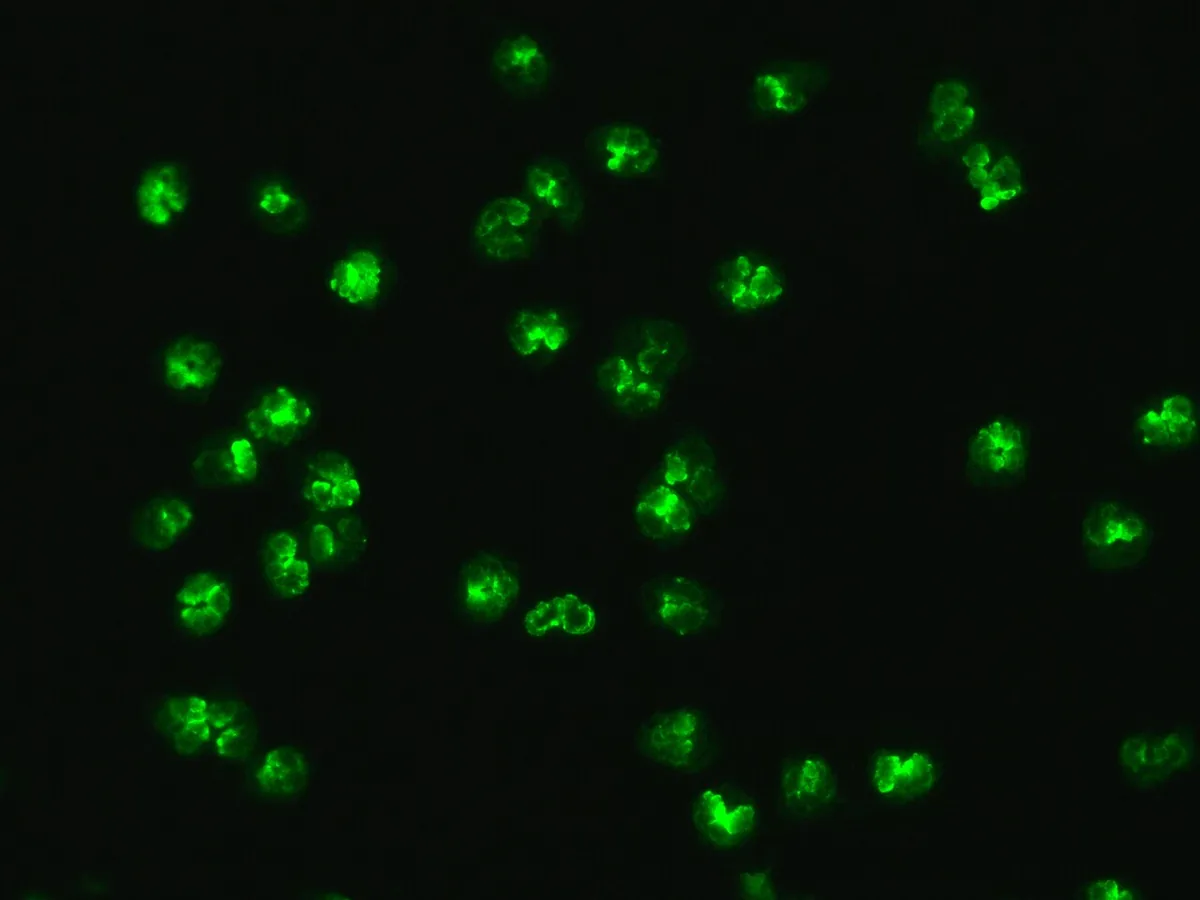 Blood smear & cytology
Definition
Microscopic polyangiitis (MPA) is a systemic necrotizing vasculitis mainly of small vessels without immunoglobulin deposition (pauci-immune). It may begin as a pulmonary-renal syndrome with rapidly progressive glomerulonephritis and alveolar hemorrhage; the pattern depends on the organs affected. Unlike GPA, granulomas are absent.
Classification
In the 2012 Chapel Hill nomenclature, MPA belongs to the ANCA-associated small-vessel vasculitides. Among the features of the 2022 ACR/EULAR classification criteria, MPO or p-ANCA and pauci-immune glomerulonephritis are the most frequent in MPA; pulmonary fibrosis or interstitial lung disease are also included.
Aetiopathogenesis
It is an autoimmune disease; at least 70 % of patients have ANCA, usually perinuclear ANCA (p-ANCA) with antibodies against myeloperoxidase (MPO). Vascular inflammation occurs without relevant immune complex deposition.
Clinical features
A prodromal illness with fever, weight loss, myalgia, and arthralgia usually precedes.
- Kidney (in up to 90 %): hematuria, proteinuria (sometimes above 3 g/24 h), red cell casts; without prompt diagnosis, renal failure may follow rapidly.
- Skin: purpuric rash in about one-third at diagnosis; nail bed infarcts, splinter hemorrhages.
- Lung: alveolar hemorrhage with rapid-onset dyspnea and anemia, with or without hemoptysis; later pulmonary fibrosis; sometimes interstitial lung disease as the first manifestation. Mild rhinitis or sinusitis possible.
- Nervous system: frequently mononeuritis multiplex of peripheral or cranial nerves; rarely cerebral vasculitis.
- Gastrointestinal: abdominal pain, nausea, vomiting, diarrhea, bloody stools.
- Rarely the heart; eyes usually as episcleritis.
Diagnosis
- Suspicion with an unexplained combination of fever, weight loss, arthralgias, abdominal pain, alveolar hemorrhage, new-onset nephritic syndrome, or mononeuritis multiplex.
- Laboratory tests: ESR, CRP, white cell and platelet counts elevated; anemia of chronic disease; an acute drop in hematocrit indicates alveolar or gastrointestinal hemorrhage. Urinalysis with sediment (hematuria, proteinuria, casts) and creatinine.
- ANCA by immunofluorescence and ELISA: usually p-ANCA/MPO.
- Biopsy of the most accessible involved tissue; in the kidney, focal segmental pauci-immune necrotizing glomerulonephritis with fibrinoid necrosis and cellular crescents.
- Chest imaging: bilateral patchy infiltrates suggest alveolar hemorrhage; CT is much more sensitive than radiographs. Bronchoscopy shows blood from all bronchi and later hemosiderin-laden macrophages and excludes infection.
Keep learning in the app
Further reading (open access)
- MSD Manual Professional: Microscopic Polyangiitis (MPA)
- MSD Manual Professional: Overview of Vasculitis
- Arch Rheumatol 2024: Performance of the 2022 ACR/EULAR Classification Criteria for ANCA-associated vasculitis (PMC-Volltext)
- Ther Adv Musculoskelet Dis 2022: A glance into the future of ANCA-associated vasculitis (PMC-Volltext, Tabelle ACR/EULAR 2022)
Cross-references
More topics: Rheumatology & immunology
- Rheumatoid arthritis
- Systemic lupus erythematosus (SLE)
- Granulomatosis with polyangiitis (GPA)
- Polymyalgia rheumatica
- Gout
- Reactive arthritis
- Behçet's disease
- Giant cell arteritis (temporal arteritis)
- Septic arthritis
- Mixed connective tissue disease (Sharp syndrome)
- Psoriatic arthritis
- Uveitis in rheumatic diseases
Note: Learning content for medical education – not a treatment recommendation and no substitute for diagnosis or treatment decisions in individual cases. Treatment and management are deliberately not covered on this page.