Hypomagnesemia
- Synonyms
- low magnesium, magnesium deficiency
- Specialty
- Internal medicine · Electrolytes & acid–base
- Images
- ECG 1
- Last updated
- 10/2026 · Dr. Pascal Bafteh
Contents
Images (1)
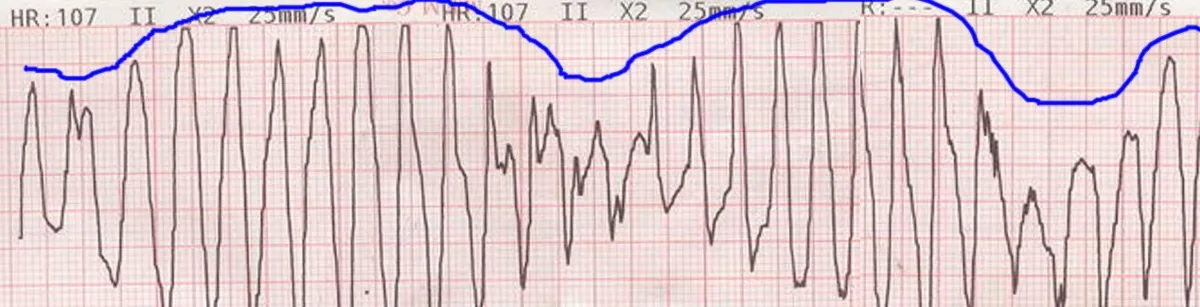 ECG
ECGDefinition
Hypomagnesemia is defined as a serum magnesium concentration below 0.70 mmol/L; severe hypomagnesemia is usually associated with values below 0.50 mmol/L. Serum magnesium may be normal despite depleted intracellular and bone stores. The disorder is common in hospital patients and often occurs together with hypokalemia and hypocalcemia.
Aetiopathogenesis
Usually inadequate intake combines with impaired renal conservation or gastrointestinal absorption.
- Alcohol use disorder and undernutrition: low intake, often compounded by increased renal excretion.
- Gastrointestinal losses: chronic diarrhea, steatorrhoea and long-term use of gastric H⁺/K⁺-ATPase blockers (over one year).
- Renal losses: saluretics (loop and distally acting agents), hypercalcemia, diabetic ketoacidosis, increased secretion of aldosterone or thyroid hormones and nephrotoxic agents such as aminoglycosides and certain platinum-based cytotoxic drugs.
- Inherited tubulopathies: e.g. Gitelman syndrome with inappropriately high magnesium excretion.
- Pregnancy and lactation: especially in the third trimester due to increased renal excretion or increased requirements.
Clinical features
Some people have no symptoms. Possible signs are loss of appetite, nausea, vomiting, lethargy, weakness, personality change, tremor and muscle fasciculations. Tetany with positive Trousseau or Chvostek signs, spontaneous carpopedal spasm and hyperreflexia correlates closely with concomitant hypocalcemia or hypokalemia. Severe hypomagnesemia can provoke generalised tonic-clonic seizures, especially in children, and arrhythmias also occur. Electromyography shows myopathic potentials.
Diagnosis
- Serum magnesium: confirms the diagnosis at values below 0.70 mmol/L.
- Associated findings: frequently hypocalcemia with hypocalciuria and hypokalemia with increased urinary potassium excretion and metabolic alkalosis.
- Suspicion despite a normal serum level: in unexplained hypocalcemia or refractory hypokalemia, in unexplained neurological symptoms with alcohol use disorder, in chronic diarrhea and after exposure to nephrotoxic agents.
Keep learning in the app
Further reading (open access)
Cross-references
Note: Learning content for medical education – not a treatment recommendation and no substitute for diagnosis or treatment decisions in individual cases. Treatment and management are deliberately not covered on this page.