Hyperkalemia
Board exam relevance: in 5 of 105 exam reports · rank 69- Synonyms
- high potassium, high blood potassium, pseudohyperkalaemia
- Specialty
- Internal medicine · Electrolytes & acid–base
- Images
- ECG 2
- Last updated
- 10/2026 · Dr. Pascal Bafteh
Contents
Images (2)
 ECG
ECG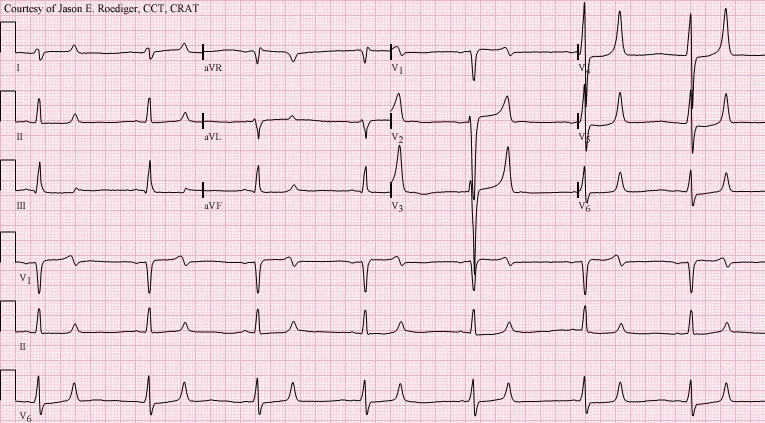 ECG
ECGDefinition
Hyperkalemia is defined as a serum potassium concentration above 5.5 mmol/L. It usually results from reduced renal potassium excretion or a shift of potassium out of cells into the extracellular space. Several factors often act together, such as impaired renal function, potassium-retaining drugs and increased potassium intake. The main danger is its effect on the cardiac conduction system.
Aetiopathogenesis
- Pseudohyperkalemia: common; usually due to hemolysis in the blood sample, and also to prolonged tourniquet use, vigorous fist clenching during venepuncture, thrombocytosis or extreme leukocytosis.
- Reduced renal excretion: acute kidney injury, chronic kidney disease (without additional potassium load usually only when GFR falls below 10 to 15 mL/min), renal tubular acidosis type 4, urinary obstruction, hypoaldosteronism, adrenal insufficiency and reduced effective circulating volume.
- Drug-induced: drugs that block the renin-angiotensin-aldosterone system (ACE blockers, angiotensin receptor blockers, renin blockers), potassium-sparing water pills, NSAIDs, trimethoprim and lithium.
- Release from cells: tissue breakdown (tumor lysis, intravascular hemolysis, rhabdomyolysis, burns, bleeding into soft tissues or the gastrointestinal tract), metabolic acidosis, insulin deficiency in diabetes mellitus, fasting, exercise, digitalis toxicity, beta-adrenergic receptor blockers and the rare hyperkalemic periodic paralysis.
- Increased intake: usually iatrogenic, e.g. potassium-containing solutions, blood products or parenteral nutrition; with normal renal function usually only transient.
Clinical features
Hyperkalemia is usually asymptomatic until cardiac arrhythmias develop. Muscle weakness and occasionally flaccid paralysis may occur; in hyperkalemic periodic paralysis, weakness up to complete paralysis develops during attacks. Severe hyperkalemia can degenerate into ventricular fibrillation or asystole. People at particular risk are those with chronic kidney disease, acute kidney injury, advanced heart failure or urinary obstruction and those taking drugs that block the renin-angiotensin-aldosterone system.
Diagnosis
ECG
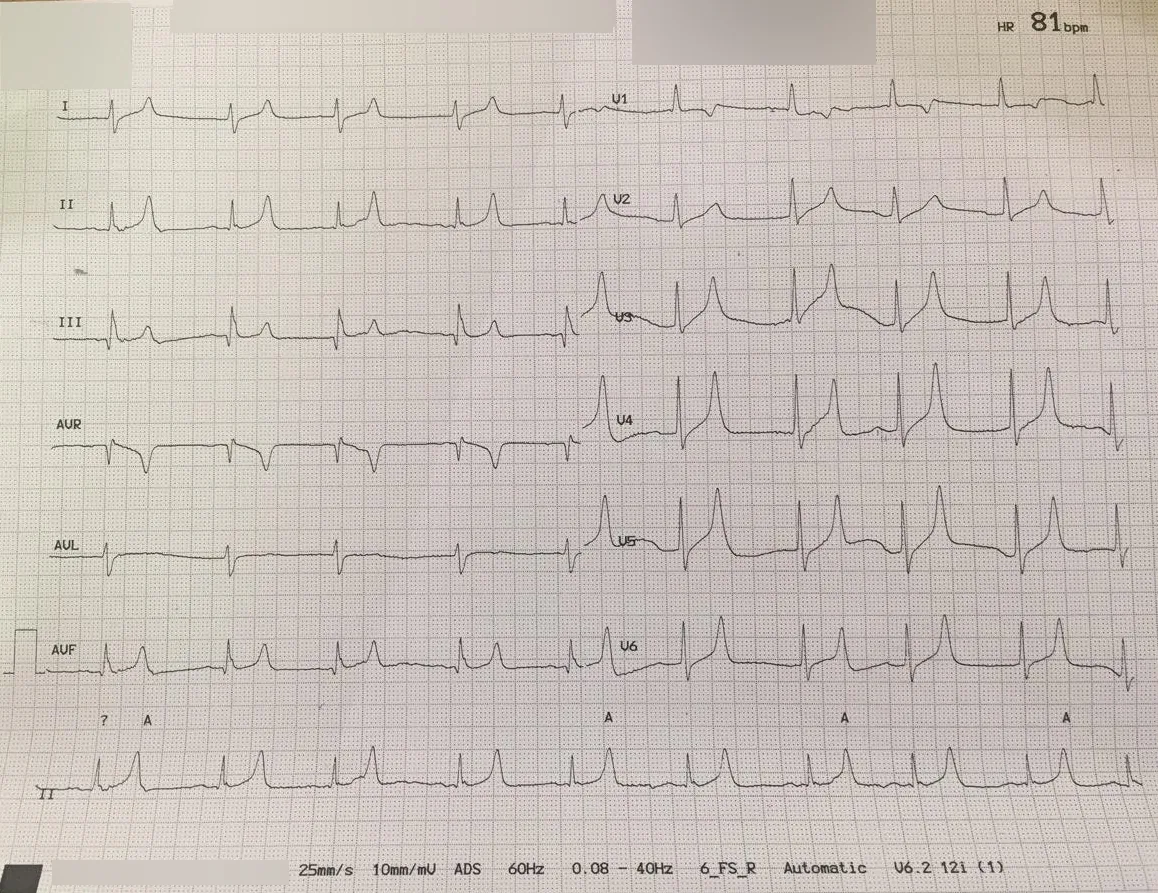
- Early signs (often from 5.5 mmol/L): prolonged PR interval, shortened QT interval and tall, peaked, symmetrical T waves.
- Above 6.5 mmol/L: further conduction slowing with widening of the QRS complex, loss of the P wave and nodal and ventricular escape rhythms.
- End stage: the QRS complex degenerates into a sine-wave pattern, followed by ventricular fibrillation or asystole.
- Limitation: potassium levels associated with similar ECG changes vary widely between patients.
Laboratory tests and search for the cause
- Serum potassium: often an incidental finding on routine laboratory testing.
- Exclusion of pseudohyperkalemia: in the absence of risk factors and with a normal ECG, repeat measurement without hemolysis (adequate needle gauge, brief tourniquet time, no fist clenching) with prompt processing of the sample.
- Search for the cause: detailed history including a drug list, examination with assessment of volume status, electrolytes, urea and creatinine.
- In renal failure: ultrasound of the kidneys and urinary tract to exclude obstruction.
Keep learning in the app
Further reading (open access)
Cross-references
Note: Learning content for medical education – not a treatment recommendation and no substitute for diagnosis or treatment decisions in individual cases. Treatment and management are deliberately not covered on this page.