Hyponatremia
Board exam relevance: in 9 of 105 exam reports · rank 32- Synonyms
- low sodium, low blood sodium, dilutional hyponatraemia, water intoxication
- Specialty
- Internal medicine · Electrolytes & acid–base
- Images
- Histology 2
- Last updated
- 10/2026 · Dr. Pascal Bafteh
Contents
Images (2)
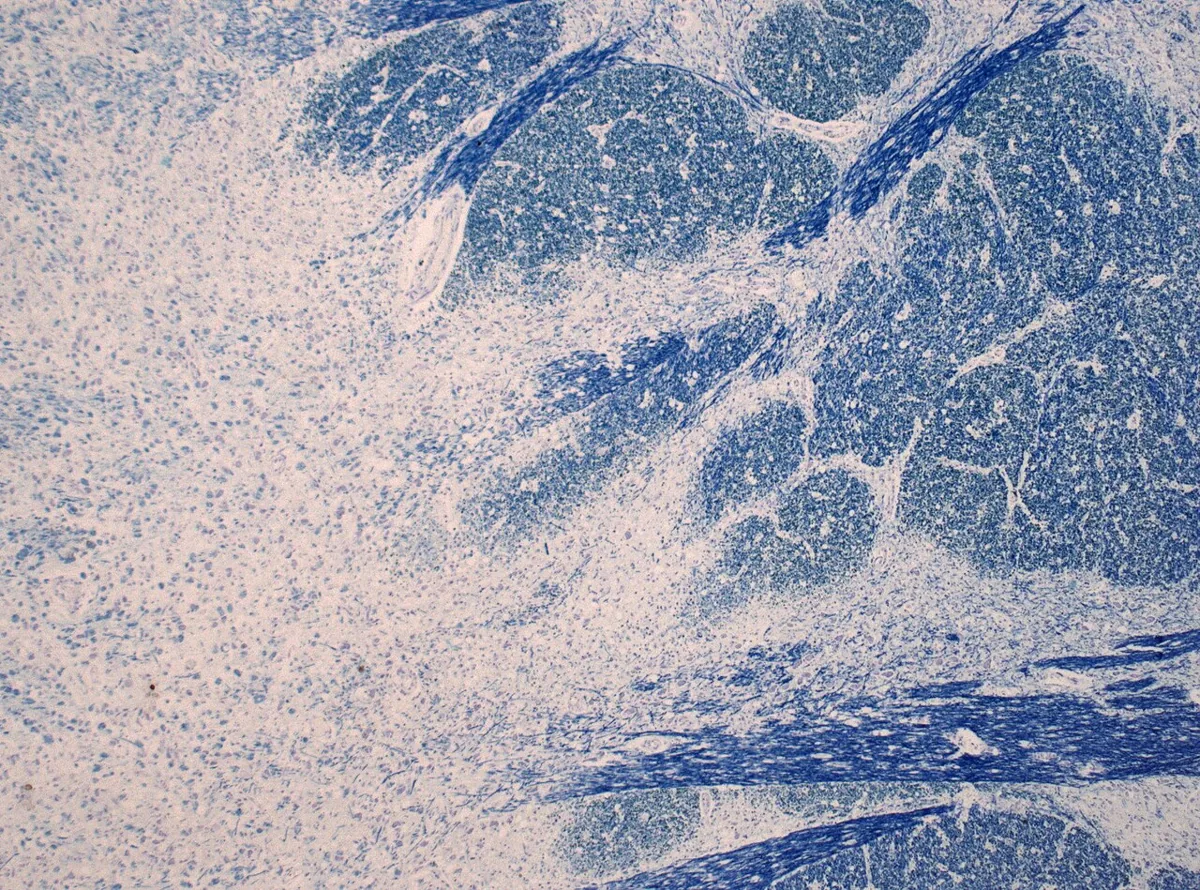 Histology
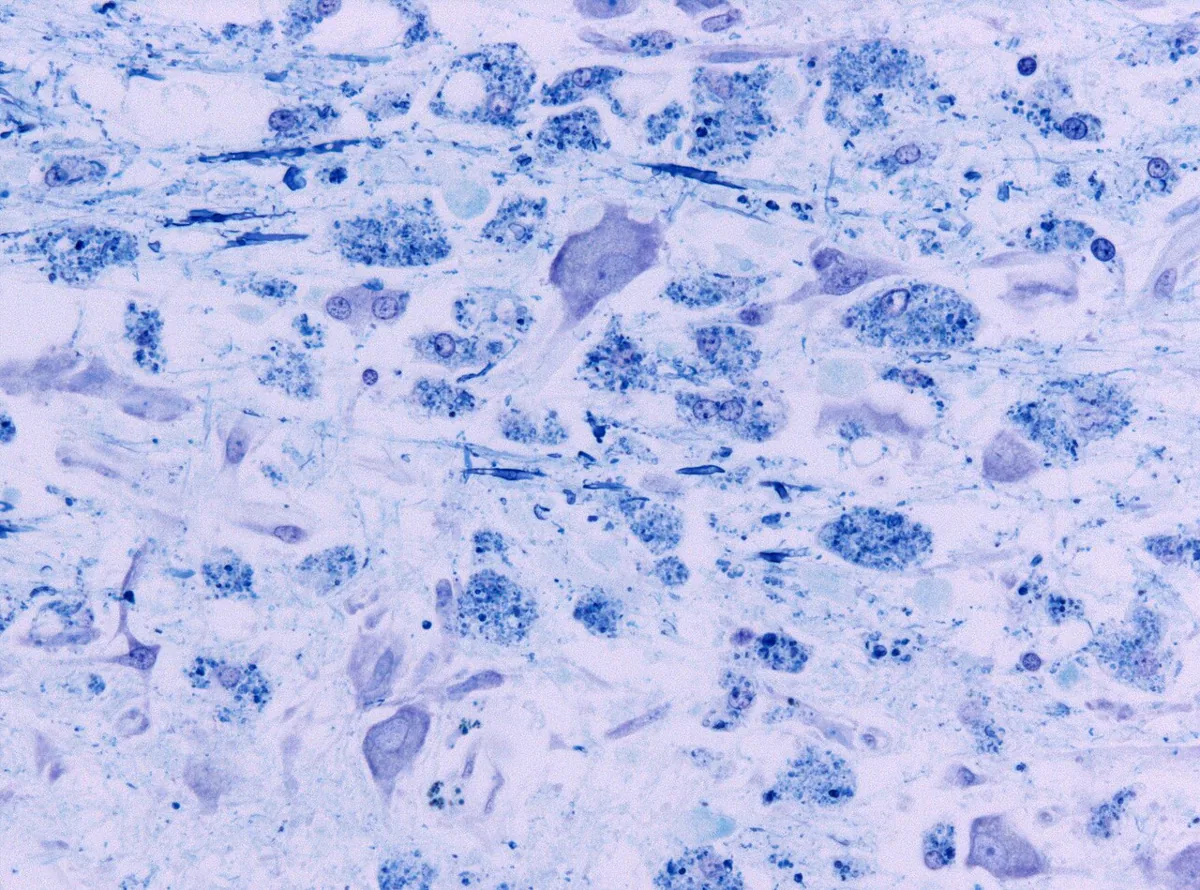 Histology
Definition
Hyponatremia is defined as a serum sodium concentration below 136 mmol/L. It reflects a relative excess of body water compared with total body sodium and is therefore primarily a disorder of water balance. Its clinical importance lies mainly in the osmotic shift of water into brain cells, with the risk of cerebral edema.
Distinct from this are translocational hyponatremia (hypertonic; e.g. severe hyperglycemia or mannitol draw water out of cells) and pseudohyponatremia (isotonic; a measurement artefact in marked hypertriglyceridemia or extreme hyperproteinemia, e.g. in multiple myeloma).
Classification
- By volume status: hypovolaemic (loss of sodium and water, with sodium loss predominating), euvolaemic (increased total body water with near-normal sodium content) and hypervolaemic (sodium and water both increased, water predominating; typical of edematous disorders).
- By rate of onset: hyponatremia that develops very rapidly, within less than 24 hours, is particularly dangerous because brain cells have not yet been able to shed osmotically active solutes.
Occurrence & epidemiology
Older people (among other reasons when taking saluretics) and people with heart failure, liver cirrhosis or brain disorders are frequently affected. In inpatients with severe HIV infection it has been reported in more than half of cases. Premenopausal women with acute hyponatremia are particularly prone to severe cerebral edema.
Aetiopathogenesis
Most forms involve reduced renal excretion of free water, often due to non-osmotic release of vasopressin (ADH) despite low osmolality, for example in volume depletion, reduced effective circulating volume, stress or pain.
- Hypovolaemic, extrarenal: protracted vomiting, severe diarrhea or fluid sequestration in a "third space", especially when the losses are replaced with water or low-sodium drinks.
- Hypovolaemic, renal: saluretics (particularly those acting on the distal tubule, especially in older people), aldosterone deficiency, osmotic diuresis and salt-losing nephropathies (e.g. interstitial nephritis, partial urinary tract obstruction).
- Euvolaemic: syndrome of inappropriate ADH secretion (SIADH), hypothyroidism, cortisol deficiency due to adrenal insufficiency, postoperative states, ecstasy (MDMA) and absorption of hypotonic irrigation fluid during transurethral, cystoscopic or hysteroscopic procedures.
- Drug-induced: among others certain antidepressants (SSRIs), antiepileptic drugs, antipsychotics, opioids, NSAIDs and some cytotoxic agents, which enhance ADH release or action.
- Primary polydipsia: causes hyponatremia only when intake exceeds excretory capacity; healthy kidneys can excrete up to about 25 litres of urine per day.
- Hypervolaemic: heart failure and liver cirrhosis, also acute and chronic kidney disease, rarely nephrotic syndrome. The reduced effective circulating volume releases vasopressin and angiotensin II.
- Cerebral salt wasting: a rare cause, mainly after subarachnoid hemorrhage; renal sodium loss with volume depletion and usually a urine sodium above 40 mmol/L.
Clinical features
Symptoms are predominantly neurological and more pronounced with rapid onset and in older and chronically ill people. They usually appear when effective plasma osmolality falls below about 240 mOsm/kg.
- Milder features: nausea, unsteadiness with falls, headache, personality change, confusion and lethargy.
- Severe features: with serum sodium below 115 mmol/L, stupor, neuromuscular hyperexcitability, hyperreflexia, seizures and coma may occur; cerebral edema can progress to brainstem herniation.
- Osmotic demyelination syndrome (formerly central pontine myelinolysis): may follow an excessively rapid rise in serum sodium. Flaccid paralysis, dysarthria and dysphagia develop over days to weeks. People with alcohol use disorder, undernutrition or other severe chronic illness are at particular risk.
Diagnosis
Laboratory tests
- Serum osmolality first: excludes translocational hyponatremia; serum sodium falls by about 1.6 mmol/L for every 5.55 mmol/L rise in glucose above normal. Pseudohyponatremia can be excluded with a direct ion-selective electrode.
- Urine osmolality: in hypo-osmolality a maximally dilute urine (below 100 mOsm/kg, specific gravity below 1.003) is expected, for example in primary polydipsia. An inappropriately high urine osmolality with low serum osmolality (below 275 mOsm/kg) points to hypovolaemia, hypervolaemia, SIADH or cerebral salt wasting.
- Urine sodium: below 20 mmol/L in extrarenal volume depletion with normal renal function; above 20 mmol/L in hypovolaemia suggests aldosterone deficiency or a salt-losing nephropathy. In SIADH it is usually above 30 mmol/L, with a fractional sodium excretion above 1%.
- Pointers to SIADH: clinical euvolaemia, normal urea and creatinine and a low serum uric acid.
- Further laboratory tests: potassium (hyperkalemia suggests adrenal insufficiency), glucose, renal function and, in euvolaemia, TSH and cortisol.
Clinical assessment and search for the cause
- Volume status: skin turgor, mucous membranes, orthostatic response, edema and ascites distinguish hypo-, eu- and hypervolaemic forms.
- Imaging to find the cause: chest X-ray (infiltrate, pulmonary congestion, tumor) and, if a brain disorder is suspected, cerebral imaging.
Keep learning in the app
Further reading (open access)
Cross-references
Note: Learning content for medical education – not a treatment recommendation and no substitute for diagnosis or treatment decisions in individual cases. Treatment and management are deliberately not covered on this page.