Syphilis in gynaecology and pregnancy
- Specialty
- Obstetrics · Pregnancy disorders
- Images
- Clinical 3
- Last updated
- 10/2026 · Dr. Pascal Bafteh
Contents
Images (3)
Definition
- Syphilis is a sexually transmitted infection caused by Treponema pallidum; the organism can be transmitted across the placenta to the fetus and cause congenital syphilis.
Classification
- Early syphilis (up to one year after infection) comprises primary and secondary syphilis, late syphilis (from one year) tertiary syphilis and neurosyphilis; asymptomatic latent phases may occur in between.
Occurrence & epidemiology
Epidemiology
- In Germany more than 90% of infections are diagnosed in men; the rise observed since 2010 is mainly due to infections among men who have sex with men.
- Among women, the 25 to 29 age group is most often affected; congenital syphilis is an isolated event in Germany (one to six cases per year since 2001).
Aetiopathogenesis
Aetiology and risk factors
- Transmission to the fetus is possible at any stage of pregnancy and any stage of maternal syphilis; it depends on the treponemal concentration in maternal blood, is more likely the more recent the infection, and reaches up to 100% when infection occurs during pregnancy.
- Most pregnant women in whom syphilis is diagnosed are in the latent stage.
Clinical features
Clinical features and complications
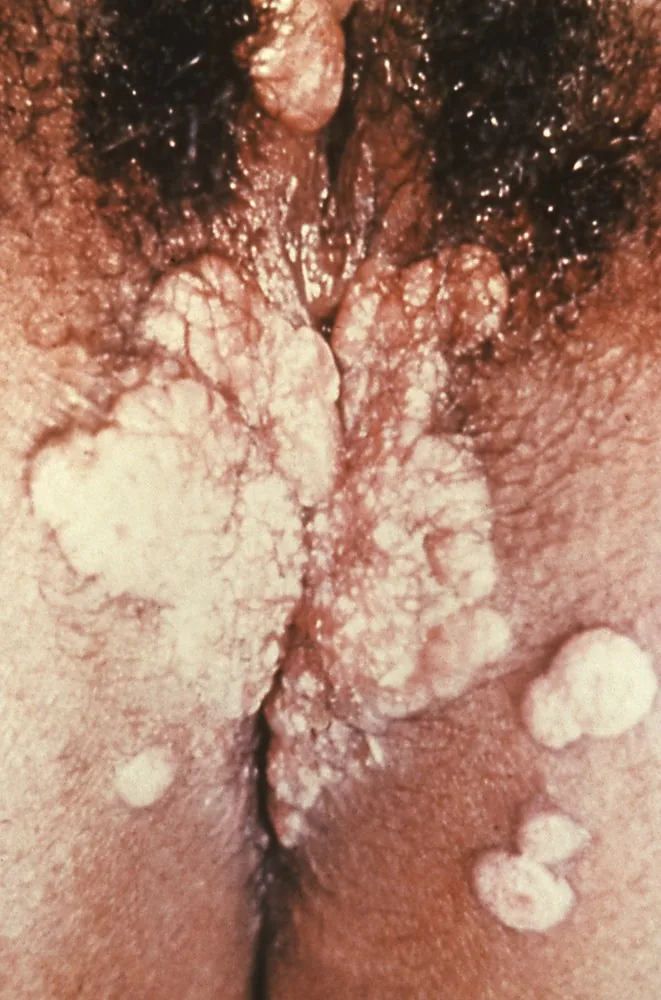
- In the primary stage a painless, indurated ulcer (chancre) develops with regional lymphadenopathy; in women the labia are frequently affected.
- The secondary stage begins 4–10 weeks after infection with generalised lymphadenopathy and a rash that characteristically also involves the palms and soles.
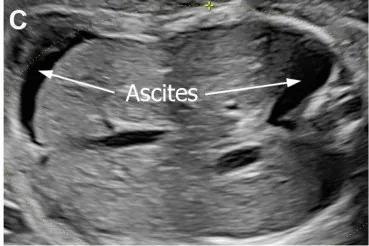
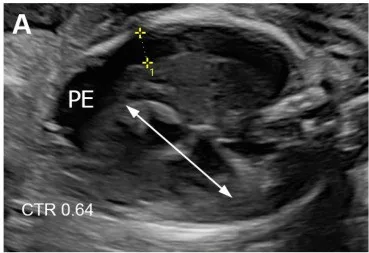
- In its natural course, intrauterine infection leads to miscarriage, stillbirth, preterm birth or death shortly after birth in about 30–40%; about 50–60% of infected infants appear normal at birth, but most become ill within the first 8 months of life.
Diagnosis
- Diagnosis is usually serological: TPHA or TPPA serve as screening tests and usually become positive 2–3 weeks after infection; a positive screening test is confirmed, for example, with the FTA-ABS test.
- Cardiolipin antibodies and treponema-specific IgM antibodies are used to assess activity; direct detection from primary lesions is possible by darkfield microscopy or PCR.
Keep learning in the app
Further reading (selection)
Cross-references
Note: Learning content from the GynFuchs app (flashcards, exam questions, image cases) for medical education – not a treatment recommendation and no substitute for diagnosis or treatment decisions in individual cases. Treatment and management are deliberately not covered on this page.