Triple I (intra-amniotic infection)
Exam relevance: in 10 of 197 board exam reports · rank 66
- Specialty
- Obstetrics · Pregnancy disorders
- Images
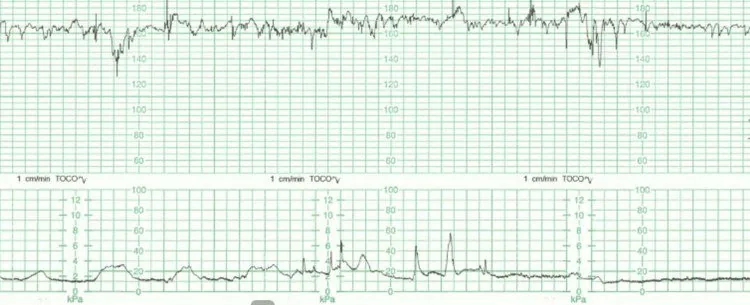
- CTG 1
- Exam relevance
- 10 of 197 reports · rank 66
- In the app
- 1 flashcards · GynFuchs
- Last updated
- 10/2026 · Dr. Pascal Bafteh
Contents
Images (1)
Definition
Term
- "Triple I" stands for intrauterine inflammation/infection.
- The term replaced the term “chorioamnionitis”.
- The working diagnosis rests on maternal fever plus one additional criterion.
- Triple I stands for intra-amniotic infection or inflammation or both; the term was proposed by an NICHD expert panel to replace the clinical diagnosis of chorioamnionitis.
Classification
- Clinical criteria are maternal fever together with further signs such as maternal tachycardia above 100 bpm, fetal tachycardia above 160 bpm, uterine tenderness, purulent or foul-smelling amniotic fluid or leucocytosis above 15,000/mm³; fever thresholds differ between definitions.
Occurrence & epidemiology
Epidemiology
- The amniotic cavity is normally sterile; the frequency of microbial invasion depends on the setting: in preterm labour with intact membranes organisms are cultured from amniotic fluid in about 10%, in PPROM in about 32%.
Aetiopathogenesis
Aetiology and risk factors
- The infection usually ascends from the lower genital tract via the cervix, decidua and membranes into the amniotic cavity and is often polymicrobial; Listeria monocytogenes, by contrast, reaches it haematogenously.
- The most frequent organisms are ureaplasmas and mycoplasmas; genital tract organisms such as group B streptococci also play a role.
Clinical features
Clinical features and complications
- Fever is typical, together with maternal and fetal tachycardia, uterine tenderness, foul-smelling amniotic fluid and purulent cervical discharge; the infection may, however, be subclinical.
- For the fetus and neonate the risk of preterm birth, low Apgar scores, sepsis, pneumonia, meningitis, seizures, cerebral palsy and death increases; chronic chorioamnionitis is associated with chronic lung disease, retinopathy of prematurity and impaired brain development.
- Maternal risks include bacteraemia, uterine atony, postpartum haemorrhage, pelvic abscess, thromboembolism, wound complications and placental abruption, and less often septic shock and disseminated intravascular coagulation.
Histology
- Acute histological chorioamnionitis is characterised by neutrophils in the chorioamniotic membranes or chorionic plate and represents a maternal inflammatory response.
Diagnosis
Criteria
- Fever counts from 39.0 °C (1x) or ≥38.0 °C (2x, 30 min apart).
- Additional criteria are fetal tachycardia >160, maternal leukocytosis >15,000.
- For laboratory confirmation, amniotic fluid is obtained by amniocentesis and tested for inflammation, such as white cells, glucose and interleukin-6, and for organisms by Gram stain, culture or molecular tests.
- A single sign is unreliable, as fetal tachycardia, for example, may have other causes.
Keep learning in the app
Further reading (selection)
Cross-references
Note: Learning content from the GynFuchs app (flashcards, exam questions, image cases) for medical education – not a treatment recommendation and no substitute for diagnosis or treatment decisions in individual cases. Treatment and management are deliberately not covered on this page.